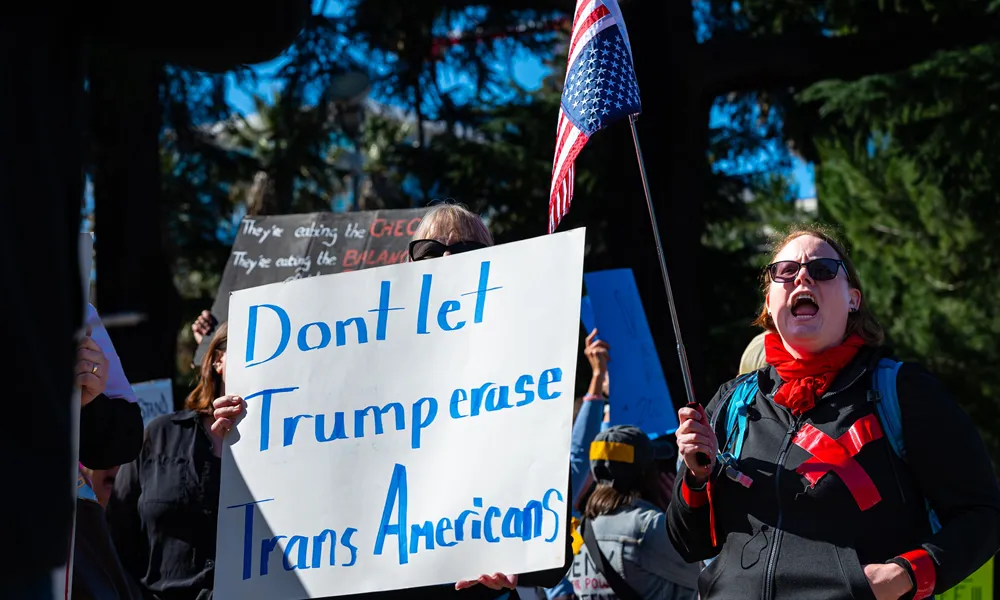



Idaho and West Virginia bans on transgender girls in girls' sports upheld in a decision advocates call part of a broader pattern of setbacks, while opponents promise to target more states
The U.S. Supreme Court on Tuesday upheld state laws in Idaho and West Virginia barring transgender athletes from competing on girls' and women's sports teams, a ruling that transgender rights advocates described as a painful blow even as they stressed it stopped short of a nationwide mandate. Joshua Block, the American Civil Liberties Union lawyer who represented the plaintiffs, called the decision "a heartbreaking ruling for our clients and transgender girls like them," adding that they had asked for nothing more than the same opportunities given to their peers.
The two cases, West Virginia v. B.P.J. and Little v. Hecox, centred on Becky Pepper-Jackson, a 15-year-old West Virginia student who has identified as female since third grade and competes in shot put and discus, and Lindsay Hecox, a former Idaho track and cross-country runner. Writing for the court, Justice Brett Kavanaugh said that under Title IX and the equal protection clause, states may maintain girls' and women's sports for biological females and set eligibility rules on that basis. He added that the ruling does not require an overhaul of women's and girls' sports nationwide.
A layered verdict
Justices were unanimous in finding that the two laws do not violate Title IX, the federal civil rights statute barring sex discrimination in education. But they split along familiar ideological lines on the constitutional question of whether West Virginia's law violates equal protection, with Kavanaugh's majority opinion joined by five conservative justices. Justice Sonia Sotomayor, writing for the three liberal justices in dissent, argued that the majority extended sympathy to the athletes it favoured while dismissing the experiences of transgender students such as Pepper-Jackson.
For advocates, the ruling lands as the latest in a run of losses at the court. Last year, the justices upheld a Tennessee law banning gender-transition medication for minors, and in March they struck down a Colorado law that had barred licensed therapists from attempting to change a minor's sexual orientation or gender identity. The Human Rights Campaign, an LGBTQ advocacy group, said the sports ruling was consistent with a pattern of decisions from the court's conservative wing that have narrowed protections for marginalised communities, though it also noted that the decision does not force states that currently allow transgender athletes to compete to change their policies.
A "BIG WIN"
President Trump, who has made restrictions on transgender rights a recurring theme both before and after returning to the White House, called the ruling a "BIG WIN." West Virginia governor Patrick Morrisey said future generations of female athletes would benefit from what he described as the certainty and fairness the decision protects. Riley Gaines, a former University of Kentucky swimmer who became a prominent advocate for the bans after tying for fifth place with transgender swimmer Lia Thomas at the 2022 NCAA championships, echoed the president's message online.
Opponents of transgender athletes' participation signalled they intend to widen their campaign beyond the 27 states that already restrict it. Kristen Waggoner, president of the Alliance Defending Freedom, the group that defended both the Idaho and West Virginia laws, wrote on social media that states still allowing transgender athletes to compete would be targeted next. Amanda Goad, who leads gender and reproductive justice work at the ACLU of Southern California, said she expected the ruling to be used to argue for broader exclusion of transgender people from public life, even though it does not extend to states with more inclusive policies.
According to the Williams Institute at UCLA, an estimated 122,000 transgender teenagers currently participate in high school sports across the United States. Kavanaugh's opinion explicitly left open a related and still-unresolved question, namely whether states can be required to allow transgender athletes to compete, which remains under litigation in lower courts.