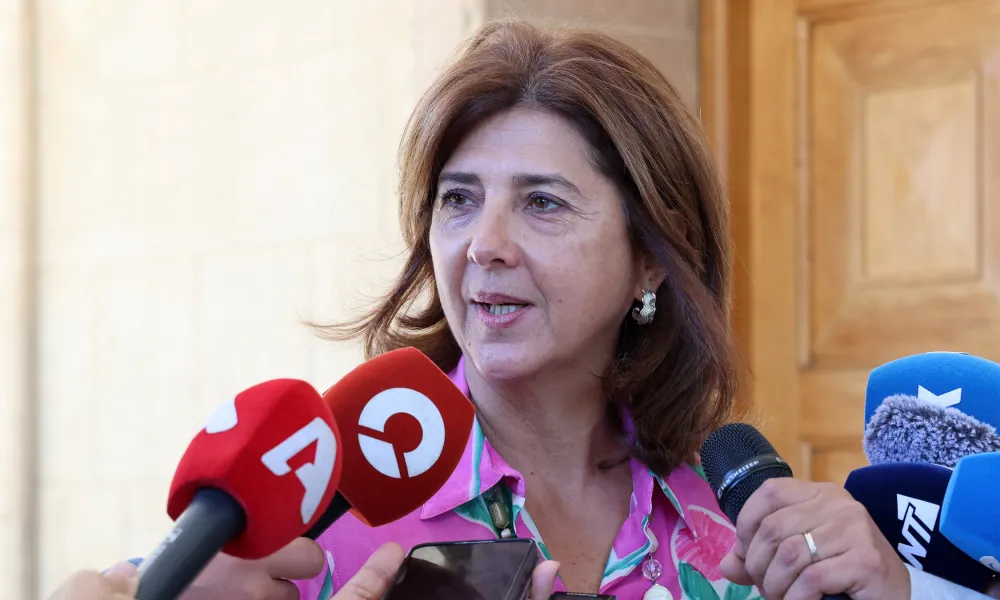
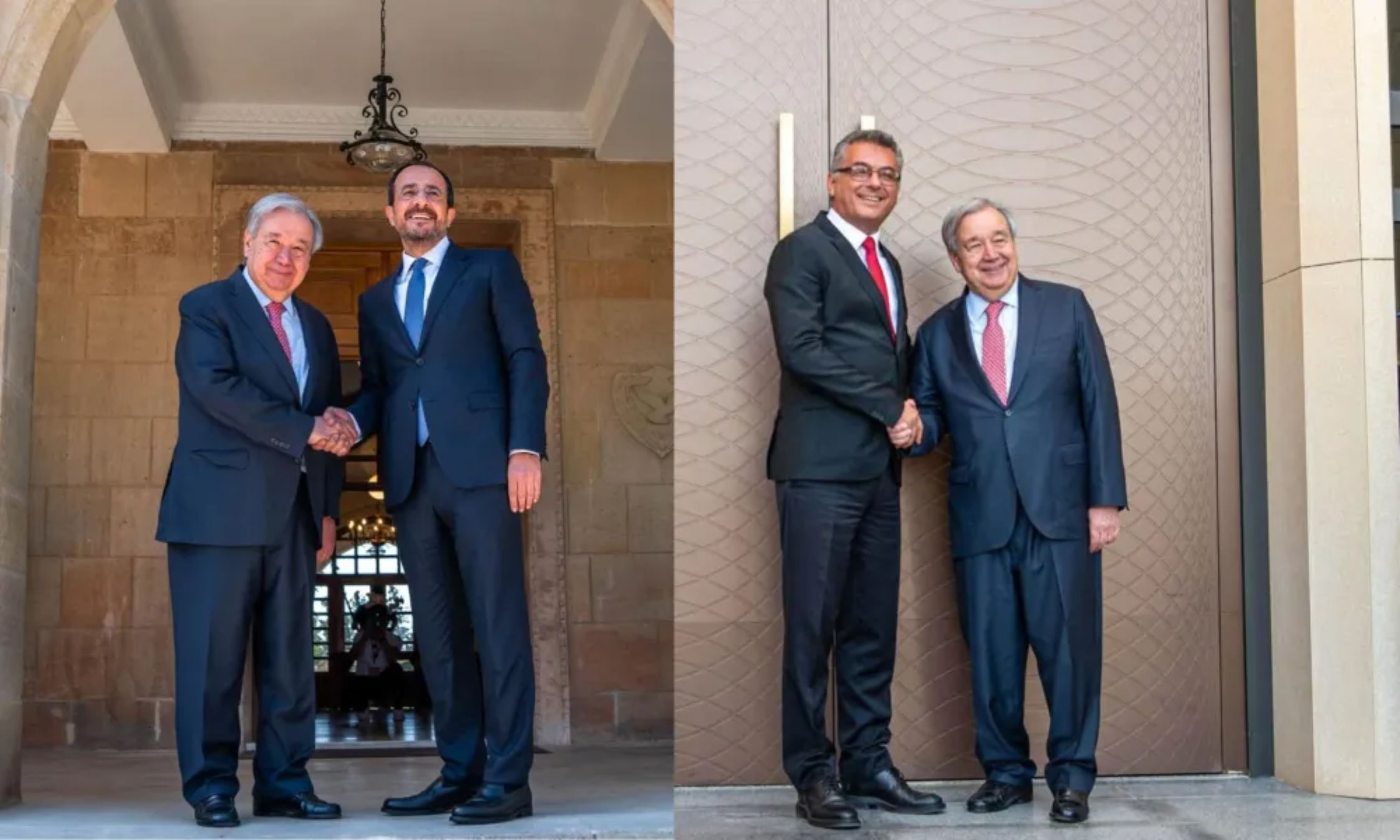
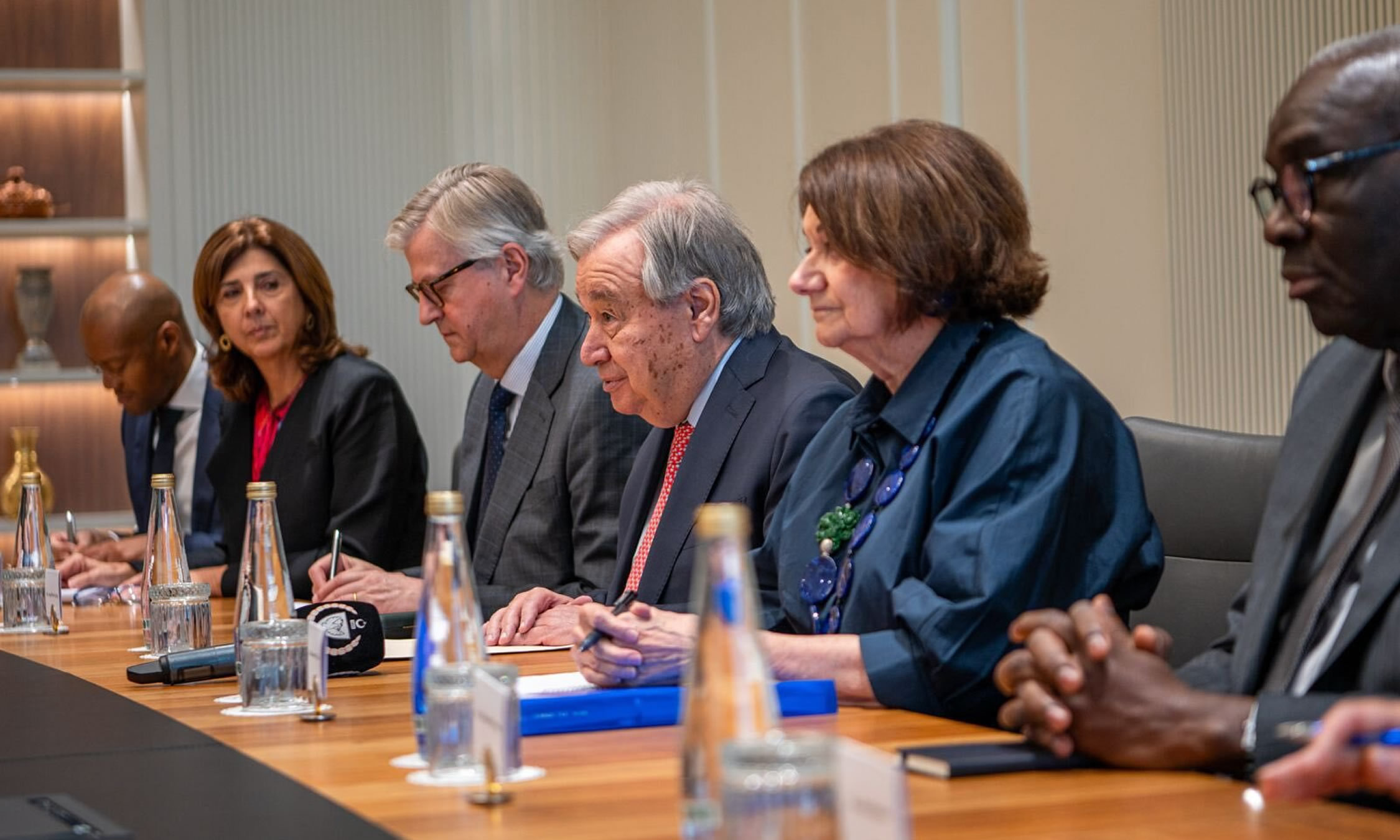
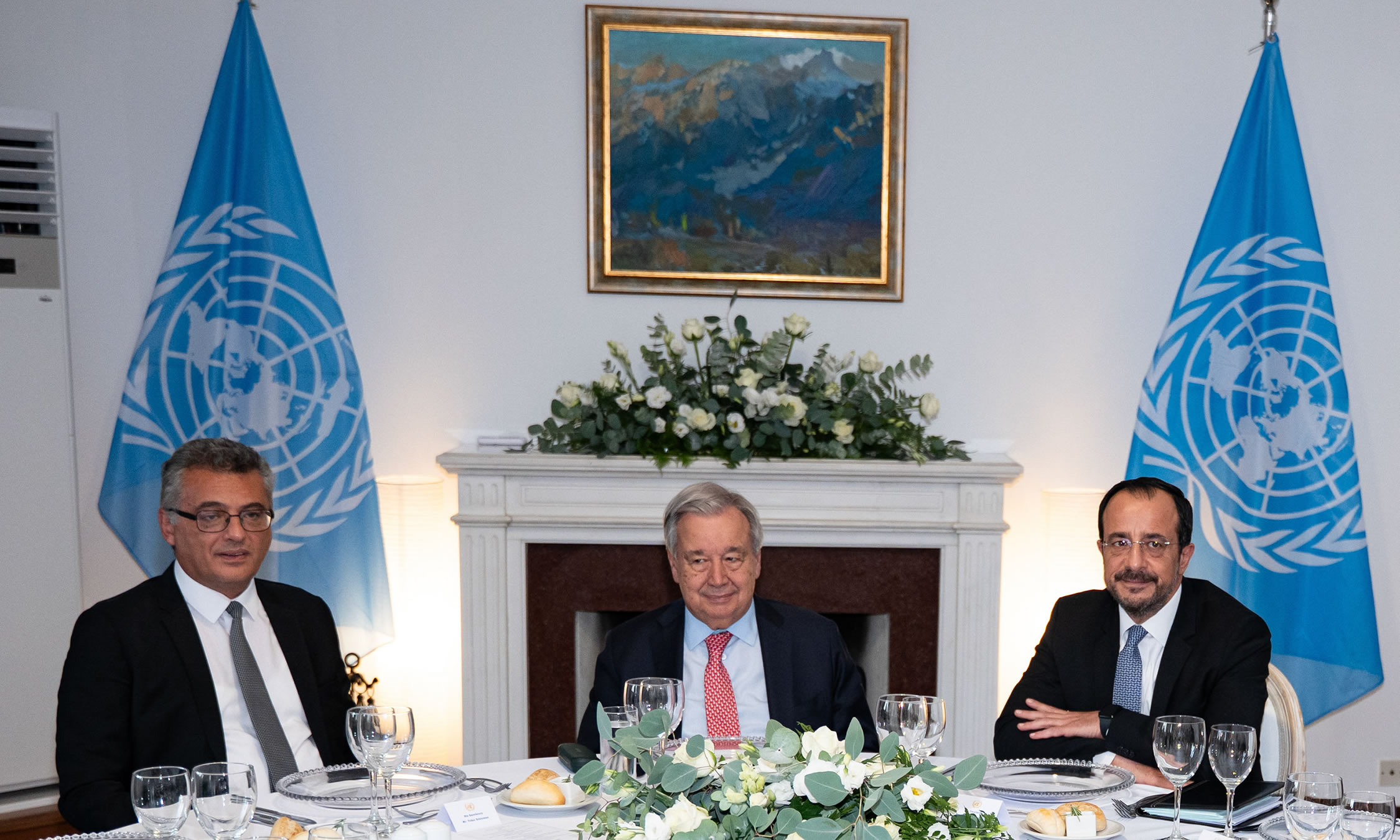
Following a rare visit of UN Secretary-General António Guterres to Cyprus, his Personal Envoy María Ángela Holguín argued in an interview with Politis that the future of the peace effort rests in the leaders’ hands.
The bare minimum needed now is sustained direct engagement between the two leaders and credible signs they are willing to move forward, “not just talk”.
If they take specific actions in the coming months, many things could be unblocked, she said, noting the biggest obstacles to progress are fear of change and lack of political will from all involved.
Work to do
Holguín called on the two leaders to meet directly and regularly to make progress on all three issues identified by the UNSG – confidence-building measures (CBMs), substance and methodology – so that a 5+1 can take place.
“We depend on the leaders’ actions.”
The envoy removed any doubt over CBMs, noting they are an essential condition for moving forwards, along with substance and methodology.
No more failures
Guterres secured the consent of all sides to convene an expanded conference, but the UN will not risk calling a 5+1 that ends in failure again, said Holguín, noting the damage this could do to the process.
On past convergences, the envoy said the UN has been working for some months now on properly recording past convergences up to and including Crans-Montana, based on UN records on all issues.
Governance and security go hand in hand
She made clear the convergences come as a heavily intertwined package. If you try to unpick one element, the whole thing might unravel.
"Let’s remember that governance, security and guarantees, territory and property are deeply interlinked. A convergence on one issue only holds its value in the context of the whole. So no, this is not a menu, not a pick and choose."
Division poses risks in turbulent region
On Guterres’ warning about the volatile nature of the region, the former Colombian foreign minister agreed, pointing to energy competition, security tensions and shifting alliances in the wider area.
“Things can change in an instant in this unstable region.”
The longer the Cyprus issue exists, the more it becomes entangled in dynamics outside of the parties’ control. The envoy suggested the situation does not lend itself to a sit-and-wait approach but to one of urgent action.
EU-Turkey progress needed once negotiations start
On EU-Turkey relations, Holguín said if the UNSG’s initiative on Cyprus can help create positive steps in EU-Turkey relations, this would be a good thing for possible negotiations. While it’s up to the European Commission to handle, progress on that file "will be necessary if there is a negotiation," she added.
Public engagement
Enhancing public engagement in the peace process is not an option, nor a distraction from negotiations, but a necessity and ultimately the glue that can keep it together, the UN envoy argued.
One lesson from the 2004 referendum is the importance of informing the public with accuracy and respect, said Holguín. Leaders and stakeholders have an essential role to play, building an understanding among the public of the issues involved and the implications on their daily lives, she added.
No place for secrets
One of the biggest challenges faced in Cyprus is the impossibility of preparing for negotiations in a private way that can create room for steps forward, noted Holguín. The idea of having negotiations without breakthroughs being leaked is “unthinkable” here, she added.
At the same time, speculation without confirmation hurts the process, the envoy said, reiterating that she has not produced or delivered to the parties any document.
Lack of will
On what’s impeding progress, Holguín was clear: “The greatest obstacles remain the fear of change and lack of political will from all actors involved.”
Concluding, the UN envoy called on the sides not to waste this chance. It’s not often that you have the UNSG’s personal investment and alignment among the guarantors and EU. We shouldn’t assume such a moment will come again soon, she noted.
Full Interview with UN Personal Envoy for Cyprus María Ángela Holguín
1. While the two leaders both expressed satisfaction with the UNSG’s visit to Cyprus, many observers criticised the outcome for a seeming lack of progress. What is your take on the visit?
I would push back on the idea that nothing happened. For the first time in nearly a decade, both leaders had a meeting with the Secretary-General to discuss issues of substance, methodology and confidence-building measures. What the visit produced was not a headline, but something more important: a shared purpose for advancing in these three issues set out for this visit and the coming months. This is a step forward in our search to bring both parties together to restart negotiations. To me, the visit was positive and demonstrated Mr. Guterres’ commitment to assist Cypriots in finding a definitive solution. If both parties decide to take specific actions to create an enabling environment, many things could be unblocked. We depend on the leaders’ actions.
2. What needs to be done to convene a new 5+1 and by whom?
First, the two leaders need to keep meeting directly and regularly. That is entirely in their hands, and I welcome every signal, from either side, that they are ready to do so. Second, the leaders have to identify possible confidence-building measures because this condition is a sine qua non. Third, the leaders and their teams have to work on substance and in methodology. My office's role is to help build that groundwork. The UN has been working for few months on a convergences paper, identifying what it has in its records including Crans-Montana. When the document is ready, we will share it with the two leaders. The UN is not going to another 5+1 meeting that risks failing the way the previous one did. That would cost the process.
3. Mr. Guterres repeatedly sent the message that regional instability poses a significant risk to Cyprus. What did he mean?
I understand the Secretary-General's point when he expresses concerns regarding Cyprus, as it is located in a security-vulnerable larger region. Cyprus sits in a volatile corner, at a moment when the Eastern Mediterranean, the Gulf and the Middle East are under great strain. Many countries find themselves right now being affected and living through conditions that were hard to imagine just a few months back. Things can change in an instant in this unstable region. An unresolved Cyprus problem is not a static, contained issue; it is exposed to whatever happens around it: energy competition, security tensions, shifting alliances. The cost of standing still is not zero. Every year the problem remains open, it becomes more entangled with dynamics the parties do not control. That, to me, is an argument for urgency, not for waiting for calmer weather that may never come.
4. The UN is compiling convergences for review by the sides. Will they be able to pick and choose the convergences they want, or do they go as a package?
What we are doing now is making sure that what was previously converged upon is properly recorded to facilitate the start of negotiations. In this regard, we are preparing a document that will reflect what the UN has in its records as convergences in all issues. Let´s remember that governance, security and guarantees, territory and property are deeply interlinked. A convergence on one issue only holds its value in the context of the whole. So no, this is not a menu, not a pick and choose. In this matter we will work with the negotiators.
5. Is there an EU-Turkey parallel track? What are your expectations from both the EU and Turkey?
Good understanding between the European Union and Turkey will always be positive on the Cyprus issue. If this new effort by the Secretary-General can lead to positive steps being taken in that relationship, it would be beneficial for a possible negotiation. The United Nations will not be involved with this track; the European Commission will handle it with Turkey directly. Now with the EU special representative Mr. Raffaele Fitto, there is a good possibility of progress, which will be necessary if there is a negotiation.
6. Public statements from political leaders in Cyprus and Ankara do not exactly inspire confidence. Is the situation looking more positive behind closed doors?
One of the most difficult things I have found in Cyprus is that the preparation for a negotiation, which requires a more reserved and private phase in order to move forward, is totally impossible on the island. For example, the peace negotiations in Colombia were kept totally secret for two years without a single breakthrough being leaked; this is unthinkable in Cyprus, where you have to live with leaks hoping that they do not damage people's confidence in a process. Public statements, on all sides, often have to do as much political work at home as diplomatic work abroad. That is simply the nature of a process being watched this closely by domestic audiences with very different histories. I would be cautious about reading public rhetoric as the full picture. What I can say is that the working-level conversations have gone into more detail than I have seen in some time. I wish the press would realize that speculation without confirmation hurts the process and I will not be giving explanations or denying every time a new theory comes out. What I can tell you is that there is no document that I have produced or that I have delivered to the parties.
7. Could a more inclusive process with greater public engagement help the peace effort?
I think it is necessary, not optional. The unfortunate lessons of the 2004 referendum in the south showed that the public needs to be informed with accuracy and respect. The messages the leaders and other stakeholders send is essential for building an understanding of the issues and their implications to the daily lives of Cypriots. This is why, during the visit, the Secretary-General deliberately met the technical committees and civil society. I have made a point, throughout my mandate, of listening to a variety of stakeholders beyond the two leaders. I am deeply convinced that the two communities want to move forward. Since they will vote a referendum, both communities have the right to know with transparency and integrity the arrangements that could shape their common future. Greater public engagement is not a distraction from the political negotiation, rather, it is what gives it a chance of holding.
8. The Secretary-General and you have invested a lot of time and effort on Cyprus. What are the greatest obstacles to progress and what would you consider the bare minimum that needs to be done?
The greatest obstacles remain the fear of change and lack of political will from all actors involved. For years the lack of direct negotiations has deepened mistrust between the parties. I won't comment on specific reports or leaked proposals that have circulated in the press; none of them reflect our official position. The bare minimum, right now, is sustained direct engagement between the two leaders and a visible, credible sign that both are willing to move forward, not just talk. And I would add one more thing: moments like this one, with this level of attention, this Secretary-General's personal investment, and this alignment among the guarantors and the European Union, do not come around often. I do not think we should assume there will be another one soon if this one is wasted.