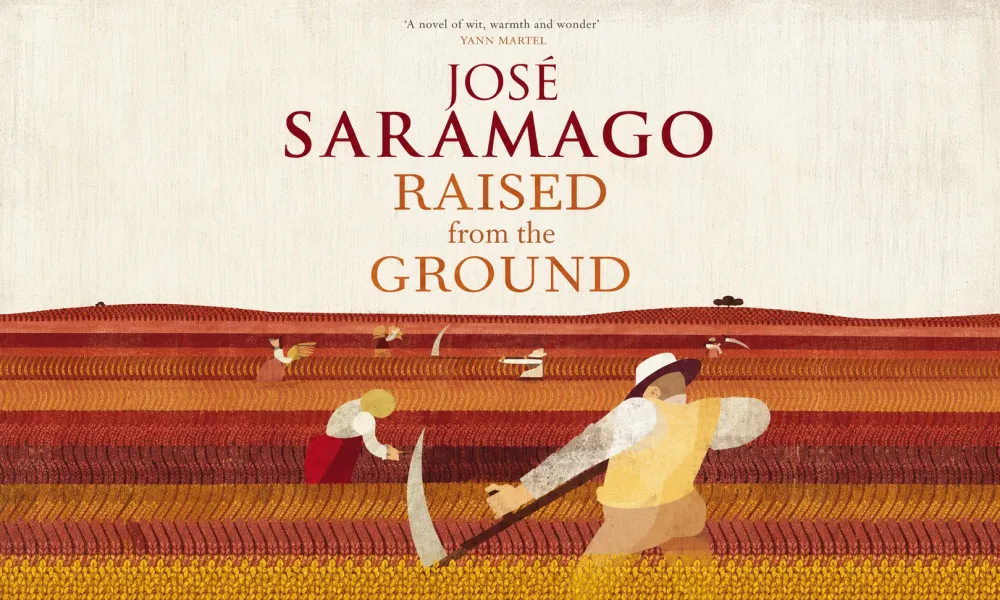

Long before he became synonymous with the philosophical allegories that made him one of the most influential writers of the 20th century, Saramago was preoccupied with the lives of ordinary people. In Raised from the Ground, he turns his attention to the agricultural labourers of southern Portugal, tracing generations of hardship, exploitation and resistance through the story of the Mau-Tempo family.
Deeply rooted in the social and political realities of rural Portugal, the novel explores questions of justice, dignity and collective struggle without losing sight of the intimate experiences of its characters. The family's story unfolds against a backdrop of poverty, authoritarian rule and social inequality, transforming personal histories into a broader portrait of a nation.
The foundations of a literary voice
While firmly grounded in historical reality, the novel already bears many of the hallmarks that would later define Saramago's distinctive style. Individual lives and collective experience become inseparable, while irony, compassion and a profound belief in human endurance run through the narrative.
The influence of Saramago's own background is equally apparent. The farmers and labourers who populate the novel are not merely subjects of observation but figures drawn from a world that helped shape his political and moral outlook. As a result, the book feels less like a reconstruction of working-class life than an expression emerging directly from within it.
History through ordinary lives
Rather than functioning as a distant backdrop, history acts as an active force throughout the novel. Political and social upheavals shape the destinies of the characters, influencing their choices, relationships and aspirations.
More than four decades after its original publication, Raised from the Ground remains a powerful exploration of inequality and resilience. At the same time, it offers readers the opportunity to witness the emergence of one of literature's most recognisable voices, capturing the moment when Saramago's social concerns, narrative ambition and humanism first came fully into focus.