An “invisible” tourism map of short-term rental accommodation operating outside the official registration and licensing framework has been revealed in a special report by the Audit Office on the Deputy Ministry of Tourism.
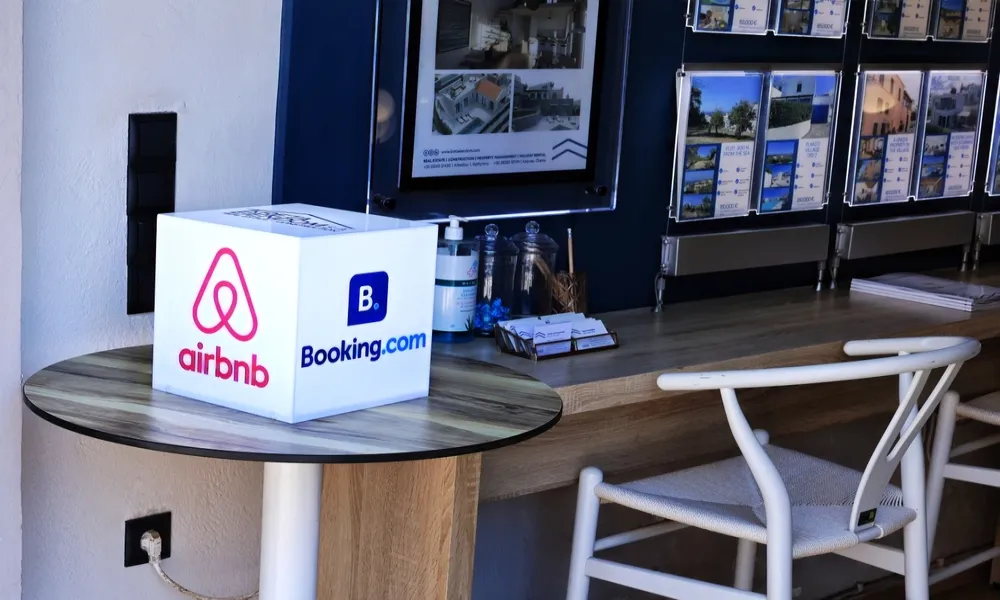
A sample check on popular platforms such as Booking.com and Airbnb shows that a significant number of tourist villas and organised apartments either do not appear in the Deputy Ministry’s registers or are advertised with inaccurate licence details.
In Famagusta district, the Audit Office examined a sample of 150 listings on Booking.com and Airbnb to determine whether properties advertised online were recorded in official registers. The review identified 23 cases, mainly tourist villas and organised apartments, that could not be matched either in the Register of Tourist Accommodation or in the Register of Self-Catering Accommodation maintained by the Deputy Ministry.
In 14 of those cases, the platform did not display any registration licence number, in breach of legislation requiring its mandatory listing for transparency and monitoring purposes. In the remaining nine cases, although a licence number was shown, it could not be found in the Deputy Ministry’s records, either because it did not correspond to a registered property or because it was no longer valid.
According to the report, the total number of such properties may be higher than recorded, suggesting that the actual share of fully licensed accommodation may be below 23 per cent. The findings also indicate that a number of properties appear to operate outside the prescribed framework of registration and licensing, potentially creating significant distortions in the tourism market and undermining the effectiveness of regulatory oversight.
Only three in 10 fully compliant
A similar pattern emerges in the self-catering accommodation sector, where the Deputy Ministry maintains a separate register. As of 6 May 2026, 8,464 licensed properties were recorded nationwide.
From a sample audit of platform listings, the Audit Office was able to identify 20 properties based on their online details. Only six of the 20, 30 per cent, were listed in the register with a valid licence that matched the Deputy Ministry’s data. Ten properties, 50 per cent, did not display any licence number and did not appear to be registered, while in four cases, 20 per cent, the licence number shown online did not match the register, either because it was not valid or referred to a different property.
The report states that the situation “simultaneously highlights gaps in the supervisory and enforcement mechanisms for online short-term rental platforms by the Deputy Ministry of Tourism”, as there is no assurance that properties advertised as legal actually meet the requirements for registration and licensing.
Identification difficulties and information gaps
Beyond the absence or inaccuracy of licence numbers, the Audit Office notes that, particularly on Airbnb, many listings lack clear identifying details such as address, name or precise description, making it difficult to match them with official records. As a result, even when authorities seek to investigate a property advertised online, the available information is often insufficient for reliable verification.
The report links the problem to the absence of an institutionalised mechanism for timely information exchange and interoperability between public services and platforms. It notes that a large part of the required data is currently collected manually or through documents submitted by applicants. This increases administrative workload, leaves room for error, delays decision-making and prevents the timely identification of non-compliant properties.
The Germasogeia case
The report connects these systemic weaknesses with the collapse of a building in Germasogeia on 11 April 2026, where three self-catering apartments were operating. The apartments had been registered in the Deputy Ministry’s register in March and May 2025.
Although the building was declared unsafe by the Limassol District Local Government Organisation in March 2026, no relevant notification was sent to the Deputy Ministry. As a result, the apartments remained registered and continued to be offered “legally” through a platform until the day of the collapse.
The Audit Office notes that the absence of a formal mechanism for timely information exchange and inter-agency coordination meant the Deputy Ministry was unable to reassess the suitability of the apartments in time and, potentially, suspend or remove them from the register.
What the Deputy Ministry says
In its response, the Deputy Ministry of Tourism said that efforts to address properties advertised without a registration number or outside the official register will be strengthened through the implementation of European Regulation (EU) 2024/1028 on short-term rental platforms.
The regulation entered into force in May 2024, with the relevant obligations applying from 20 May 2026, and provides for stricter requirements on data registration and cross-checking between platforms and national authorities.
At the same time, the Deputy Ministry said it intends to promote a new bill to regulate the operation of short-term rentals. The proposal includes provisions for mandatory certifications, beyond existing administrative documents, and on-site inspections, so that the register functions not merely as a record but also as a mechanism to ensure suitability and safety.