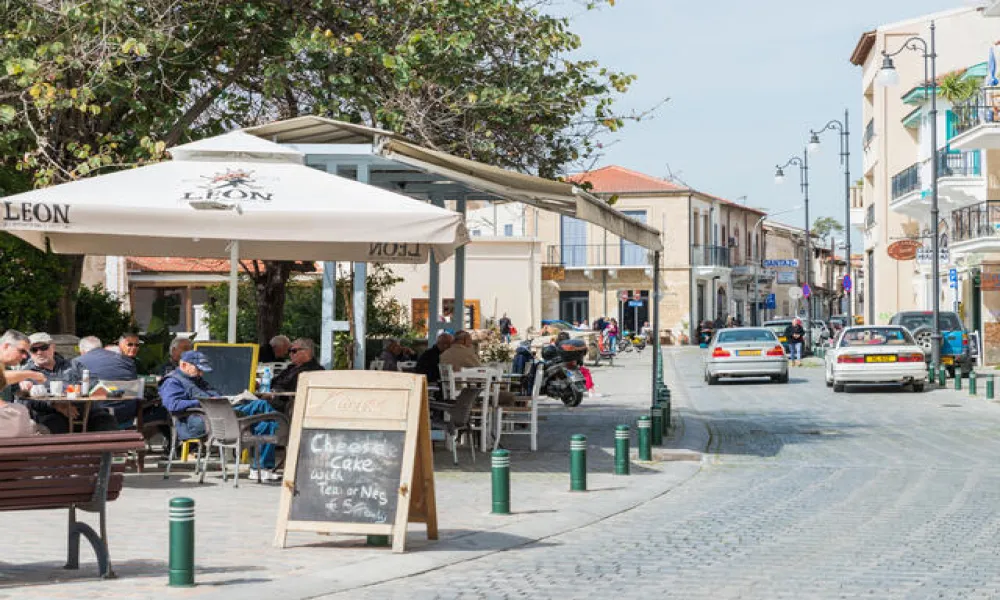
For years, Larnaca remained on the sidelines of the major development activity that transformed other Cypriot cities, especially Limassol and Paphos. Despite hosting the country’s main airport and possessing an extensive coastline, the city did not experience the same level of investment or urban renewal. In recent years, however, the picture has begun to shift. Urban‑renewal works in the historic commercial centre, improvements to public space, infrastructure upgrades, new green areas, the relocation of fuel‑storage facilities away from the coast, and rising investor interest together form a new landscape for Larnaca.
Politis takes a closer look at these changes, beginning with efforts to revive the city’s historic commercial centre. The goals: to improve quality of life, restore economic vibrancy in the city centre and strengthen Larnaca’s position as a competitive tourist destination.
Historic commercial centre
Major interventions are underway in the city’s historic commercial district, including works in Alkis and Akropoleos Squares, Grigori Afxentiou Street and key commercial streets such as Ermou and Zinonos Kitieos. The redevelopment of Alkis and Akropoleos Squares includes upgrades to road junctions and surrounding streets, more greenery, the addition of water features, and new urban furniture – all aimed at improving aesthetics, functionality and safety for both pedestrians and vehicles. Larnaca mayor Andreas Vyras told Politis that the project is now in its fourth and final phase and expected to be completed by the end of June.
In parallel, phase two of the AMEA II programme is progressing, focusing on street renewal and improved accessibility for people with disabilities in the city centre. It includes road reconstruction, wider pavements, upgraded infrastructure and new urban‑design elements. The works affect Ermou, Zinonos Kitieos, Galilaiou, Nikolaou Rossou, N.D. Dimitriou, Kosma Lisioti, Evanthias Pieridou, Filiou Zannetou and Evriviadou Streets. Zinonos Kitieos is expected to be completed by September 2026 up to Atrium Zenon, while the entire project is forecast to finish by early 2027. The mayor believes most work will be completed earlier: “By September 2026, the commercial centre will essentially be finished.”
These interventions aim to create a more pedestrian and accessibility‑friendly urban environment – one that, the mayor said, “will significantly change both the look and the substance of the area in terms of sustainable mobility.” More than 200 trees will be planted, with many already in place. Shading structures will also be added where trees cannot be planted, particularly along Zinonos Kitieos and Ermou.
Cycle and bus lanes
Alongside the urban‑renewal works, the city’s Sustainable Urban Mobility Plan (SUMP) is underway. It foresees the upgrading of more than 15 major avenues and streets, the creation of roughly 30 kilometres of cycle lanes and about 11 kilometres of bus lanes. The plans involve redesigning road sections, introducing one‑way systems, reducing car lanes on main avenues, planting trees, reconstructing road surfaces and improving pavements.
The €18‑million project is being executed by the Public Works Department with support from the Municipality of Larnaca and the District Organisation of Local Government.
“It has already begun at the Kalo Chorio roundabout and extends toward the Kamares area as phase one. Phase two is starting in the Nikou and Despinas Pattichi area,” the mayor explained. The project is expected to take 18 months, though completion may stretch to 20–22 months. “We reviewed the initial design and made some changes, but we will ensure the project is implemented correctly,” he said. Its aim is to make the city more accessible to alternative transport: “bicycles, pedestrians and buses.”
Park and ride
Two park‑and‑ride facilities are also being developed in Rizoelia and Kalo Chorio, and “are already under construction.” The mayor emphasised that shifting public‑transport habits requires time: “Changing people’s mindset about using public transport takes a lot of work,” he said, but noted that these projects are an important first step.
Pattichio Park and Larnaca Salt Lake
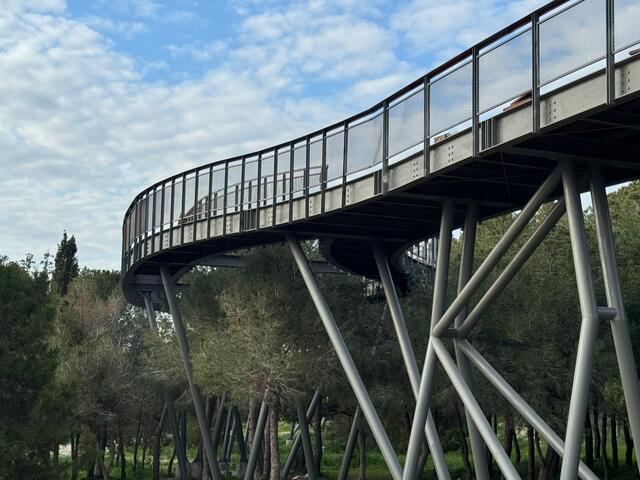
Plans also include new and upgraded green spaces. The redevelopment of Pattichio Park includes an elevated pedestrian bridge – now nearly complete – viewpoints, an outdoor gym, recreation areas, a playground, a botanical garden and walking and cycling paths. The €6.8‑million project is funded under the “THALEIA 2021-2027” cohesion‑policy programme and is due for completion in 2026.
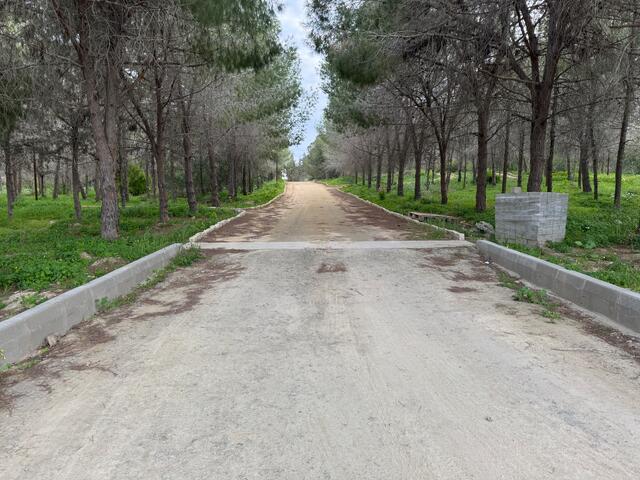
Nearby, a new Environmental Education and Information Centre is planned at the old leprosarium site as part of a broader redevelopment of the salt‑lake park. “The architectural competition has been completed, the winning team selected, and we estimate that in a year to a year and a half we will be ready to tender for construction,” the mayor said. Most of the existing buildings will be demolished due to age and asbestos presence – “except for one used by the church, which will remain until a new building is constructed.” The project aims to support environmental education and improve access to the nature trail.
Seafront
No redesign project is currently underway on the Finikoudes seafront. “What matters now is understanding how the port and marina development is progressing,” Vyras said. A new architectural competition for the full redevelopment of Finikoudes may follow at a later stage.
In the Mackenzie area, the presence of Cyprus University of Technology (TEPAK) is anticipated, while the municipality is preparing a study to upgrade public spaces there, including pavements, walkways and lighting.
The revival of the old Rex cinema is also part of the city’s cultural strategy, linked to Larnaca’s candidacy for the title of European Capital of Culture 2030.
Infrastructure to protect the city
Infrastructure works are advancing alongside urban upgrades, including major flood‑protection projects in the Kamares area under the supervision of the District Organisation of Local Government.
“We fought hard for this project,” the mayor said.
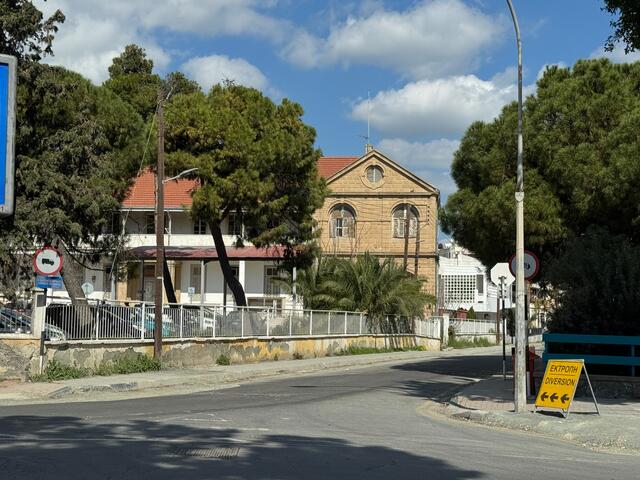
EOA Larnaca president Angelos Chatzicharalambous added: “I feel much safer for Larnaca. We have significantly strengthened the city’s defences with projects worth more than €50 million.” The Kamares project was initially scheduled for completion in 2027, but is now expected to finish six months earlier. The next phase of flood‑protection works will extend toward Aradippou.
From a city for residents to a city for visitors
These interventions aim not only to improve daily life for residents but also to upgrade the public realm and historic centre as part of Larnaca’s broader effort to enhance its presence on Cyprus’s tourism map.
13 new boutique hotels
Tourism in Larnaca has grown substantially in recent years, driven in part by the opening of new boutique hotels in the city centre. “Larnaca has surged in tourism – it is now the number‑three destination after Paphos and Ayia Napa,” Vyras said, adding that the city receives “almost year‑round tourism.” Around 13 new boutique hotel permits have been issued, with most developments concentrated in the city centre. “It’s very convenient – everything is within walking distance,” he noted.
At the same time, both the municipality and business associations acknowledge that the Metropolis Mall affected the historic commercial centre. “The mall was the biggest problem for the city centre,” the mayor said. Larnaca Chamber of Commerce president Nantios Antoniou echoed this view: “It certainly affected the centre,” though he believes that the urban‑renewal projects could revive the area. “The character of the city may shift – more restaurants and tourist shops due to rising tourism.” He also sees boutique‑hotel development as a means to bring life back to the centre.
The mayor stressed that the goal is not only to attract hotels but also to bring ground‑floor retail back to properties with storefronts. “We didn’t reinvent the wheel – many cities successfully operate with both a mall and a city‑centre retail district,” Antoniou said.
According to Chatzicharalambous, more than 25 hotel‑development applications are currently under review across the Larnaca district.
Despite the ongoing changes, local stakeholders believe the city is moving in a positive direction. “If the marina project moves forward, things will get even better. Larnaca has a future,” Antoniou concluded.
Town hall moves to the old hospital
The city’s new plan also includes relocating Larnaca Town Hall to the old hospital site. The €9‑million project includes restoring and maintaining both listed and non‑listed buildings, demolishing non‑listed structures and constructing new facilities to house municipal services. It also provides for landscaping, a public square, green areas and parking.
The municipal council reaffirmed the relocation decision on 27 February. “We estimate that in about three months we will sign the contract with the contractor,” the mayor said.
The State Health Services Organisation (OKYPY) services have already moved to the new hospital wing, while the Public Health Office now operates in rented premises.
According to the mayor, relocating Town Hall is necessary because its current location on Finikoudes “is not convenient for citizens, does not meet the needs of a town hall and results in lost revenue.” The existing building is expected to be commercially repurposed and “will be a significant source of income for future generations.”