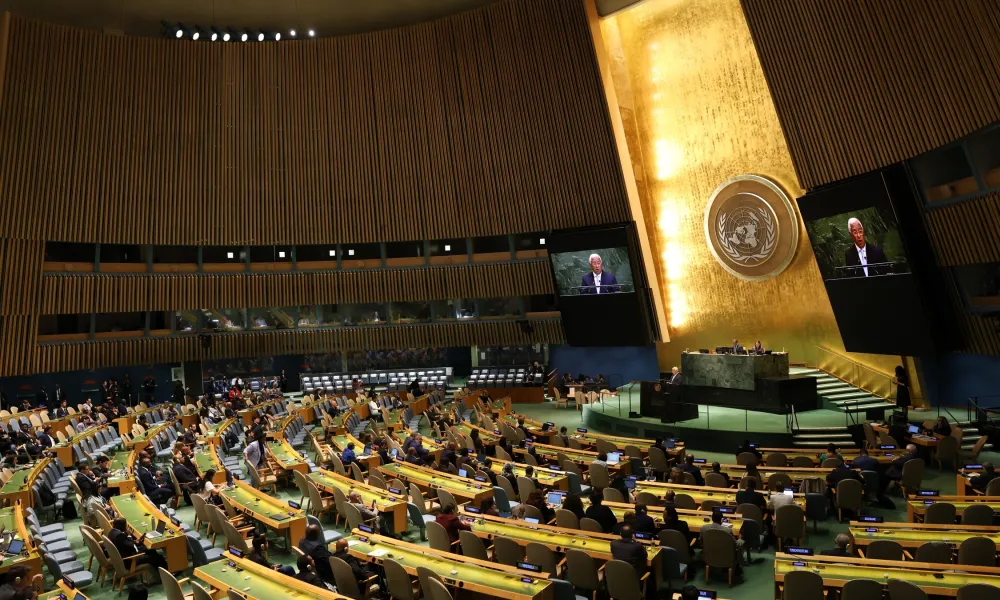

Many are trying to understand the President’s recent insistence on raising the issue of the British Bases. It is clear that the drone incident created an opening for criticism of the British, who failed to inform Cyprus in time. The British apologised and deployed aircraft and naval vessels which, combined with Greek and French forces, have contributed to a greater sense of security among Cypriots. Yet last Thursday, the President chose to revisit the matter, stating in Brussels that the issue of the Bases in Cyprus remains open. He did not clarify what he meant. Does he intend to seek their abolition or a change to their status? No one knows what the young Richelieu has in mind; we can only hope he is not overlooking something fundamental: that it is far safer to call for their abolition within the context of a Cyprus settlement.
It is far safer for both communities – those that co‑signed the 1960 Constitution – to demand the removal of the Bases, rather than the Greek Cypriots alone. Even if Greek Cypriots somehow succeeded in pushing the Bases out, the British could very easily respond by handing Akrotiri to the Greek Cypriots and Dhekelia to the Turkish Cypriots. And if one takes the time to read Professor Neophytos Loizides’ analysis in today’s Politis, it becomes evident that the Bases – by remaining rather than leaving – may better serve the security architecture Cyprus needs after a settlement. Naturally, when one has little interest in a solution or in the withdrawal of Turkish troops, one can always fall back on patriotic distractions such as the Bases to occupy the mind of every late‑night ELAM supporter.
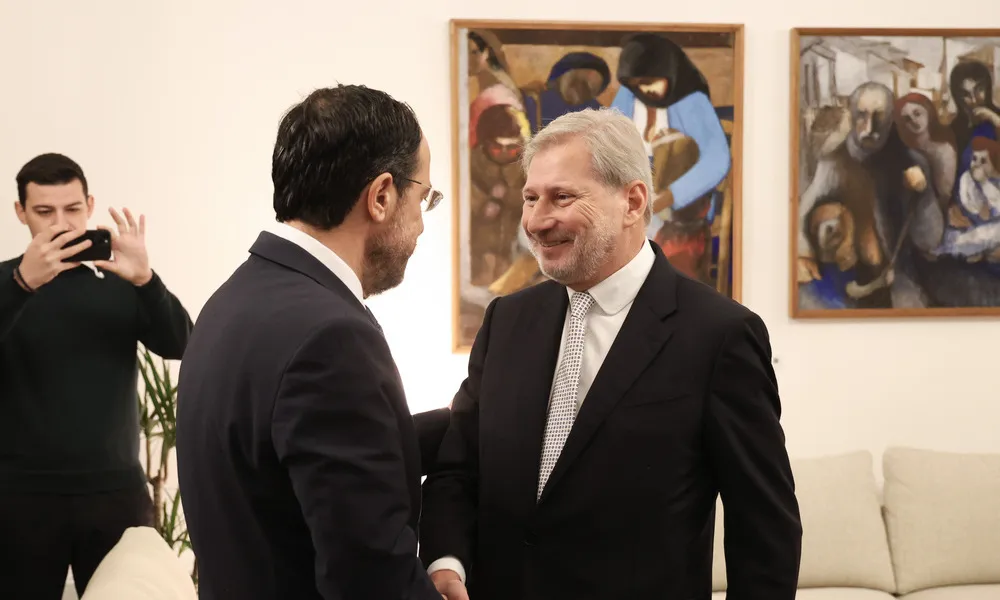
Meanwhile, the EU’s Special Representative for the Cyprus Problem, Johannes Hahn, is departing. The Austrian former Commissioner has reached his own conclusions. As he reportedly told several people in Brussels this week, no developments are expected, nor does he see any willingness for movement – so why should he remain engaged with Cyprus? It is worth recalling that when Hahn was first appointed by Ursula von der Leyen, both Tatar and Ankara initially refused to meet him. Although he recently met with Erhürman, the Turkish Cypriot side shows no sign of seeking substantive engagement. The Greek Cypriot side welcomed Hahn’s involvement, as his presence forms part of the “diplomatic activity” President Christodoulides wants to project – but without any meaningful negotiations.
Privately, there may be an additional reason for Hahn’s departure: his name is already circulating as a potential candidate for Governor of the Central Bank of Austria.