New data on water allocation, shaped by recent rainfall and new desalination units, will apply at least until November following the latest meeting of the Advisory Committee on Water Management held on Friday, April 24.
As far as water supply is concerned, the EOAs express satisfaction. Not only has the 10% reduction in water supplied from the Water Development Department network, introduced by the Council of Ministers in January, been scrapped, but additional quantities have also been allocated compared to the same period in 2025. This has created a sense of security ahead of the summer.
Specifically, Limassol, Nicosia, Larnaca and Famagusta, which are supplied through the Southern Conveyor Project, will receive 5% more water compared to the same period last year, rising from 87.9 million cubic metres to 102.2 million cubic metres. Paphos, which faced significant shortages last year, will receive 16% more water, increasing from 16 million to 18 million cubic metres.
Farmers disappointed
In contrast, agricultural organisations have expressed disappointment, according to Politis sources, after the decision to maintain 0% coverage of water needs for seasonal crops in areas served by the Southern Conveyor Project, particularly potato cultivation in free Famagusta, and the Paphos Irrigation Project.
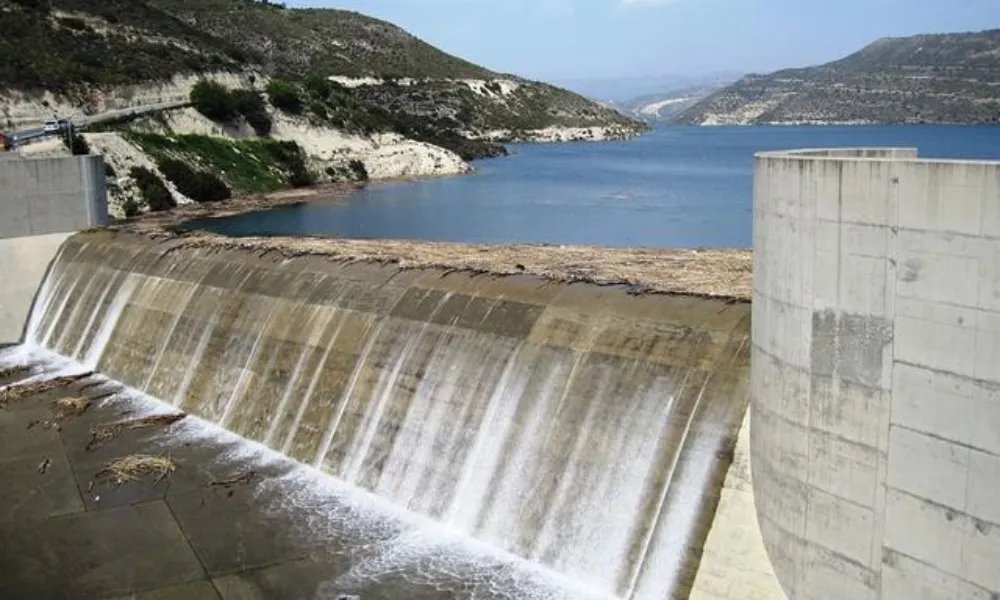
As expected, the Water Development Department has approved additional allocations in areas such as the Chrysochous district and parts of Nicosia, where dam overflows have been recorded and supply can be safely covered. In Chrysochous, coverage rises from 0% to 30% for seasonal crops and from 12% to 50% for permanent crops and greenhouses. In Solea, 80% of needs will be met for both permanent and seasonal crops, while in Kalopanayiotis allocations stand at 30% for permanent and 10% for seasonal crops, and in the Vyzakia–Xyliatos area at 50% and 20% respectively.
However, in the Southern Conveyor Project and the Paphos Irrigation Project, allocations remain unchanged from January. Seasonal crops remain at 0%, while permanent crops and greenhouses receive 10% of needs in the Southern Conveyor Project and 26% in Paphos.
Reservoir levels, currently at 38.2%, do not signal a return to normality nor eliminate the medium-term risk of water scarcity, the Water Development Department warned. Reservoirs remain around two-thirds empty and recovery is uneven.
Calls for changes
The revised proposal will be submitted in the coming days by Agriculture Minister Maria Panayiotou to the Council of Ministers for final decisions. Agricultural organisations, along with the Union of Cyprus Communities, which rejected the proposal at the committee meeting, will push for last-minute changes, seeking at least minimal allocations for seasonal crops in affected areas. A letter to the ministry is expected.
This time, water distribution was based on availability within each irrigation scheme and the specific needs of each area.
Conservation measures continue
“We will receive the same quantities as in 2025 with a 5% increase. However, this does not mean EOAs will stop conservation measures,” said Sofoklis Christodoulides, Director General of the Larnaca EOA, who represents EOAs on the committee.
Efforts to reduce demand will continue through repairs to network faults, pressure reductions, restrictions on irrigation of green spaces and public awareness campaigns. “The problem of water scarcity will not disappear,” he said.
Data from the Water Development Department show that EOAs failed to reduce consumption by 10% in the first quarter of 2026, as required to offset earlier supply cuts. Instead, average consumption increased slightly by 0.6% in areas supplied by the Southern Conveyor Project, driven by a 7.8% rise in Limassol, despite reductions of 2.6% in Nicosia, Larnaca and Famagusta. In Paphos, consumption rose by 15.8%.
Christodoulides noted that conservation measures take time to produce results and pointed to increased development activity, residential and tourism-related, as a contributing factor.
Three-year planning framework
The Water Development Department said the new allocation tables were prepared using a rational and conservative approach within a three-year planning framework covering 2026 to 2028, taking into account uncertainty over future inflows and the need to address unexpected factors.
It also considered the challenges and timelines linked to the installation of mobile desalination units aimed at tackling the ongoing water crisis.
Irrigation allocations remain targeted, prioritising permanent crops and greenhouses, with limited water for seasonal crops only where the water balance allows. Full coverage is maintained for livestock and industrial needs due to their relatively low consumption and socio-economic importance. In Limassol, irrigation is fully covered through reclaimed water.
The department also clarified that where water supply can be safely met from available reserves, higher irrigation coverage is possible, as in parts of Nicosia and Chrysochous. By contrast, in areas where demand for drinking water is rising sharply, such as Paphos, additional irrigation allocations cannot be granted.
Groundwater extraction remains a key pillar of the strategy to reduce reliance on surface water.
Reservoir levels still insufficient
Rainfall between January and April 2026 has improved the water balance and available reserves. However, this does not change the broader picture of water scarcity following consecutive dry years, nor does it remove the need for careful management.
As of April 22, reservoirs held 111.2 million cubic metres, or 38.2% capacity. Levels stood at 34% in the Southern Conveyor Project system, 42% in Paphos and 98% in smaller reservoirs.
“The current improvement does not constitute a return to normal conditions nor eliminate the risk of medium-term water scarcity. Levels of 34% to 42% in major systems are not sufficient to lift restrictions,” the department stressed.