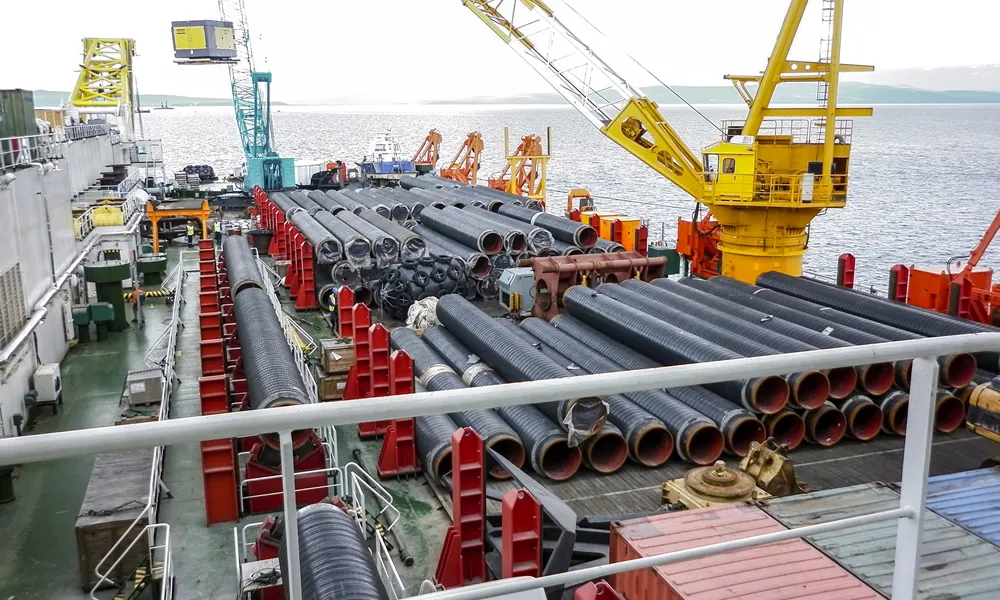

Turkey's Energy and Natural Resources Minister Alparslan Bayraktar announced on 28 April that Ankara is actively working on a natural gas pipeline to the north of Cyprus, with state pipeline operator Botaş conducting engineering studies for the project. The announcement, made at a press gathering hosted by the Zero Waste Foundation in Istanbul, adds a new dimension to Turkey's longstanding drive to assert energy rights in waters the Republic of Cyprus claims as its exclusive economic zone.
"This connectivity is the most important issue"
According to reporting by Yenidüzen Gazetesi, Bayraktar said Turkey has not abandoned Mediterranean exploration despite nine deep-sea drillings that have so far yielded no discovery comparable to its Black Sea finds. "We are working on a natural gas pipeline to northern Cyprus in a new project," he said. "Botaş is conducting engineering work. God willing, we can later deliver the gas we find there to Turkey via a pipeline. This connectivity is the most important issue."
Turkish Cypriot newspaper Özgür Gazete Kıbrıs reported that Turkish Cypriots learned of a strategic plan affecting their own future from a Turkish minister's remarks to the press, with no indication that the administration in the north had been informed or had made any public statement in response. "Who was consulted? Does the government know? Why doesn't the community know?" the paper asked.
The broader context of Bayraktar's remarks is one of accelerating Turkish energy ambition. Turkey's state oil company TPAO has in recent months signed cooperation agreements with ExxonMobil's Esso unit for exploration in the Black Sea and the Mediterranean, with BP for projects focused on Iraq and other regions, and with Chevron for joint global exploration and production activities, as Ankara works to transform TPAO into a more globally active player and reduce its heavy dependence on imported hydrocarbons. Turkey currently meets around 90% of its oil and gas needs through imports.
The pipeline announcement lands against a backdrop of acute tension between Nicosia and Ankara. Earlier this month, Turkey rejected an invitation for President Erdoğan to attend the informal European Council summit hosted by Cyprus during its EU Presidency, with President Nikos Christodoulides confirming that the response from Ankara was negative across all proposed levels of engagement.
The Exclusive Economic Zone
Cyprus holds an exclusive economic zone under the UN Convention on the Law of the Sea, which Turkey has not signed and does not recognise. Previous Turkish drilling and seismic survey operations in waters licensed by Nicosia to international energy companies have drawn repeated condemnation from the EU and warnings from the United States, including asset freezes on senior TPAO officials imposed by Brussels in 2019.
What Ankara is signalling, energy analysts have long argued, is about the political architecture of any future settlement. A gas pipeline to the north, like the water pipeline completed a decade ago, would deepen the physical and economic integration of the occupied territory with Turkey, shaping the terms of any eventual reunification negotiation.
Sources: Yeni Düzen, Özgür Gazete Kıbrıs, Kıbrıs Türk Haber, Hürriyet