
By Antonis Polydorou
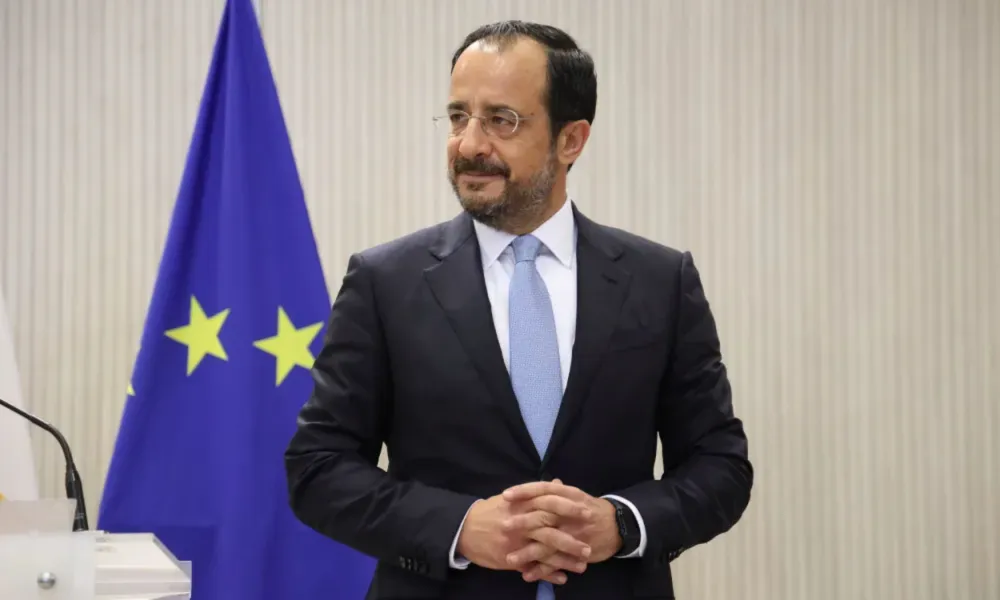
The latest Rai Consultants poll for Alpha was yet another confirmation that the Christodoulides of 2026 bears no resemblance to the Christodoulides of 2023. The man who, before the 2023 presidential election, enjoyed exceptionally high approval ratings, effectively "forcing" the centrist parties to climb aboard his bandwagon, now appears, despite maintaining a narrow lead, with low approval ratings and a markedly altered public image. Fully 64% of respondents said they were dissatisfied with his performance, only 21% believed the country is moving in the right direction, and satisfaction with his handling of domestic governance stands at just 29%.
Yet the standout figure in the poll is neither the level of dissatisfaction, nor the high percentage of citizens who believe the country is heading in the wrong direction, nor the low satisfaction rate with domestic governance, nor even the figures relating to the economy, about which the government boasts on a daily basis.
What stands out, and confirms the enormous damage suffered by the President's image, is the level of dissatisfaction regarding meritocracy and the fight against corruption. It reached 82%, higher than in any other area of governance, while only 17% expressed satisfaction.
That figure carries particular weight because meritocracy, transparency and combating corruption formed a central part of the political identity promoted by Nikos Christodoulides and of his pre-election commitments.
Nikos Christodoulides was elected promising to bring a new political ethos. During the campaign he regularly carried what he described as a black notebook containing the names of leading scientists living abroad who, he said, would form his future Cabinet. He promised the creation of an Advisory Council that would bring transparency and meritocracy to public appointments. He even described the enrolment of a child in a school district outside the designated parish as an example of corruption.
It took only a matter of days for him to abandon his pre-election commitment to transparency and meritocracy. Those who contributed to his election, those who appeared on the list of his supporters, and members of his close family and social circle found positions in the Presidential Palace, the Cabinet and public boards.
Nor did it stop at nepotism.
The publication of the video showing individuals from the President's innermost circle allegedly involved in activities pointing towards institutional collusion and corruption struck directly at the moral foundations of his administration.
The man who promised to abolish patronage and fight corruption ended up becoming fully identified with the very practices he pledged to change, in some cases even taking a step backwards.
In doing so, he created the impression that he operates without any political or moral foundation.
When Nikos Christodoulides assumed the presidency, many questioned whether he was capable of, or even willing to, break with a series of deeply problematic practices and bring at least some measure of something new. Whether he could restore meritocracy and lead the country towards lower levels of corruption.
Few expected him to differ substantially from his predecessor. Even fewer, however, expected the picture that emerged.
Within less than two months, through his appointments alone, he managed to take the country back to the 1980s in terms of the cynicism with which political favours were dispensed. Then came Videogate, reinforcing the belief that his administration is, in many respects, merely a third term of Nicos Anastasiades.
He succeeded a government that had elevated impunity to unprecedented levels, creating a deeply clientelist state marked by serious corruption scandals.
And, by abandoning his campaign promises, he demonstrated through his actions that he was moving not merely towards preserving that system of collusion and corruption, but in some cases towards strengthening it.
That 17% was not simply a number.
Nor was it merely another rebuke of the way the President exercises his duties.
It was the repudiation of the very political identity with which he sought power in 2023.
Confirmation that, in less than four years, the "new" has become the very definition of the old.
Most importantly, it was proof that he has completely lost his credibility.
And along with it, the public's trust.
It served as a stark reminder that "You can fool all the people some of the time, and some of the people all of the time, but you cannot fool all of the people all of the time."
Credibility is not built through promises or image-making. Sooner or later, it is judged against reality.
And in the case of Nikos Christodoulides, that 82% captures, more eloquently than anything else, the distance between promises and governance. Between the man who promised something new and the man who supercharged patronage.