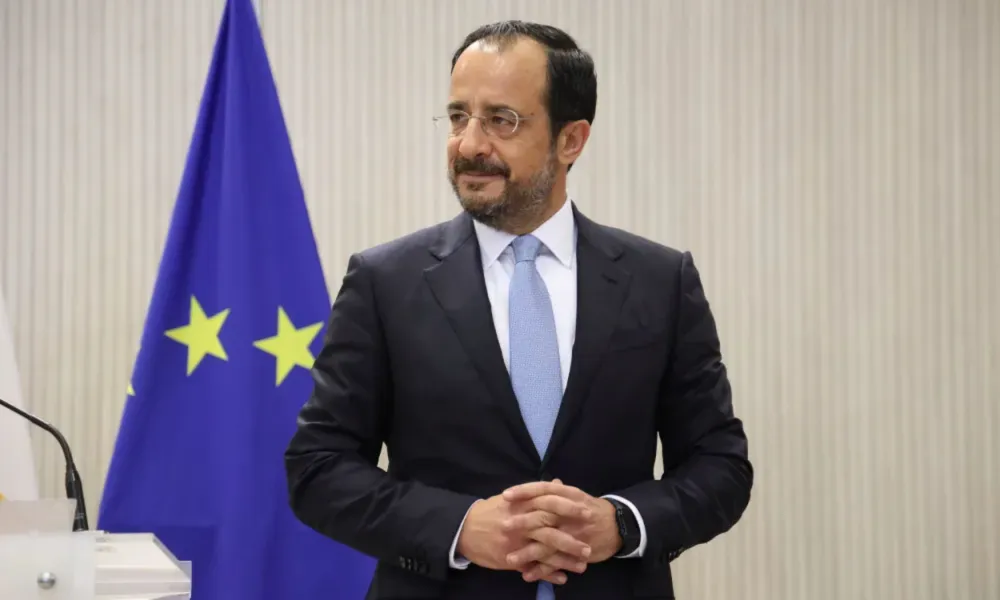

Anthi Theocharous is the first woman elected president of the Limassol Chamber of Commerce and Industry (LCCI) and the first woman to lead a business chamber in Cyprus.
In her interview with Politis, she says her first priority is direct communication with LCCI member businesses and the identification of their needs.
She calls for public investment commensurate with Limassol's contribution to the national economy, accelerated delivery of major road projects, immediate interventions at traffic bottlenecks and improved public transport.
She also discusses rents, tourism and their role in the Limassol economy.
You are the first female president of LCCI and the first woman to head a business chamber in Cyprus. What does this mean to you personally?
I feel deeply moved and grateful for the trust placed in me by Limassol's business community.
Equally important to me was the support of the members of the Chamber's board of directors.
Limassol has always been a pioneering, outward-looking and dynamic business community. The fact that it entrusted a woman with the presidency of the Chamber for the first time since its establishment in 1962 confirms this.
Allow me, however, a personal reference.
When I began my professional career in the 1990s, the presence of women in boardrooms and decision-making centres was extremely limited.
I remember many occasions when I had to summon all my courage, and even a small prayer, before walking into such a room.
Today, conditions have changed significantly.
Recognition of a person's ability and value, regardless of gender, has advanced substantially.
That fills me with satisfaction and optimism.
My election is a symbolic moment of progress, but above all a great responsibility towards those who placed their trust in me.
Consultation
What priorities are you setting for your term at LCCI?
I firmly believe in a Chamber that listens before it decides and intervenes before problems emerge.
One that represents all businesses equally, regardless of size, and all productive sectors.
One that cooperates meaningfully with the state, local authorities and relevant organisations, while at the same time firmly advocating for what the business community needs.
This was the central message I conveyed to our member businesses when I announced my candidacy, and it will form the core of my priorities.
Our first concern is therefore strengthening direct communication with our members.
We want to hear their concerns, record the needs of every sector and formulate specific actions to address them.
We are not seeking dialogue for the sake of dialogue, but decisions and results.
Justified disappointment
How is the gap between Limassol's economic contribution and the public investment it receives reflected in the 2027 budget?
Limassol is one of Cyprus' most important economic pillars, with a strong presence in shipping, services, tourism, property development, technology and trade.
It contributes more than 50% of state revenues.
However, that economic strength is not reflected to the extent it should be in public investment and infrastructure.
According to figures highlighted by LCCI, development projects for Limassol account for only 3.8% of the 2027 budget, or €57 million out of a €1.5 billion project portfolio.
This picture has caused understandable disappointment and strong reactions from local authorities and organised bodies.
This is not a matter of localism or a demand for preferential treatment.
It is about recognising in practical terms Limassol's contribution to the national economy.
A city that generates growth and significant public revenue needs the corresponding infrastructure to continue developing sustainably.
Growth outpaced planning
What is the contribution of technology companies to the economy and what pressures do you associate with Limassol's growth, particularly regarding rents and transport?
Limassol has developed into a highly dynamic centre for technology and innovation companies.
It is a sector of strategic importance whose direct contribution to Cyprus' GDP was estimated at 16.2% in 2025, according to a KPMG study.
LCCI recognised its importance early by creating a dedicated vice-presidency for Technology and Innovation.
However, every period of rapid growth creates challenges when markets and public infrastructure cannot adapt quickly enough.
That is exactly what Limassol is experiencing today.
Increased demand for housing, pressure on rents, traffic congestion and strain on infrastructure are the consequences of growth that advanced faster than the necessary planning.
I want to be absolutely clear, however: growth is not the problem.
The problem arises when we fail to prepare in time to manage it.
No economy seeking progress discourages investment and business activity.
On the contrary, it anticipates needs, plans ahead and creates the conditions for the benefits of growth to spread throughout society.
In Limassol, the necessary planning did not keep pace with economic development.
We should not slow progress in order to adapt to our shortcomings.
We must address our shortcomings in order to support progress.
Traffic congestion
Major road projects in Limassol remain pending. What will LCCI seek and what interventions could bring immediate relief?
Limassol's infrastructure needs are substantial and have been accumulating for years.
The list of required projects is long and forms part of a common agenda pursued by the city's stakeholders.
As a Chamber, we will continue to push in a coordinated manner for their implementation, with specific priorities and timelines.
However, we must be realistic.
We cannot expect the immediate construction of major road projects for which the necessary studies have not yet been completed.
That, however, cannot be an excuse for inactivity.
I believe we must move in two directions simultaneously: accelerate major projects while promoting smaller, targeted interventions that can provide immediate relief to traffic problems.
Improving secondary road connections and resolving specific congestion points can produce meaningful results.
At the same time, upgrading public transport is essential.
LCCI has already submitted recommendations, and the new board will review all practical solutions.
We do not need to wait for the big solution before implementing the smaller solutions that can make a difference today.
How do you respond to criticism of development when workers and young people struggle to find affordable housing in Limassol?
Development is a sign of progress and economic dynamism.
Healthy businesses create jobs, incomes, investments and public revenues that can support better infrastructure and social services.
I believe it is wrong to treat economic development as something negative.
Of course, it creates pressures and imbalances.
These must be addressed through proper policies and timely planning, not by discouraging entrepreneurship.
The real objective is for economic progress to translate into a better quality of life.
Our young people must be able to work and live in Limassol, have access to affordable housing and benefit from the opportunities created by development.
We should not punish success and progress.
We should create the conditions that allow their benefits to reach society as a whole.
The city lacks three- and four-star hotels
You come from the tourism sector. What does the conversion of hotels into residential developments mean for Limassol, and what interventions does the city need to support year-round tourism?
Limassol has established itself as a modern, high-quality, year-round tourism destination. In recent years, however, the conversion of some hotels into mixed-use developments and residential complexes has reduced the number of available beds, particularly in the three- and four-star categories.
We need a more balanced accommodation offering that caters to different categories of visitors.
Limassol's major comparative advantage is that it is a city that lives and operates 365 days a year. With its extensive seafront, modern character, history, culture and high-standard hospitality and gastronomy services, it offers comprehensive experiences throughout the year.
This continuous activity supports restaurants, retail and a wide range of businesses linked to tourism.
At the same time, the wider district enriches our tourism product through mountain resorts, wine villages, wine routes, nature trails, cycling routes and a rich religious and cultural heritage.
The Limassol Chamber of Commerce and Industry works closely with the Limassol Tourism Development and Promotion Company and the relevant municipalities to promote important projects.
Priorities include upgrading and completing the seafront promenade, improving cleanliness, creating more green spaces and highlighting our history and culture, including through the establishment of a modern museum.
With a capable and dynamic board of directors by my side, sharing a common vision, collective spirit and determination, I am convinced we can turn challenges into opportunities and move Limassol even further forward.
Because progress is not only the result of ambition, but also of cooperation, boldness and action.