
Leaders of the Association of Southeast Asian Nations (ASEAN) began their summit in Manila on Sunday, with discussions expected to focus on trade, security and the energy crisis. U.S. President Donald Trump is due to attend.
Trump is expected to arrive in the Philippine capital on Tuesday, the final day of the summit. He is scheduled to meet the leaders of the Quad grouping, comprising the United States, India, Japan and Australia.
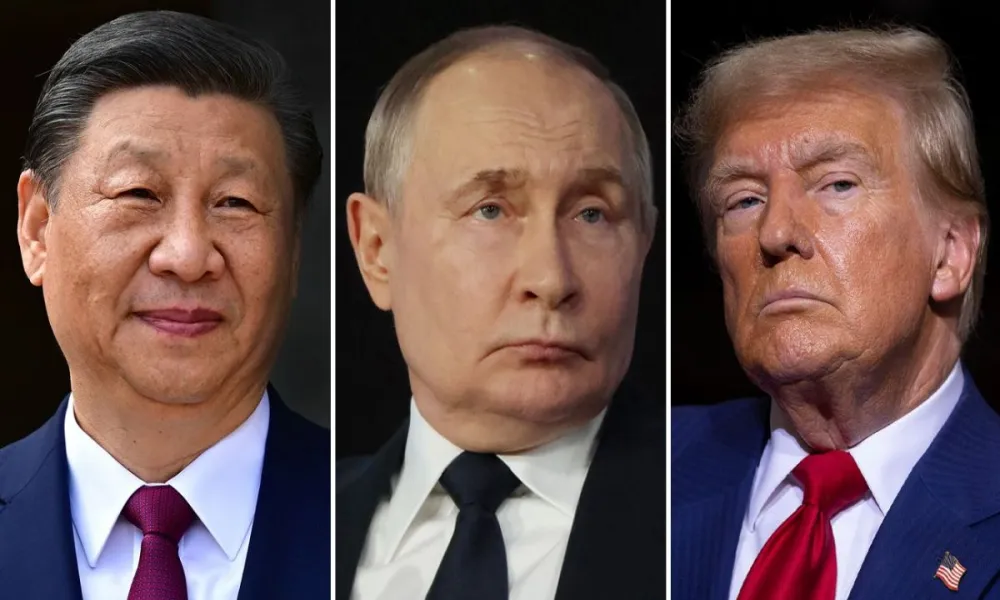
The Quad was established to counterbalance China's influence in the region. The meeting will take place just hours before a summit in Shenzhen, China, involving Trump, Chinese President Xi Jinping and Russian President Vladimir Putin.
Brazilian President Luiz Inacio Lula da Silva is also expected to take part in a session involving ASEAN's 11 member states.
The Philippines and Australia signed an agreement on Sunday to strengthen bilateral defence cooperation as China expands its military presence in Southeast Asia.
Australian Prime Minister Anthony Albanese said the agreement "will deepen cooperation between our defence forces and create new opportunities for collaboration in the service of regional security".
Nearly 20,000 police officers have been deployed across Manila for the summit. A protest against Trump is scheduled for Tuesday.
The demonstration is centred primarily on the U.S. "Pax Silica" programme, an initiative aimed at reducing China's dominance in semiconductor and rare-earth supply chains. The programme's flagship project, a 16,200-hectare industrial complex north of Manila, has raised concerns over the displacement of indigenous families.
Unresolved issues
Meetings began on Saturday, when Canadian Prime Minister Mark Carney announced the completion of negotiations on a broad free trade agreement with the Philippines.
ASEAN leaders are also expected to discuss air pollution caused by forest fires in Indonesia and fuel-sharing strategies aimed at mitigating the impact of the war in Iran.
However, two issues that have long affected relations in the region, a South China Sea code of conduct and relations with Myanmar, appear likely to be deferred until the next ASEAN summit, which is scheduled to be held in Singapore in 2027.
Myanmar has been excluded from high-level ASEAN meetings since the military coup in 2021. Thailand proposed last week that Myanmar's newly appointed foreign ministry chief be allowed to participate in the meetings, but Manila said that as of Saturday "no progress had been made" on the issue.
Prospects have also diminished for ASEAN member states and China to agree on a South China Sea code of conduct before the end of the year.
A regional diplomat involved in preparations for the summit told AFP that no such agreement was expected to be reached in Manila.
Beijing claims most of the South China Sea despite an international legal ruling rejecting those claims. The area has been the scene of repeated confrontations between the coast guards of China and the Philippines.
Source: CNA