
As the wars in the region reign on incessantly and the carnage of destruction shows no sign of abating, Cyprus’ frozen conflict appears to have created a lulled sense of security. On either side of the divided island, each side is building up its own arsenal of defence, building alliances of its own, cementing once again the decades old division that has existed across the tiny space of land.
Apart from the drone strike in March, Cyprus has emerged largely unscathed from the endless barrage of warfare which has killed tens of thousands of people in countries neighbouring the island.
The wars span across Gaza, Lebanon, Syria, and Israel, along with Saudi Arabia, Yemen, and of course Iran along with the US.
And yet, experts warn the division itself puts the island in an unusual predicament. Each side has starkly contrasting relations with Israel, with the polar opposites contained in the small geographical space the island takes up.
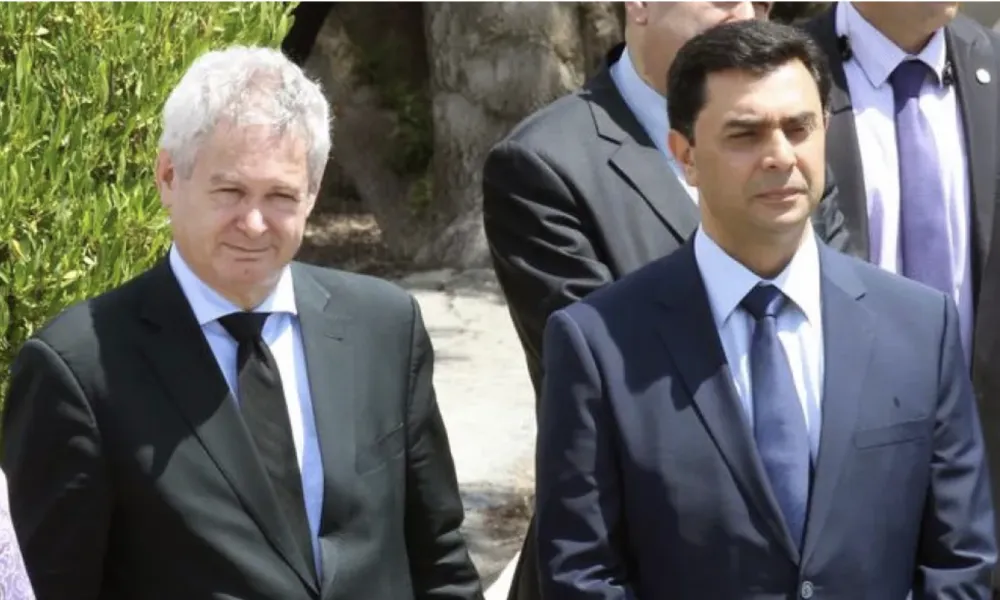
“Without a solution to the Cyprus problem, we are far more vulnerable,” former Greek Cypriot negotiator Andreas Mavroyiannis told Politis.
‘Dangerous situation’
The island’s physical proximity to the tensions in the Middle East has been ever-present. However the added volatility combined with the absence of a comprehensive solution, creates a far more challenging situation, he underlines.
For starters, Mavroyiannis questions how realistic demilitarisation is likely to be - taking into account Greek Cypriot demands for Turkish troops to leave the island in the event of a solution - with all the threats unfolding close by.
“The last thing someone would accept is demilitarisation when the region poses so many threats.”
Similarly, former Turkish Cypriot negotiator Ozdil Nami shared a sense of foreboding on the direction of the Cyprus problem, in the face of everything unfolding in the region.
“I don’t believe a divided Cyprus is a stable arrangement. It is a dangerous situation…I am deeply concerned about how things are going.”
Relations between Turkey and Israel have deteriorated, the role of the US under the leadership of Donald Trump has changed and everyone is trying to make sure their power ambitions are fulfilled in the region, he specifies.
Nami expressed his concern that the Greek Cypriot leadership “is taking a huge risk with alienating Turkey,” noting that deepening ties with a state like Israel does not help the peace process.
A vicious circle
Political scientist James Ker-Lindsay notes that many security problems stem from the traditional double asymmetry between the two sides. The Turkish Cypriots are a minority compared to the Greek Cypriots. The Greek Cypriots, and Greeks, are a regional minority compared to the Turks.
“This has always made addressing security questions very tricky. The dynamic was often one side reacting to steps taken by the other,” Ker-Lindsay argues.
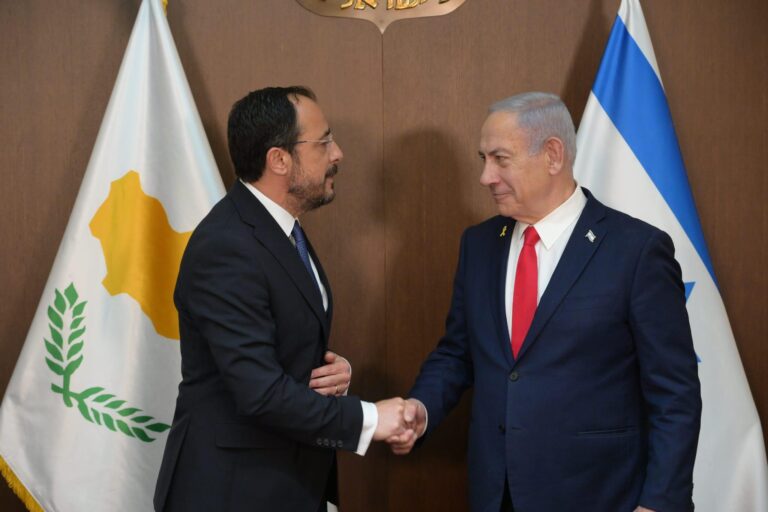
In a slightly different way, this dynamic is now playing out with Israel. The Republic views the closer relationship with Israel as a vital link to the United States, and, by extension, a source of protection from Turkey.
However, in the context of its deteriorating relations with Israel, Ankara sees any steps to increase security ties with Israel as a threat. This in turn creates a new vicious circle.
Ker-Lindsay argues that all this means that Cyprus could find itself increasingly caught between Israel and Turkey. While impossible to predict which way this will go, it necessarily raises concerns about how it will play out on the island. For now, though, a more likely scenario is that these tensions will be focused on Syria.
“But if the situation deteriorates sharply, things may well change.”
Mavroyiannis downplays this risk and says much like interpersonal relationships, these tensions fluctuate. “Sometimes they have their honeymoon period, others, things are more difficult. This could pass too,” he underscores.
Nami argues that Turkey will start seeing the Greek Cypriot side as a threat, and the only exodus is to stop viewing this as a win/lose game - one side gaining the upper hand over the other - but one of win/win - where both sides can benefit. And this is best achieved at the negotiating table.
The current strategy alienates each other and fails to plant seeds of hope. “Both sides put up their guard.”
Outsourcing intelligence
At the same time, trust between the two sides is at rock bottom. As the drone strike back in March illustrated, with each leadership acting unilaterally to build their arsenal of defence, not even an external threat could bring the sides closer, even with the knowledge that an attack on one side would not necessarily leave the other immune.
The physical proximity of each side to one other is visibly close but so too is the widening gap. Dangers in the region circulate however, and the absence of proper communication between both sides, means things like intelligence are ultimately outsourced externally.
Israel has announced on at least three occasions in the past five years an attempted plot against its interests on the island. The security gap of the north was used in more than one case by suspects as a means to avoid detection.
As such, this points to a suggestion that the communication gap which exists between both sides, leaves room for a third party to act as a bridge.
Mavroyiannis views the matter with a different lens stressing that we shouldn’t underestimate the capacity of what Israel brings to the table in terms of intelligence.
“Whether it’s about exchanging information, intelligence and military equipment that we buy from them,” it lends a strongly helping hand, he notes.
Between security and international law
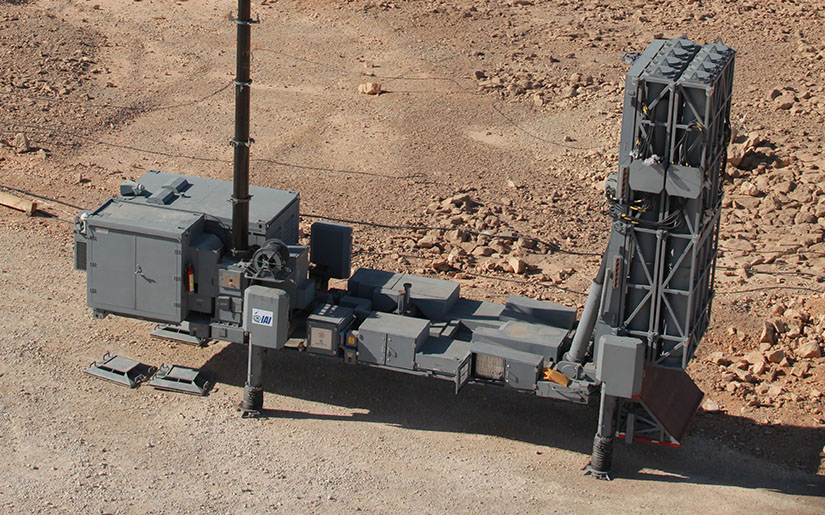
Cyprus has strengthened its defence arsenal with Israel’s anti-aircraft system BarakMX and is reportedly nearing a €150 million deal with Israeli defence companies Israel Shipyards and Rafael for the supply of naval vessels equipped with advanced weapons systems.
It has also carried out military exercises with Israel, the latter keen to train on terrain similar to Lebanon’s, according to sources.
Mavroyiannis points out that Israel is also aiding Cyprus with terrorism-related intelligence “that we don’t have the capacity for.”
“We should not underestimate this.”
Mavroyiannis’ argument is that Turkey’s wish would be to completely eliminate Cyprus if it could. But as it cannot, it is ‘forced’ into a situation where other avenues have to be explored. Though formal negotiations are evidently not unfolding, Cyprus’ strategy is wise to involve good relations with all neighbours.
But importantly, “Cyprus is a victim of occupation.” The same international law it cites to serve the Greek Cypriot cause is the same one that should apply to Israel.
“Israel cannot be doing all these war crimes and genocide while we stay silent.”
The ties between Cyprus and Israel should be all the more reason the Republic speaks out, he underlined.
“Friends should speak even more candidly to each other…I’m not suggesting ending the relationship…but being fully dependent is not good either.”
It appears the friendship is applied different here though. Last month, Israel’s prime minister Benjamin Netanyahu made a reference in his speech at the UN General Assembly, calling out his foe Turkey on the occupation of Cyprus.
The Republic’s government was one of the delegations that did not leave the room as many did.
Dangerous waters
While the government lauds the developments with Israel as a net positive, particularly in view against Turkey as an occupier, the experts all question the cost of this defence - not in monetary value, but as one of a solution to the division.
Mavroyiannis says the answer to this, is a focus on finding a solution to the island’s division. “We have to show we’re actually committed to one” and have our actions reflect our words.
Nami says foreign interests always had a hand to play on the destiny of the island - even until a few years ago, Russian influence served to keep the island divided. Though Moscow’s influence has dwindled, there are many actors who like to see their ambitions materialised that benefit from the island’s split, he noted.
This is why Cypriots should take the future into their own hands, the former negotiator stresses.
“People should not take the current situation for granted…We have set sail in dangerous waters and someone must steer us in the right direction.”