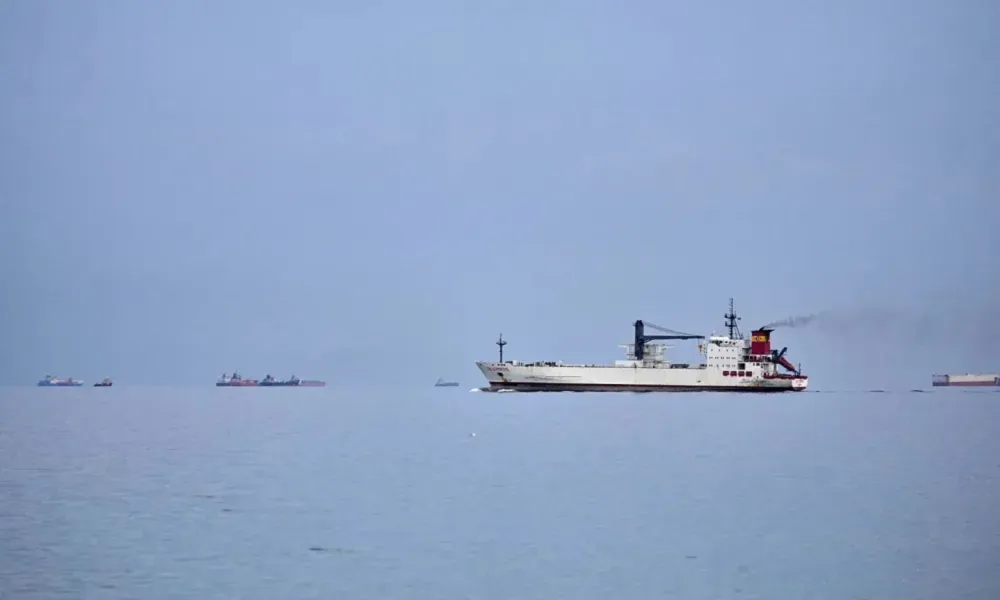

Oil prices rose above the $100-per-barrel threshold after Iran announced attacks on vessels attempting to transit the Strait of Hormuz and signalled plans to expand restrictions on maritime traffic in the region.
The developments mark a further escalation in tensions across the Gulf, where the disruption of one of the world's most important shipping routes continues to affect global energy markets.
Iran reports attacks on vessels
Iran said it targeted more than 10 vessels attempting to pass through the Strait of Hormuz, describing the actions as retaliation for US strikes against five Iranian oil tankers earlier this week.
According to the Islamic Revolutionary Guard Corps, the targets included two US warships, eight oil tankers and 10 commercial vessels operating in the Gulf region.
Iran's Foreign Ministry said the US attacks on Iranian commercial vessels represented a threat to regional and international security and justified Tehran's response as an act of "legitimate self-defence".
Restrictions to expand beyond Hormuz
Since the outbreak of the conflict, Iran has required ships transiting the Strait of Hormuz to obtain permission to pass through the strategic waterway.
Tehran has now announced plans to extend those controls beyond the strait itself.
Iran previously announced the creation of a new restricted zone that will cover parts of the Gulf of Oman and the Arabian Sea. Iranian authorities have warned that vessels entering the area without permission could face sanctions.
Reports of vessels on fire
The UK's maritime security agency UKMTO reported vessels on fire at multiple locations in the region.
The agency did not provide details on casualties or potential environmental damage.
Iranian state media also reported an explosion in southern Iran near the Strait of Hormuz, though no official explanation was given.
Oil prices surge
The latest developments triggered further gains in energy markets.
Brent crude rose 3.4% to $101.21 per barrel, moving above the $100 mark for the first time since July.
Meanwhile, West Texas Intermediate (WTI) climbed 3.25% to $96.05 per barrel.
Analyst Arne Lohmann Rasmussen of Global Risk Management described the developments as a "new escalation" for oil markets.
US and Iran exchange demands
The United States has responded by imposing a blockade on Iranian ports in the Gulf, according to the report, in retaliation for Iran's actions in the Strait of Hormuz.
US President Donald Trump said he expects the conflict to end shortly after US midterm elections in November, arguing that Iran is under growing pressure.
Iran, meanwhile, said the conflict could end if Washington meets a series of demands, including ending threats against Iran, lifting restrictions affecting Yemen, releasing frozen Iranian assets and refraining from interference in Iran's nuclear and ballistic programmes.
Nuclear tensions remain
The dispute comes as international scrutiny of Iran's nuclear programme intensifies.
The International Atomic Energy Agency (IAEA) governing board voted in favour of referring Iran's case to the UN Security Council, citing what it described as failures by Tehran to meet its obligations.
At the same time, the Center for Strategic and International Studies (CSIS) reported increased construction activity at Mount Kolang in central Iran, where the United States suspects a future underground nuclear facility could be developed.
Negotiations between Washington and Tehran remain stalled after a memorandum of understanding signed in June collapsed in July.
Source: AFP