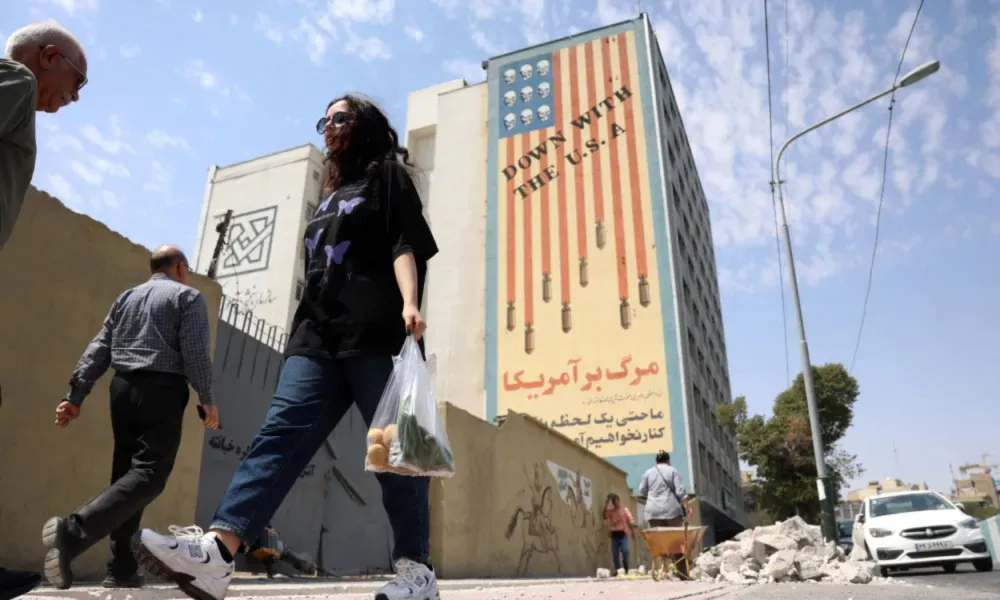

The administration of US President Donald Trump has confirmed plans to cut off what it describes as all remaining economic resources available to Iran, warning countries that continue supporting Tehran that they could also face punitive measures.
During a press conference in Washington, US Treasury Secretary Scott Bessent outlined a new package of proposed secondary sanctions aimed not only at Iran but also at its commercial partners.
The measures would target sectors including:
- Gold
- Technology
- Digital assets
- Aviation
- Maritime transport
Bessent did not specify when the new sanctions would take effect or which countries could be targeted. China, for example, remains a major buyer of Iranian oil.
'A clear choice'
"Iran faces a very clear choice between only two possible paths: complete isolation or a return to normality and the possibility of reintegration into the global economy," Bessent said.
He warned that countries refusing to support the US-led measures would face consequences of their own.
According to Bessent, governments must either contribute to Iran's isolation or risk sanctions, potentially including exclusion from the US dollar system.
"We will hold everyone accountable," he said, warning against attempts to undermine what he described as efforts to impose "economic suffocation" on the Iranian regime.
"Nobody should test our resolve."
Tehran promises resistance
Iran responded defiantly.
Speaking on state television, Economy Minister Ali Madanizadeh said the latest US measures would result only in "another defeat" for Washington.
"The United States has done everything to test the determination of the Iranian people and the country's leaders, failing every time," he said.
"It appears they wanted to suffer another defeat."
Madanizadeh said the Iranian government has prepared a two-year plan to manage the impact of further sanctions.
China rejects pressure campaign
Even before Bessent's announcement, China, one of Iran's most important partners, argued that American sanctions and pressure would not resolve the conflict in the Middle East.
The latest exchange comes as diplomatic efforts to end the conflict that began on 28 February remain deadlocked.
Military option remains on the table
US Defence Secretary Pete Hegseth said economic pressure does not rule out further military action against Iran if deemed necessary.
"We are in no way ruling out strikes anywhere in or around the Strait of Hormuz or Iran," Hegseth told reporters.
He argued that Tehran would struggle to withstand the economic pressure being planned by Washington.
Strait of Hormuz remains central
At the centre of the conflict remains the Strait of Hormuz, through which roughly one-fifth of the world's hydrocarbon consumption passed before the war.
Iran closed the strategic waterway and has reopened it only briefly during the past six months, contributing to higher fuel prices and increasing political pressure on Trump ahead of US midterm elections in November.
Tehran has ruled out a return to pre-war arrangements and has been discussing a possible new transit framework with Oman, which sits opposite the strait.
Omani Foreign Minister Badr Albusaidi is expected in Tehran on Tuesday.
Highlighting the ongoing security risks, Britain's UK Maritime Trade Operations (UKMTO) reported overnight that an oil tanker sailing off Oman had been struck by an "unknown projectile".
Economic strain inside Iran
Despite Tehran's defiant rhetoric, Iranian President Masoud Pezeshkian has acknowledged that the country faces serious economic challenges after decades of US and international sanctions.
"The situation is really very difficult," Tehran pharmacist Sara Hasanbeigi told AFP.
"I don't think Iranians can endure much more."
Official figures show annual inflation reached 66% on 22 July, up from 46% in February.
Meanwhile, the Iranian rial has continued to weaken, falling to 1.88 million rials per US dollar last week from 1.65 million before the outbreak of the conflict.
According to shipping analytics firm Kpler, the US blockade of Iranian Gulf ports has sharply reduced crude exports from the Islamic Republic, from around 2 million barrels per day before the war to approximately 400,000 barrels per day by mid-August, their lowest level since the conflict began.