
Ukraine is set to host a summit of its leading European supporters on Monday, as Kyiv seeks greater assistance to strengthen its air defence capabilities against escalating Russian missile attacks that have increasingly targeted civilian areas.
The meeting of the "Coalition of the Willing" coincides with the 35th anniversary of Ukraine's independence, declared on 24 August 1991, and comes as Russia's war against Ukraine enters its fifth year with no breakthrough in diplomatic efforts to end the conflict.
European leaders gather in Kyiv
The summit will be co-chaired by the United Kingdom, France and Germany.
New British Prime Minister Andy Burnham is expected to attend in person, making Kyiv the destination of his first foreign trip since taking office. European Council President António Costa is also expected to participate in person.
Other leaders are due to join the discussions remotely as European governments consider further support for Ukraine amid the latest escalation in the war, which began on 24 February 2022.
Originally launched through a joint British-French initiative aimed at bringing together countries willing to contribute peacekeeping forces in the event of a ceasefire, the Coalition of the Willing has since evolved into a broader forum for coordinating support for Kyiv amid uncertainty over future US commitments under President Donald Trump.
Air defence remains Ukraine's priority
Ukraine has repeatedly appealed to its allies for additional air defence systems and interceptor missiles as Russian forces intensify ballistic missile attacks on major cities, including Kyiv.
In recent weeks, Russian strikes have repeatedly hit the Ukrainian capital, including residential buildings, leaving dozens of civilians dead and forcing thousands of residents to seek shelter in metro stations, bunkers and other underground locations.
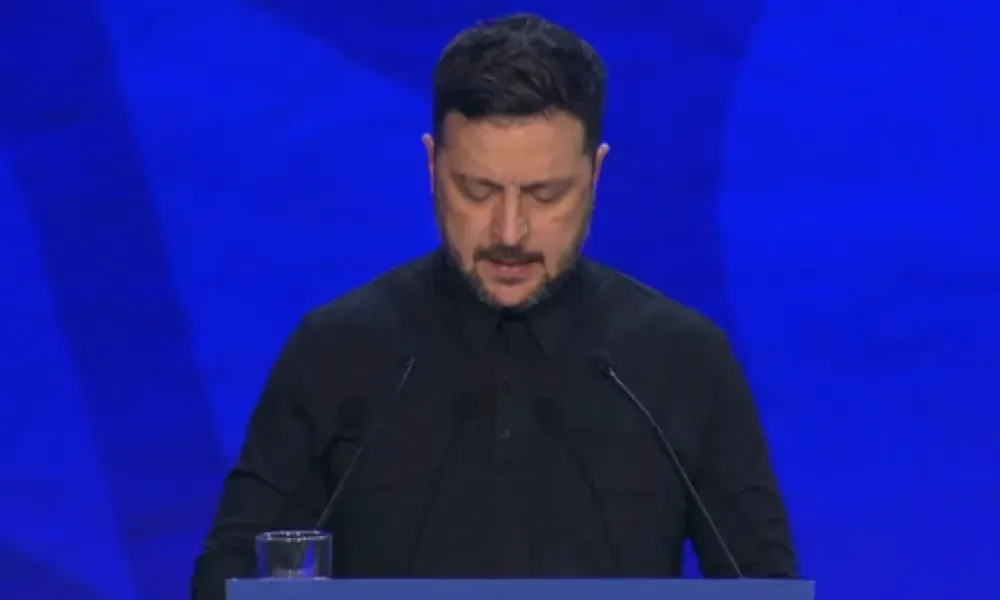
Ahead of the summit, Ukrainian President Volodymyr Zelenskyy again urged allies to strengthen Ukraine's ability to defend its airspace.
UK and France signal further support
Before arriving in Kyiv, Burnham said support for Ukraine would continue.
"Russia must have no doubt about our determination. We will not step back until a just and lasting peace has been restored."
The British prime minister is expected to announce that his government has approved measures allowing defence manufacturer MBDA to share classified information relating to British components used in the long-range SCALP missile, the French version of the British Storm Shadow cruise missile.
According to UK officials, the move would enable French and Ukrainian partners to proceed with missile assembly in Ukraine.
French President Emmanuel Macron also pledged on Saturday that France would provide Ukraine with additional interceptor missiles.
Peace efforts remain stalled
The summit takes place against a backdrop of stalled diplomatic efforts to end what is widely regarded as Europe's deadliest armed conflict since the Second World War.
Russia continues to demand territorial and political concessions that Ukraine has repeatedly rejected, arguing that such terms would amount to capitulation and could pave the way for future Russian aggression.
Patriot missile shortages a growing concern
A major issue for Kyiv remains the supply of missiles for US-made Patriot air defence systems, which Ukraine relies on to intercept Russian ballistic missiles.
Because Ukraine's domestically produced systems are unable to counter many advanced ballistic threats, Patriot batteries remain central to the country's air defence network.
Ahead of the summit, Zelenskyy disclosed figures showing a decline in deliveries of Patriot interceptor missiles.
According to the Ukrainian president:
- Ukraine received 675 Patriot missiles in 2023
- Deliveries fell to 364 missiles in 2025
- Current projections indicate 264 missiles in 2026
Zelenskyy said Ukraine requires at least 300 missiles ahead of winter.
"In 2023, Ukraine received 675 missiles, compared with 364 in all of 2025, despite Russian missile attacks intensifying."
US supplies under pressure
The United States appears increasingly reluctant to provide large quantities of interceptor missiles as stockpiles have also been affected by conflict in the Middle East.
According to Zelenskyy, Russia is currently capable of producing around 100 ballistic missiles per month, allowing it to sustain pressure on Ukrainian cities and infrastructure.
At the same time, Ukraine has expanded its own long-range strikes against targets inside Russia, including energy facilities, oil refineries and warehousing infrastructure, as both sides continue to intensify operations.