A new round of negotiations on Iran is taking place in Doha, Qatar, with positive developments emerging from indirect technical talks. US President Donald Trump has stated that the contacts are “going very well”, while Iranian President Masoud Pezeshkian has acknowledged that they are already producing tangible results for the Iranian economy.
The talks are being conducted entirely through indirect channels. The American delegation communicates through the Qatari mediator, while the Iranian side communicates through a Pakistani intermediary. This structure reflects the central difficulty facing the diplomatic process: Tehran refuses to engage in direct talks with the Americans, a position that US Vice President JD Vance described as “a Persian negotiating tactic.”
The June 17 memorandum
The talks are being held within the framework of the memorandum of understanding signed by the United States and Iran on June 17, under which the ceasefire was extended for 60 days.
The memorandum leaves several of the most contentious issues unresolved, including the future status of the Strait of Hormuz, the release of frozen Iranian funds, sanctions relief and Iran’s nuclear programme.
Arab media outlets have reported a preliminary agreement on the release of three billion dollars, while Pezeshkian referred to a figure of six billion dollars as an expected first step.
The Wall Street Journal reported that Trump was briefed on alternative military scenarios, including the resumption of large-scale operations against Iran. However, he is said to favour the diplomatic route, believing that a new conflict would undermine the negotiations. He has not ruled out targeted strikes, should they be deemed necessary.
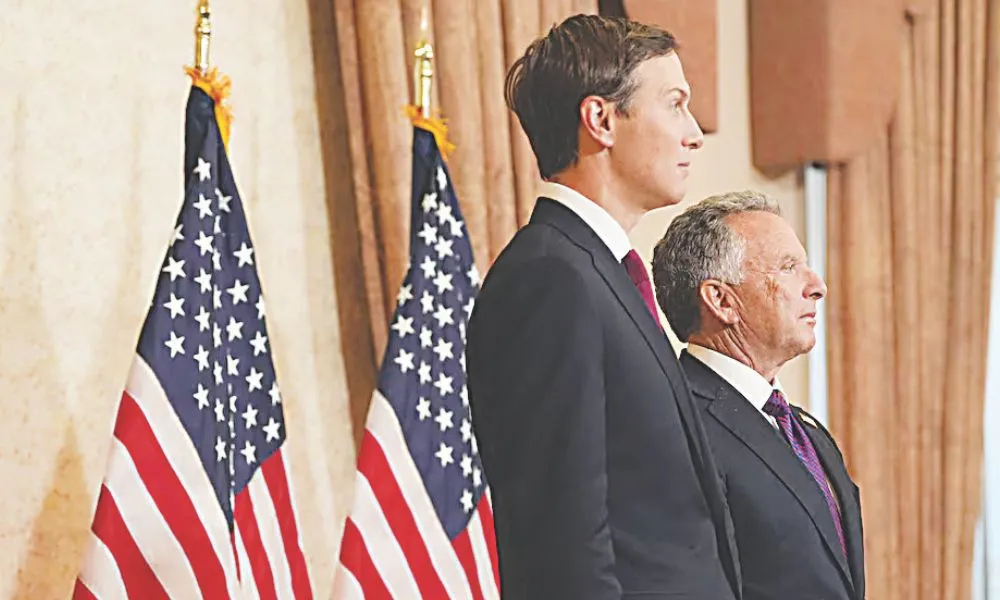
Envoys Steve Witkoff and Jared Kushner, who were in Doha on Tuesday, met Qatar’s Prime Minister, Mohammed bin Abdulrahman Al Thani, but did not participate directly in the technical talks themselves.
A US administration official told Bloomberg that the discussions were “positive” and that progress in the technical contacts is continuing.
Tehran's position
Iran’s chief negotiator, Mohammad Bagher Ghalibaf, made it clear that Tehran will not proceed to a new round of negotiations before the terms of the memorandum are implemented, adding that Iran’s nuclear rights and red lines are “non-negotiable”.
Iranian Foreign Ministry spokesman Esmail Baghaei reiterated that the talks relate primarily to the release of frozen funds and declined to confirm any direct contact with the US delegation.
Pezeshkian pointed to what he described as the first tangible benefits of the process: the continuation of oil exports, the easing of certain financial and monetary restrictions, and the opening of new opportunities for economic cooperation.
According to the semi-official Fars news agency, the value of the US dollar on the Iranian exchange market has fallen, a development being interpreted as a sign of optimism regarding the course of the negotiations.
Among the most difficult outstanding issues remains the future status of the Strait of Hormuz, through which approximately one-fifth of the world's supply of crude oil and liquefied natural gas passes.
According to sources cited by Al Arabiya and Al Hadath, consultations are continuing around a new proposal submitted by Oman concerning the passage regime through the strait.
A strategic affairs analyst speaking to Al Jazeera said Tehran is using its control over the Strait of Hormuz as a diplomatic asset, something Washington cannot afford to ignore.