Iran and the United States announced on Monday that delegations from both countries would hold talks in Qatar, expected to begin later in the day, following the exchanges of attacks in recent days. However, Tehran described the contacts as technical-level discussions rather than direct negotiations with Washington, while the United States referred to them as “high-level meetings.”
According to a US official who spoke to AFP, the two sides have decided to halt the exchange of attacks that had continued despite the signing of a preliminary agreement between them, a “memorandum of understanding” reached in mid-June with the aim of ending the war in the Middle East.
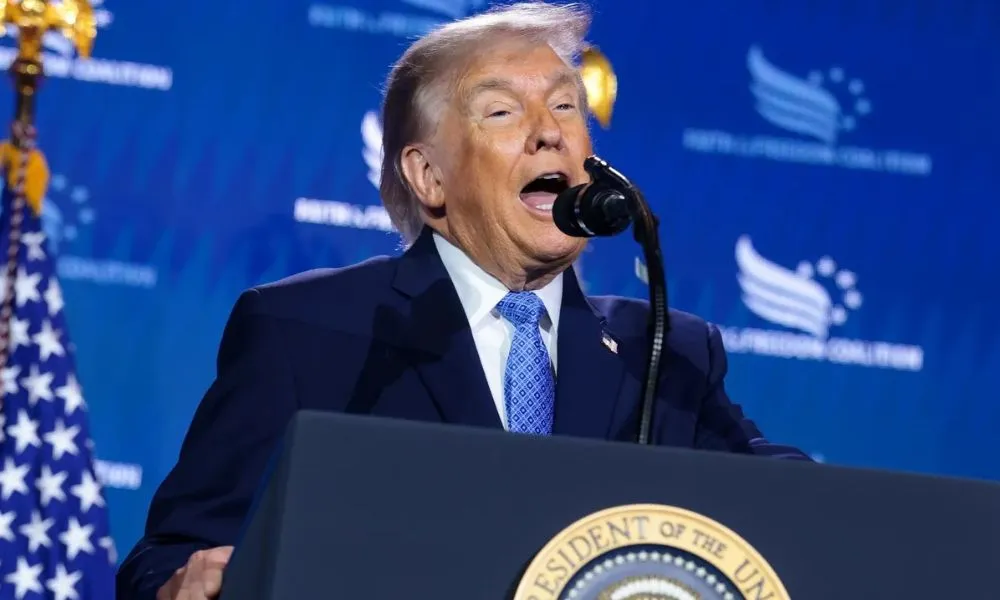
US President Donald Trump also announced via Truth Social, writing entirely in capital letters, that “Iran has requested a meeting” and that it “will take place tomorrow (Tuesday) in Doha!”
Shortly afterwards, White House Press Secretary Karoline Leavitt told Fox News that the president’s envoys, Steve Witkoff and Jared Kushner, were travelling to the emirate to “participate in high-level meetings” during the week.
A diplomatic source familiar with the matter confirmed to AFP that a meeting of “technical teams” would take place in the coming days, adding that these had now become “operational communication channels for de-escalating incidents.”
Tensions Over Hormuz
After initially denying that any meeting would take place, Iranian diplomacy later confirmed that it would send an “expert delegation” to Doha this week.
However, Iranian Foreign Ministry spokesman Esmaeil Baghaei insisted that “in the coming days we will not negotiate with the American side at any level.”
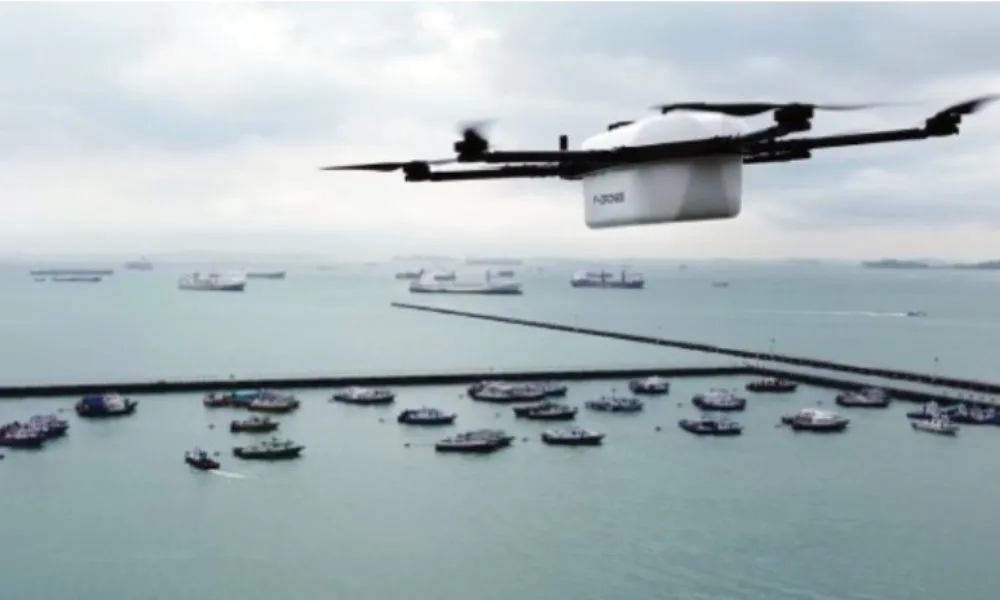
Tensions remain focused on the strategically important Strait of Hormuz, where shipping traffic slowed significantly over the weekend following two attacks on vessels.
According to data from ship-tracking company Kpler, a total of 29 vessels carrying raw materials passed through the strait on Saturday and another 12 on Sunday, figures far below those recorded on previous days.
For weeks, Tehran has maintained, despite opposition from Washington, that the strait will not return to its pre-war status, when passage was free of charge. It has also threatened ships attempting to bypass the designated shipping route.
Since last Thursday, two vessels have been struck by projectiles of unknown origin. The attacks were blamed on Tehran by the US military, which two days later carried out air strikes against Iran. The Islamic Republic responded by launching missiles and drones against neighbouring Gulf states, particularly Kuwait and Bahrain.
The renewed escalation threatened to collapse the preliminary agreement signed by the presidents of the two countries on June 17.
Transit Fees
Iran and Oman say they intend to exercise their sovereign rights regarding passage through the strait and are preparing to impose fees for the service provided.
However, the United Nations Convention on the Law of the Sea (UNCLOS), adopted in 1982 but not ratified by Tehran, guarantees the right of “transit passage” through straits used for international navigation, such as Hormuz, which connects the Gulf to the wider world.
The strait, which was effectively closed by the Islamic Republic when the war broke out on February 28 following the US-Israeli attack on Iran, causing disruption to global hydrocarbon trade and sending oil prices soaring, only reopened last week.
Tehran, however, currently permits traffic to use only a single route running along the Iranian coastline.
On the opposite side of the waterway, Oman has remained less explicit and announced the opening of a temporary alternative route. The sultanate described the measure as an initiative coordinated with the United Nations to assist crews and vessels that had been stranded in the Gulf for months.
Oman’s Sultan Haitham bin Tariq and French President Emmanuel Macron on Monday expressed support for “free navigation, without conditions or restrictions,” and agreed to conduct joint mine-clearing operations.
Iranian diplomacy reacted by calling on Paris not to “further complicate” the situation.
“Determination” in Lebanon
In Lebanon, which was included in the talks with the US at Tehran’s insistence, the Israeli military continued over the weekend to conduct air strikes and demolition operations despite the signing in Washington on Friday of a framework agreement aimed at restoring “lasting peace."
According to Lebanon’s state news agency, another Israeli strike was recorded yesterday in the south of the country.
The framework agreement stipulates that Israel will continue occupying part of southern Lebanon - as it has done since the beginning of the new war against Hezbollah on March 2 - for as long as the Iran-backed Shiite movement refuses to lay down its weapons.
This has been a demand raised for decades, one that successive Lebanese governments have been unable to fulfil despite pressure from the United States.
Lebanese President Joseph Aoun yesterday expressed the authorities’ “determination” to extend state authority all the way to the Israeli border through the deployment of the Lebanese army in the south of the country, a traditional Hezbollah stronghold.
Hezbollah is accused of dragging Lebanon into the Middle East war in early March when it launched rockets at Israel in retaliation for the death of Iran’s Supreme Leader Ali Khamenei, who was killed during the opening hours of the US-Israeli attack on the Islamic Republic on February 28.
In response, Israel vowed to “eliminate” its enemy and launched large-scale bombardments and a ground invasion of southern Lebanon, killing more than 4,200 people, according to figures from Lebanon’s Health Ministry in Beirut.
Source: ANA-MPA