
Lebanon’s culture minister has told Reuters that Israel’s military campaign caused damage to or destroyed major heritage sites, as UNESCO raises concern over monument preservation.
Extensive damage to archaeological sites and cultural landmarks in southern Lebanon was caused by Israel’s nearly four-month air and ground campaign, according to culture minister Ghassan Salame.
The Israeli military, for its part, says it targets only sites dictated by military necessity and takes into account the presence of sensitive cultural locations.
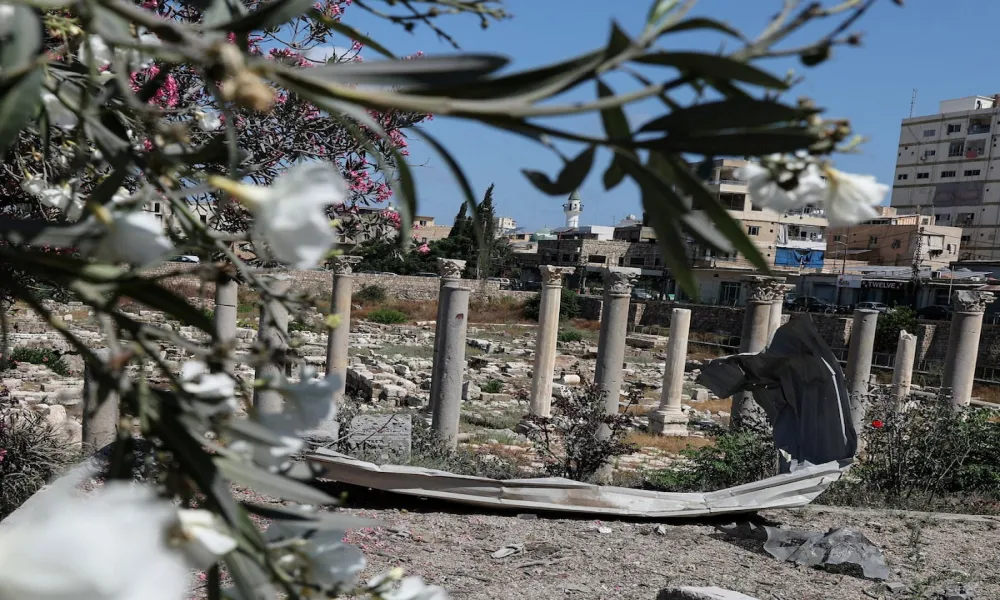
According to Reuters, part of an entablature detached from an ancient column at a UNESCO-listed monument in the coastal city of Tyre. In another southern Lebanese town, a shrine significant to both Muslims and Christians was destroyed.
Israeli strikes also caused serious damage to the medieval market in Nabatiyeh, dating back to the Mamluk period, while military operations levelled border towns with centuries of history.
Despite a ceasefire that came into effect a week ago, Lebanese authorities still lack a full picture of the destruction, as Israeli forces continue to control a zone of around 10 kilometres in southern Lebanon, where Lebanese services have no access.
"We cannot operate under the shadow of occupation," Salame told Reuters, adding that the zone includes Beaufort Castle and villages with centuries-old histories, inhabited by Christian, Shia and Sunni communities.
The minister said that even sites outside the controlled zone, such as Tyre and Nabatiyeh, had come under heavy bombardment. He also expressed concern that the Crusader fortress in Tebnine may have suffered damage.
"Cultural heritage is not only Roman and Phoenician antiquities. It also includes historic buildings, archaeological sites and cultural-use structures," he said.
In its response to Reuters, the Israeli military said it does not seek to cause "excessive damage to civilian infrastructure" and carries out strikes only when there is military necessity.
It added that it takes into account "sensitive sites" and applies a strict approval process for operations.
The army also repeated its claim that Hezbollah had used Beaufort Castle to store weapons, which Lebanese authorities deny.
According to ReIuters, UNESCO expressed concern last month about the preservation status of Tyre, a World Heritage site under enhanced protection.
Salame said he has asked the organisation to place the city on the list of World Heritage in danger, in order to activate stronger protection measures.
"There is something systematic: a systematic destruction of villages, settlements and entire towns," Salame told Reuters, warning that the Israeli campaign could erase centuries of Lebanese history.