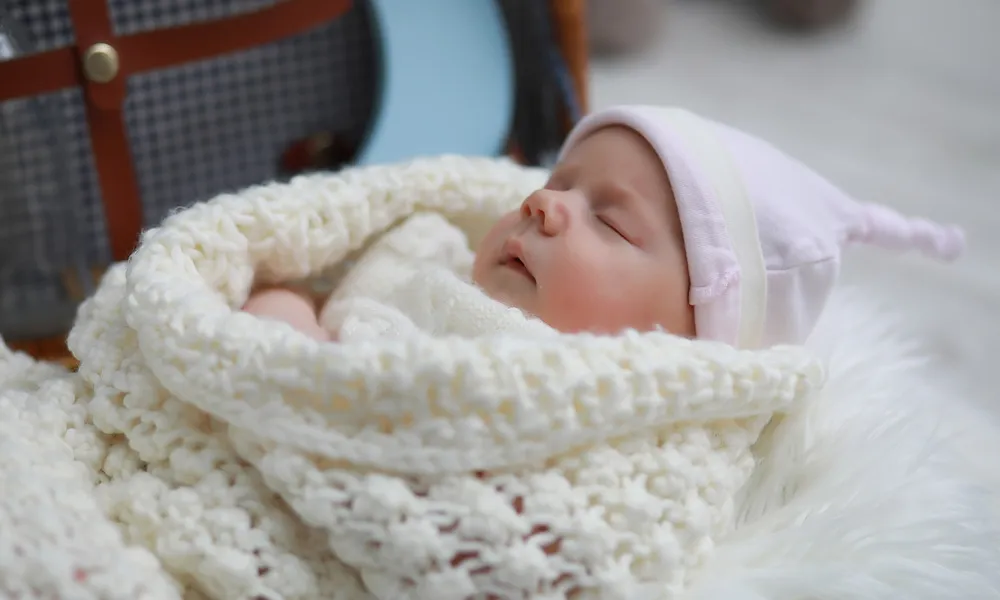
Those of us born in Cyprus after 1990 underwent a medical test we do not remember. In the first days of our lives, before we had images, words or memories, a few drops of blood from our heel were enough to screen for two serious but treatable conditions: congenital hypothyroidism and phenylketonuria.
For most of us, that test was a silent confirmation that everything was fine. For some children, however, it was something far greater. It was the first critical intervention of their lives — the moment a condition, invisible to both parents and doctors, was detected before it could cause harm.
It was the moment prevention ceased to be an abstract slogan and became a real act. That is the true meaning of newborn screening — not just another laboratory test, not a procedure buried in the paperwork of birth, but one of the purest forms of public health: preventing disease before it becomes destiny.
Today, the question is not only how many children were protected through screening for the two conditions included in the programme. It is also how many more could have been protected had Cyprus moved earlier towards broader newborn screening.
The answer is not theoretical. In other countries, newborn screening has already paved the way for early detection of diseases once diagnosed only after damage had already begun.
Spinal muscular atrophy is one of the most characteristic examples — a rare genetic disorder where early diagnosis through newborn screening and immediate access to treatment can prevent rapid and irreversible loss of motor function.
In severe combined immunodeficiency (SCID), screening can identify infants at risk of life-threatening infections before symptoms even appear, allowing immediate protection and treatment.
This is the essence of the discussion in Cyprus. We are not simply talking about more tests. We are talking about more time, more chances, children who can grow up under better conditions and families spared the anxiety of delayed diagnosis.
A turning point for Cyprus
On the occasion of World Newborn Screening Day, Politis spoke to the Americos Argyriou Preventive Paediatrics Centre, the institution that has implemented Cyprus’s neonatal screening programme for nearly four decades.
The centre now stands at a new turning point, having begun the process of validating methods that will allow three additional conditions to be included in the programme.
This development is not merely a technical upgrade. It reflects how we, as a society and a state, understand prevention. It raises the question of whether we are willing to invest early to avoid bearing later the human, social and economic cost of delay.
Newborn screening is based on a simple yet deeply human idea: to detect disease before it causes harm.
In many conditions included in international screening programmes, the child is not visibly ill at birth. There may be nothing to immediately alarm parents or doctors. Yet the condition may already be developing silently.
It is in that silence that prevention intervenes. A few drops of blood, accurate analysis, quick notification, diagnostic confirmation and timely treatment can prevent serious complications.
In congenital hypothyroidism, for example, early treatment protects a child’s development. In phenylketonuria, early diagnosis and appropriate dietary management can prevent severe neurological consequences.
This is the central message often lost behind technical terminology. Newborn screening is not a test carried out simply because it is required. It is a promise that a child will not be left to suffer from something that could have been detected early.
The path of prevention
Since 1989, the Americos Argyriou Preventive Paediatrics Centre has screened more than 350,000 newborns. In 2025 alone, 9,491 screening tests were conducted — effectively covering all births in Cyprus.
Behind these figures are children and families. Since the programme began, 147 newborns have been diagnosed with congenital hypothyroidism and received treatment, while cases of hyperphenylalaninaemia and phenylketonuria have also been identified.
For these families, screening was not a routine procedure. It was the moment the health system intervened early and gave their child a better start.
The centre’s history begins with the foresight of Dr Americos Argyriou and his associates, who in the late 1980s recognised that prevention had to become an organised public health practice.
At a time when the state had not yet been convinced of the value of such programmes, the centre began operating with support from private donors and organisations.
A delayed expansion
This summer marks the start of a new phase for the programme. The centre has begun validating methods for three new conditions: galactosaemia, congenital adrenal hyperplasia and G6PD deficiency.
Their inclusion forms part of a 2022 Council of Ministers decision to pilot the expansion of the programme to a total of 10 conditions.
Under the plan, the health ministry will coordinate the programme, while the Preventive Paediatrics Centre and the Cyprus Institute of Neurology and Genetics will operate in a complementary manner.
The institute will take on five additional conditions alongside phenylketonuria, creating a more complex prevention network.
Behind this transition lies extensive unseen work — equipment, protocols, method validation, reference thresholds and scientific documentation.
The new equipment already installed is not just a technological upgrade. It represents time gained.
The cost of prevention
The centre has already invested its own resources in purchasing and installing the necessary equipment, at a cost exceeding €140,000.
The figure may seem high. But the real question is different: what is the cost of not preventing?
What is the cost to a family of delayed diagnosis? What is the cost to a child of lost developmental potential? And what is the cost to the state of long-term care, treatments, hospitalisations and social support?
Cyprus’ paradox
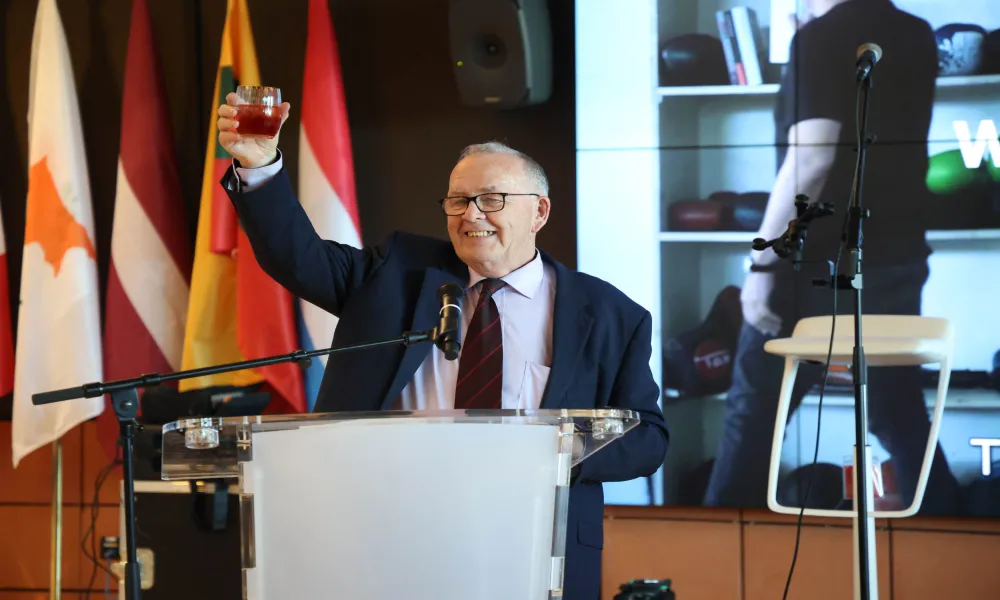
Speaking to Politis, the centre’s president, Dr Argyrios Argyriou, noted that Cyprus remains the EU country offering the fewest conditions in newborn screening programmes.
“This could be justified in 1989, when the programme began and Cyprus was not yet part of the wider European family. Thirty-seven years later, however, the absence of a national strategy for neonatal screening is no longer justifiable,” he said.
This statement highlights a clear contradiction. For decades, a universal programme affecting every newborn has relied largely on a private charitable organisation.
And this is not the first case. According to the centre, none of its three population-wide programmes were initially introduced with state support. The state came later, after their value had already been proven.
The right to a better start
Newborn screening is not only a health issue. It is also a matter of equality. Every child born in Cyprus should have the same opportunity for early diagnosis, regardless of their family’s financial situation.
New guidelines from the International Society for Neonatal Screening emphasise that screening is not just a test but a complete system: informing parents, sampling, transport, analysis, diagnosis and treatment.
Because newborn screening does not end in the laboratory. That is where it begins.
And behind every blood sample is a child who may never remember that moment — but whose parents will, and whose society will too, if it has done the right thing in time.