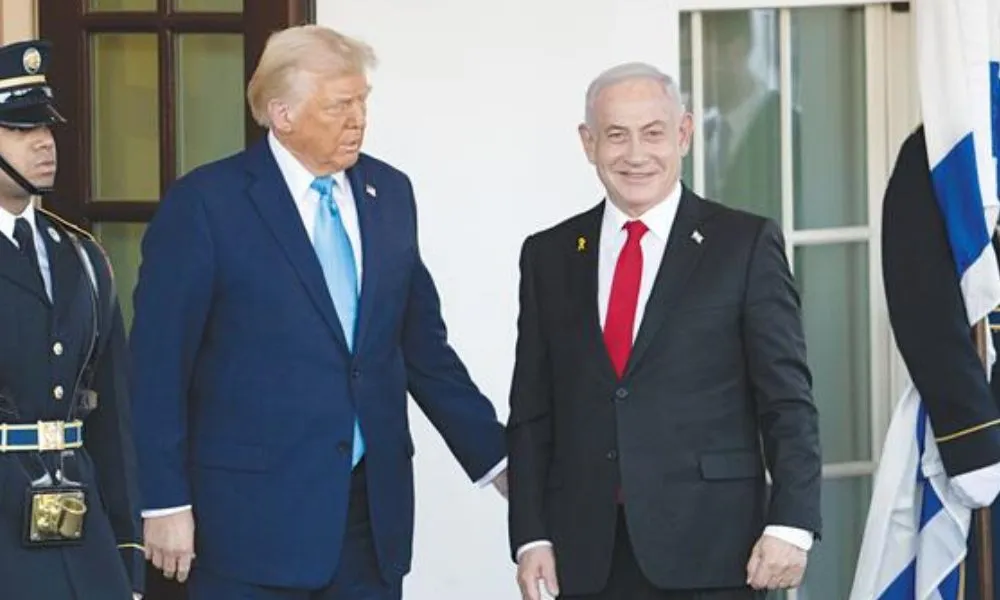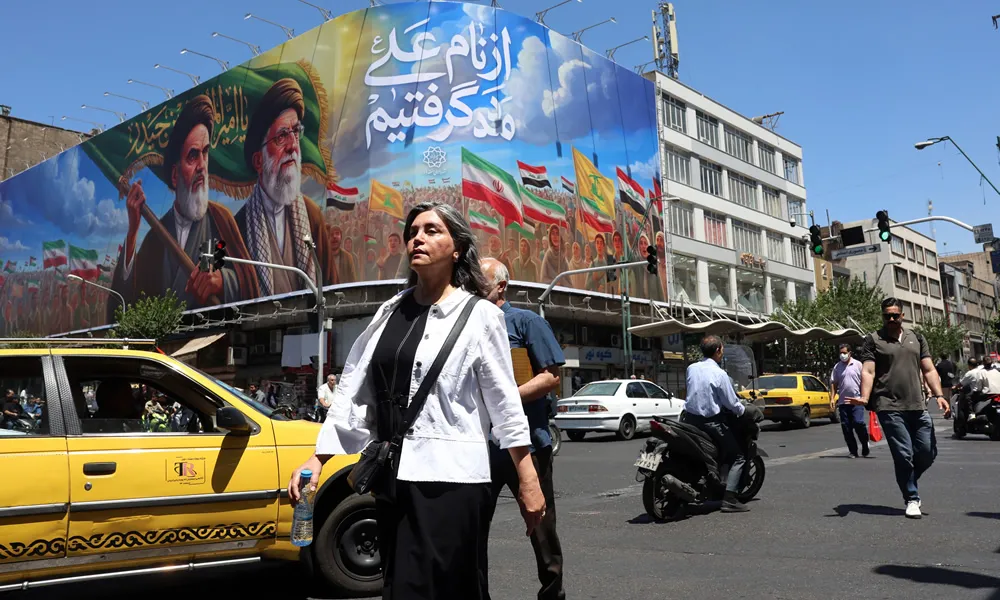


When President Donald Trump announced the signing of a deal with Iran on Sunday evening, he immediately pivoted to defending his agreement against comparisons to President Barack Obama's 2015 nuclear deal. "It was a disaster," Trump said. "Ours is a wall against a nuclear weapon." The agreement being signed is merely a memorandum of understanding. It extends a ceasefire and commits both sides to open the Strait of Hormuz for 60 days. The real negotiations on the nuclear programme, missiles, and other substantive issues will begin after the signing, with Vice President JD Vance leading talks in Switzerland. Trump may have won a military campaign but he faces the prospect of losing the diplomatic one.
A military scorecard
Trump's war aims, set out on 28 February, were sweeping. He intended to destroy Iran's ballistic missile arsenal, eliminate its nuclear programme, prevent it from arming proxy groups across the region, and ultimately precipitate regime change. Three months later, the scorecard is sobering. According to Reuters reporting by Andy Sullivan, whilst the US destroyed roughly one-third of Iran's missile stockpile and damaged or buried another third, Iran still retains between 2,500 and 6,000 missiles capable of reaching Israel and other regional targets. Admiral Brad Cooper told Congress that Iran's ability to build missiles has been "set back by years," yet Iran demonstrated its capacity to strike again as recently as 7 June, firing at Israel with no significant damage reported.
On the nuclear front, Sullivan reports that the war "has not significantly changed Iran's nuclear capability." US intelligence estimates Iran would need less than a year to produce a weapon, the same timeline assessed after strikes on nuclear facilities in June 2025. The dangerous 60 percent enriched uranium stockpile remains undestroyed, buried under the rubble of facilities hit in Operation Midnight Hammer.
Trump's proxy war objective has fared somewhat better. Sullivan notes that Iran's proxy network is "much less effective" than before, with Hamas decimated, Hezbollah leadership killed, Syria's Assad gone, and sanctions constraining Iran's ability to fund these groups. Yet these groups have not been eliminated, and Iran continues to supply them. Hamas has not attacked from Gaza. The Houthis have not significantly disrupted Red Sea shipping. The proxies played a marginal role in the war itself.
The regime change illusion
On regime change, Trump has performed an extraordinary rhetorical manoeuvre. He encouraged Iranian protesters to overthrow their rulers and declared the death of Supreme Leader Ali Khamenei on 28 February their "single greatest chance" to seize power. Now that the regime survives under Khamenei's son, Mojtaba Khamenei, Trump claims victory because the new leader is "more reasonable." In other words, Trump is accepting the regime's continuity under different management.
As Robin Wright argues in The New Yorker, Iran has deployed a strategy of leverage throughout modern history. From the 1979 hostage crisis to the capture of individual Americans over decades, Tehran has learned that seizing something of value and refusing to return it extracts political concessions more reliably than military force. Wright notes that Washington "tends to view negotiations with Iran through the lens of power. Tehran views them through the lens of possession." The US aims to force Iran to surrender through military pressure and sanctions. Iran aims to force the US to surrender by holding something valuable. In this case, that something is the Strait of Hormuz, through which one-fifth of the world's energy supplies transit.
Trump's Defence Secretary Pete Hegseth argued on CBS that the US now has cards it never had in 2015. "Obama, they begged Iran for a deal," Hegseth said. "We bombed Iran, and then put in a blockade." Yet David E. Sanger of the New York Times observes that this account omits a crucial fact: Iran has discovered what Wright calls a "diplomatic superpower". This is the ability to shut down the Strait through mines, drones and speedboats. Iran has also demonstrated the capacity to strike water desalination plants, American radar arrays and petrochemical infrastructure across the region. These asymmetric capabilities neutralise the effect of superior conventional military force.
The negotiating bind
Trump must now deliver a nuclear agreement that surpasses Obama's results or risk the judgment that three months of war, nearly $3 trillion in conflict costs and thousands of deaths were insufficient to change Iran's strategic position. Sanger notes that Trump has moved the goalpost repeatedly. He insists incorrectly that Obama's deal "allowed enrichment all the way to a nuclear weapon" when it actually limited enrichment to 3.67 percent. Trump now proposes a 15-to-20-year suspension of enrichment activities, which would expire between 2041 and 2046. This differs little in principle from Obama's 2030 expiration. Both strategies amount to buying time.
Wendy Sherman, who led the 2015 negotiations for Obama, told Sanger that Trump's task is harder than 2015 because he confronts a far more dangerous stockpile of 60 percent enriched uranium, capable of reaching bomb-grade material in days or weeks rather than months. Sherman also noted that Trump has not assembled the technical team. Nuclear experts, energy specialists and inspection authorities were essential to 2015. Sanger reports that Witkoff and Kushner visited Oak Ridge National Laboratory weeks ago to learn about "downblending" uranium, a fundamental task that should have been prepared long before negotiations began.
Iran's advantages
Meanwhile, Iran has sent Abbas Araghchi, the second-ranking Iranian official at the 2015 talks. Sanger notes that Araghchi possesses "encyclopedic knowledge" of Iran's nuclear infrastructure. Iran has also tabled demands that expand far beyond the nuclear question: 24 billion dollars in frozen assets, permanent control of the Strait with "service fees," and explicit acknowledgment of US commitment to no regime change.
The question is not whether Trump has achieved his war objectives. By most measures, he has not. The question is whether he can achieve through negotiation what he could not through force. A strategic capitulation that justifies the campaign's costs and demonstrates that American power still commands leverage over Tehran. So far, the evidence suggests otherwise.