


Iran and Israel exchanged direct strikes for the first time since their April ceasefire on Sunday and into Monday, in an escalation that has sent oil prices sharply higher, rattled Asian stock markets and cast deep uncertainty over ongoing peace negotiations between Washington and Tehran.
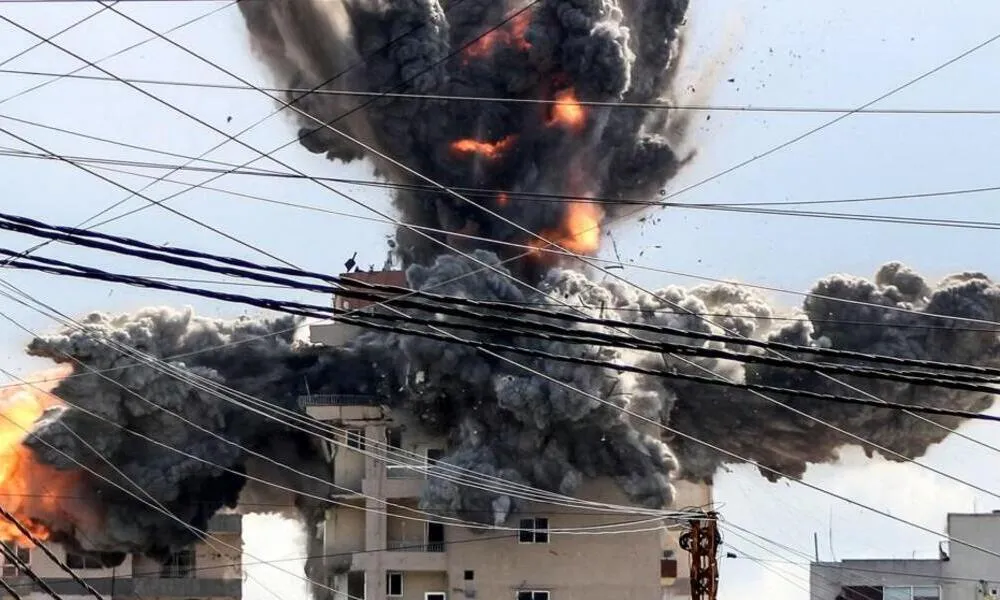
The chain of events was set in motion on Sunday when Israel bombed the southern suburbs of Beirut, known as Dahiya, targeting what it described as a Hezbollah command centre. The strike killed at least two people and wounded several others, according to Lebanese state media. Iran swiftly retaliated, firing at least 11 ballistic missiles at northern Israel. The Israeli military said its air defences intercepted the barrage and announced citizens could leave shelters by 11pm local time, though schools across the country were closed on Monday as a precautionary measure.
Hours later, in the early hours of Monday, Israel struck back. The Israeli Defence Forces said they hit military targets in western and central Iran, with explosions reported in Tehran, Tabriz and Isfahan. Iran's Revolutionary Guards confirmed the Israeli attacks and said they subsequently launched strikes on two Israeli air bases, Nevatim and Tel Nof, in retaliation for Israeli hits on Iranian radar sites. A second wave of missiles toward Israel was detected shortly after.
Israel hits Iranian energy infrastructure
The exchange did not stop there. Israel struck the Mahshahr petrochemical complex in Iran's southwestern Khuzestan province, the first hit on an energy site inside Iran since the April ceasefire. Provincial authorities ordered a full evacuation of the complex, though no casualties were reported. Iran's state media said five production lines at the facility had been struck since the war began on 28 February. Flights at Tehran's Mehrabad and Kermanshah airports were suspended until further notice.
Iran's Revolutionary Guards issued a stark warning to Washington alongside the strikes. "We warn the US government and the regimes supporting the hostile entity of the consequences of intervention," the Guards said in a statement. "Any land or airspace made available for aggression against Iran will make its owners a direct target of our attacks." Iran's chief peace negotiator and Parliamentary Speaker Mohammad Bagher Ghalibaf went further, saying that Israeli attacks on Lebanon had turned "US and Israeli bases and assets in the region into legitimate targets." Yemen's Houthis added another dimension to the crisis, announcing a naval blockade against Israel in the Red Sea and claiming responsibility for a missile launched at Israel, their first such attack since the April ceasefire.
Trump urges restraint
President Donald Trump said publicly that he had urged Netanyahu not to retaliate for the Iranian strikes, describing himself as "not happy" with the earlier Israeli attack on Beirut, which he said had not been coordinated with Washington. In a recorded NBC interview aired on Sunday, Trump said he preferred "a more surgical" Israeli approach to Hezbollah. Yet hours after expressing all of this, Israel struck Iran's petrochemical complex anyway. Trump insisted the latest exchange would not derail peace talks. "It's not going to have any impact on the deal," he told the Financial Times. "I call the shots. I call all the shots. He doesn't call the shots."
The violence is the most serious rupture yet in an agreement that was never fully holding. The April ceasefire paused the wider US-Israeli war with Iran that began on 28 February, when joint strikes killed Supreme Leader Ali Khamenei and devastated Iranian military and civilian infrastructure, killing a reported 1,700 civilians. Since then, Iran has blockaded the Strait of Hormuz, through which roughly one-fifth of the world's oil and gas normally passes, and Washington has imposed its own blockade of Iranian ports. The two sides have been negotiating, with Iran demanding the lifting of sanctions, the release of billions of dollars in frozen assets and recognition of its control over the strait. Iran has also flatly rejected a reported US plan to redirect those frozen assets to compensate Gulf states for war damages. Deputy Foreign Minister Kazem Gharibabadi called the idea illegal, saying Iran's assets were "neither war spoils for Washington nor a payment fund for its allies."
Markets react sharply
The economic fallout from Sunday's exchange was immediate. Brent crude rose above $96 a barrel on Monday, up more than 3%, with investors focused on further potential disruption to the Strait of Hormuz. Asian stock markets fell sharply: South Korea's KOSPI index dropped 8% before trading was temporarily halted, while Japan's Nikkei 225 fell more than 4%. US retail petrol prices, already 40% higher than at the start of the war, stood at a national average of $4.17 a gallon on Sunday. Britain and Canada called for immediate de-escalation, with Canadian officials warning the renewed fighting "jeopardizes ongoing negotiations and the prospects for peace." The European Union called on all parties to return to the negotiating table.
The Lebanon front, which sits at the heart of the dispute, shows no sign of resolution. Hezbollah rejected a ceasefire deal negotiated last week in Washington, describing it as tantamount to surrender, and has continued firing cable-guided drones and rockets at Israeli forces, killing 30 Israeli soldiers since the Lebanon war began in March. More than 3,600 people have been killed and one million displaced in Lebanon. Netanyahu, facing domestic pressure from residents of northern Israel battered by Hezbollah fire and trailing in polls ahead of elections, had warned last week he would order strikes on Beirut if Hezbollah attacked Israeli territory again. On Sunday, Hezbollah did. He followed through.
Exhaustion and economic collapse
Inside Iran, the renewed violence has deepened what was already a profound sense of despair. More than 20 Iranians interviewed by the New York Times in Tehran, Isfahan, Ahvaz and Mashhad described an economy in free fall, with cooking oil up 430% in price compared to last year, eggs up 345%, rice up 287% and milk up 139%. Pharmacies are rationing medicine. Factories have shut. For many Iranians, including those who had hoped the war might bring regime change, what has arrived instead is exhaustion. "What was this all for?" one 62-year-old engineer in Tehran asked.
Sources: New York Times, Reuters