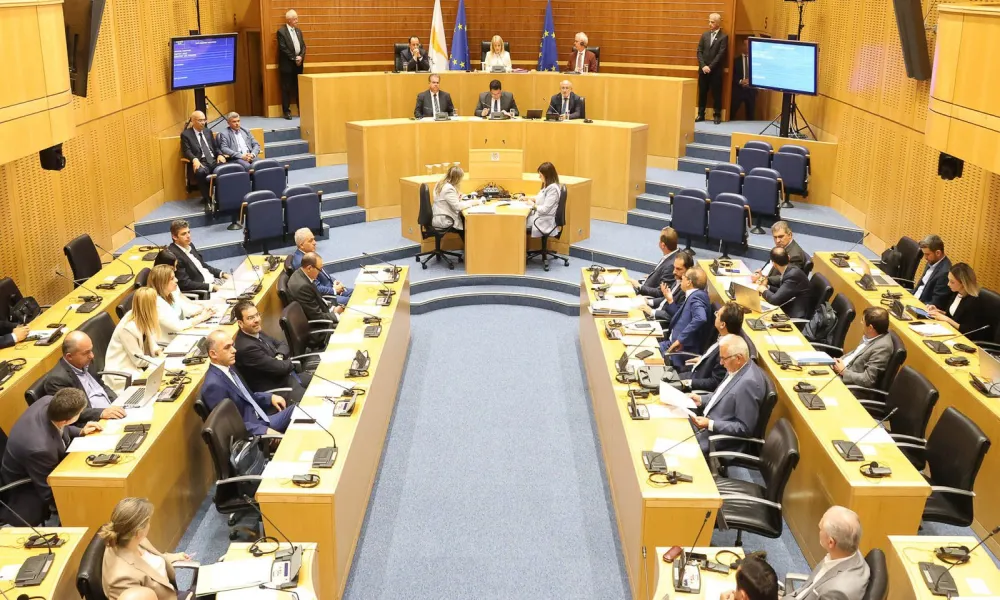

All former, newly elected and re-elected members of the House of Representatives have submitted their asset declarations ahead of a review process aimed at identifying potential cases of unjustified wealth, Parliament has announced.
The deadline for submitting the declarations, known in Cyprus as Pothen Esches, expired on 4 October 2026.
According to a statement from the House presidency, all relevant MPs have submitted the required declarations of their personal and professional assets.
Under the legislation, declarations may be published progressively within 30 days of submission. The publication process is under way, with the documents being uploaded to the Parliament’s website.
Once publication is completed on 4 November, Tax Commissioner Sotiris Markides will take over the process, checking the accuracy and correctness of the information provided.
The aim of the checks is to identify cases of unjustified enrichment involving state officials and elected representatives.
How the asset declaration checks will work
As part of the review, the Tax Commissioner can request clarifications from the person concerned, access state records and obtain information from ministries, offices and departments of the public service. He can also require the submission of any relevant supporting documents or evidence.
The commissioner must complete the check within three months and submit his observations and conclusions to Parliament’s Special Committee on Pothen Esches.
Under the law, a formal investigation into an official may be initiated following either a written sworn complaint submitted to the committee setting out specific facts or evidence, or the discovery during the review that false, falsified or misleading information has been provided.
During an investigation, the Tax Commissioner may also lift banking, stock market or tax confidentiality relating to the person under scrutiny, provided the individual is informed in writing.
Findings could lead to criminal investigations
Once an investigation has been completed, the Tax Commissioner must prepare a report setting out the findings and submit it to the Special Committee.
Before drawing up its own report, the committee must give the person concerned an opportunity to be heard or to submit their position in writing.
The committee’s report must record the relevant facts, the commissioner’s findings and the responses of the person under investigation.
It is then forwarded to the appropriate officeholder, depending on the position held by the individual concerned.
Reports involving a minister or deputy minister are sent to the President of the Republic, while those concerning an MP or MEP are submitted to the President of the House. In the case of an MEP, the President of the European Parliament is also notified.
If the report concerns the President of the House, it is forwarded to the members of the meeting of political party leaders or representatives. If it concerns the President of the Republic, it is sent to the President of the House.
Where a change in an official’s financial circumstances is identified without adequate and substantiated explanations, the relevant legislation on preventing and combating money laundering may apply.
The findings are also referred to the Attorney General for the investigation of any potential criminal offences.
The legislation further makes it an offence to obstruct the work of either the Special Committee or the Tax Commissioner. Anyone convicted of such an offence faces a fine of up to €5,000, imprisonment for up to one year, or both.
Report for former minister expected
The process also includes a case involving a former minister in the Christodoulides administration who allegedly failed to declare movable and immovable assets with a combined value of €2.4 million, according to a recent report by Politis.
The Tax Commissioner is expected to submit a report detailing the findings to the Special Committee.
The committee will then prepare its own report after giving the former minister an opportunity to present his position. It will subsequently decide whether to refer the case to the Attorney General.
The case is among those attracting attention as Cyprus proceeds with the scrutiny of asset declarations under the legislation.
Asset declarations that have been published to date are available through the official Parliament website, under the category “Members of Parliament”.
Further declarations are expected to be uploaded as the publication process continues.