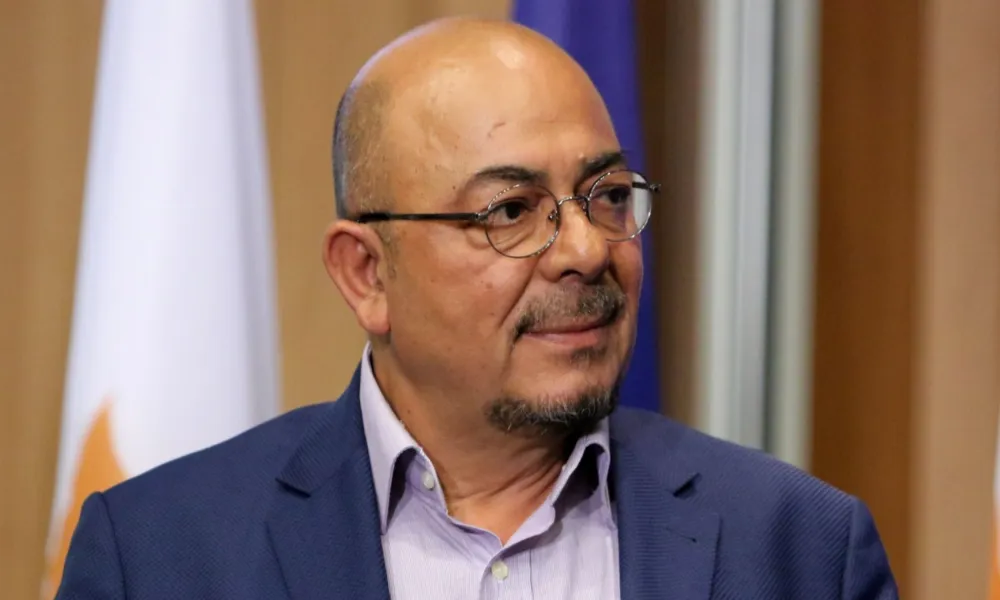

Academic and former AKEL MEP Niyazi Kizilyürek has described a climate of deep anger, frustration and distrust in the north, arguing that the fallout from the Filo Jet shipwreck has intensified public dissatisfaction with the political system as a whole.
Speaking on the Morning Briefing programme broadcast by Politis 107.6 and 97.6 FM, with Katerina Eliadi, Kizilyürek said recent political developments, including the departure of Erhan Arıklı and his party from the coalition administration, do not fundamentally alter the political landscape because Turkish Cypriots were already heading towards elections.
According to him, planning remains focused on elections in December, with a strong possibility that local and parliamentary elections will be held on the same day, although no final date has yet been set.
"There is tremendous anger and despair"
Kizilyürek argued that the most significant development is not the reshuffling of political forces but the mood prevailing in society.
"There is tremendous anger and despair in the north" he said.
He maintained that suspending Arıklı from his post as "transport minister" was the minimum action the administration could have taken.
Referring to the shipwreck, Kizilyürek spoke in particularly strong terms, arguing that responsibility for the tragedy is extensive and that, in his view:
"We are talking about a crime, not an accident."
He said public dissatisfaction extends beyond any single individual or political party and now encompasses both the coalition administration and the wider political system.
According to Kizilyürek, many people no longer believe that a change of government or the rotation of parties in power will, by itself, bring meaningful change.
CTP heading for first place
On the electoral front, Kizilyürek believes the Republican Turkish Party (CTP) is currently the main beneficiary of the political climate.
He noted that the CTP was already leading in opinion polls before the latest developments and said recent events have made an electoral victory even more likely.
The key question, he added, is whether the party will be able to secure an outright majority or whether it will need coalition partners to form a government.
At the same time, he stressed that even a CTP victory would not resolve the deeper problem facing the Turkish Cypriot community.
A significant section of society, he argued, has lost confidence in the ability of the political system to deliver genuine change.
Division and the role of Arıklı
Kizilyürek also reflected on what he described as growing divisions within Turkish Cypriot society.
According to him, the majority of Turkish Cypriots continue to support a solution to the Cyprus problem and reconciliation, but a different political and social reality has also emerged, represented to a considerable extent by Arıklı's party.
He accused Arıklı of repeatedly confronting Turkish Cypriots, fuelling tensions and building his political profile through polarisation and division.
Kizilyürek also described the position of Turkish Cypriot leader Tufan Erhürman as particularly difficult.
In his assessment, Erhürman finds himself caught between an Ankara pursuing its own agenda on the Cyprus problem and a Greek Cypriot side from which he sees few strong indications that significant progress can be achieved in the near future.