
Turkish Cypriot leader Tufan Erhürman and Turkish Vice-President Cevdet Yilmaz have reaffirmed close coordination on the Cyprus issue during a meeting in the north of the island, while a memorandum was signed for the construction of an undersea natural gas pipeline from Turkey.
Cyprus talks and Ankara coordination
According to a statement from the Turkish Cypriot administration, Erhürman received Yilmaz and his accompanying delegation before the two held a private meeting following wider discussions.
Erhürman said the latest developments regarding the Cyprus issue were discussed as a priority, claiming that the process was being conducted in consultation with Turkey.
He referred to his previous meeting with Turkish President Recep Tayyip Erdoğan ahead of the Antalya Diplomacy Forum, saying that coordination between the two sides had once again been confirmed.
"We had said that we would always conduct this process through consultation. We are continuing with intensive consultations," Erhürman said, adding that contacts would continue without interruption.
The discussions also covered property issues, the participation of Turkish Cypriot athletes in international competitions and energy cooperation.
Erhürman described the natural gas initiative as particularly important, arguing that it could become a source of energy security for the Turkish Cypriot community.
Yilmaz said Ankara and the Turkish Cypriot leadership were acting with "very close consultation and coordination" on strategic and international issues.
Pipeline agreement and energy plans
Referring to the Cyprus issue, he reiterated Turkey's position in favour of a settlement based on "sovereign equality" and said Ankara would continue providing economic support to the Turkish Cypriot community and projects included in the 2026 economic and financial cooperation agreement.
In a parallel development, Yilmaz and Turkish Cypriot "Prime Minister" Ünal Üstel signed a memorandum for the start of construction works on an undersea natural gas pipeline linking Turkey and the north of Cyprus.
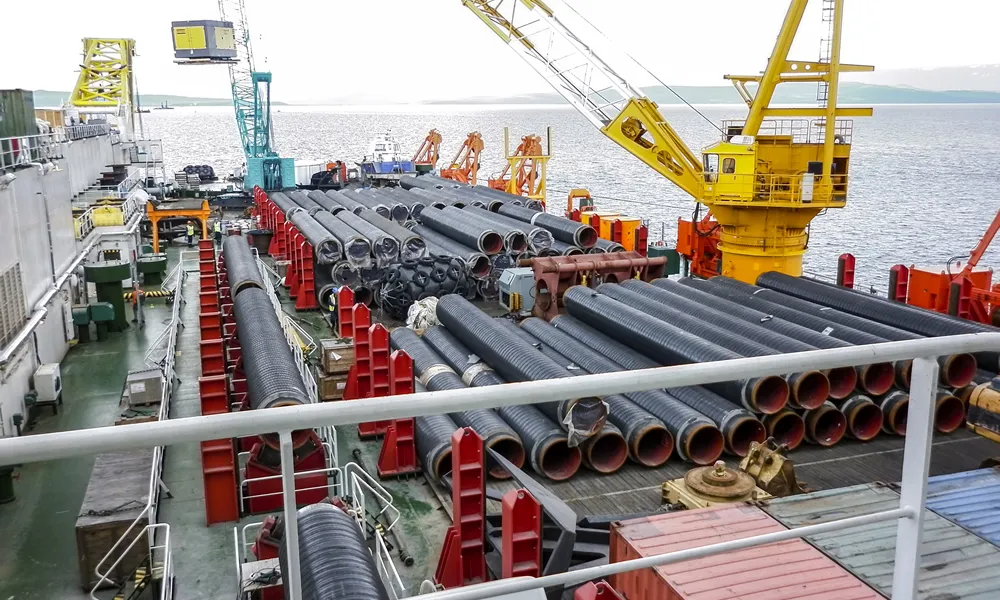
Turkish Energy Minister Alparslan Bayraktar said the project envisages a pipeline with a total length of around 101 kilometres, including 97 kilometres offshore and four kilometres on land.
Under the plans, two 22-inch pipelines would be constructed, running from Anamur in southern Turkey to a power plant in the Kyrenia district of the north.
The pipeline is designed to operate in both directions, allowing natural gas to be transported from Turkey to Cyprus and, at a later stage, potentially enabling gas resources from the region to be transferred towards Turkey and Europe.
Project presented as boost for electricity supply
Initially, the gas would mainly be used for electricity generation.
Bayraktar said the project would improve electricity supply, reduce dependence on liquid fuels and support the expansion of electric vehicles.
He also recalled that Turkey had installed seven mobile power generation units in the north and supplied fuel for electricity production over the past five years.
Üstel set a target of completing the project within two years, saying that natural gas would reduce electricity generation costs and strengthen industry, tourism and agriculture.
He also referred to a planned electricity interconnection cable project, claiming that relevant studies had been completed but that approval from the European Network of Transmission System Operators for Electricity (ENTSO-E) was still required.
Turkey outlines wider infrastructure support
Speaking at the signing ceremony, Yilmaz described the pipeline as a "historic turning point", saying that Turkey's financial support for the energy sector in the north had exceeded 8 billion Turkish lira over the past five years, with an additional 560 million lira allocated for 2026.
He also outlined other infrastructure projects funded by Turkey, including the transfer of 330 million cubic metres of water, irrigation projects in Morphou, more than 850 kilometres of road network upgrades, a new "hospital" project in northern Nicosia and the expansion of telecommunications infrastructure through fibre-optic networks.
Source: CNA