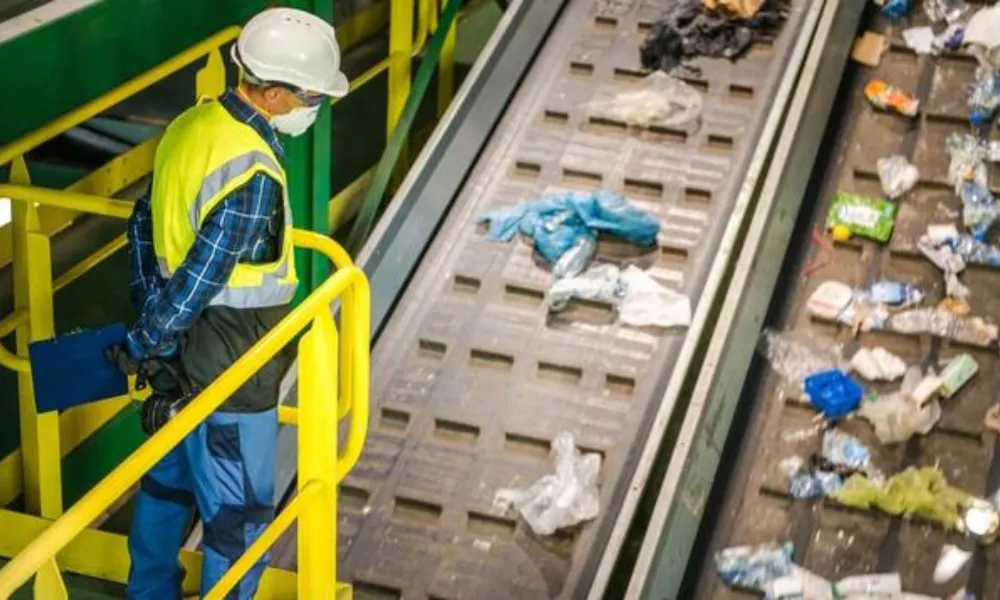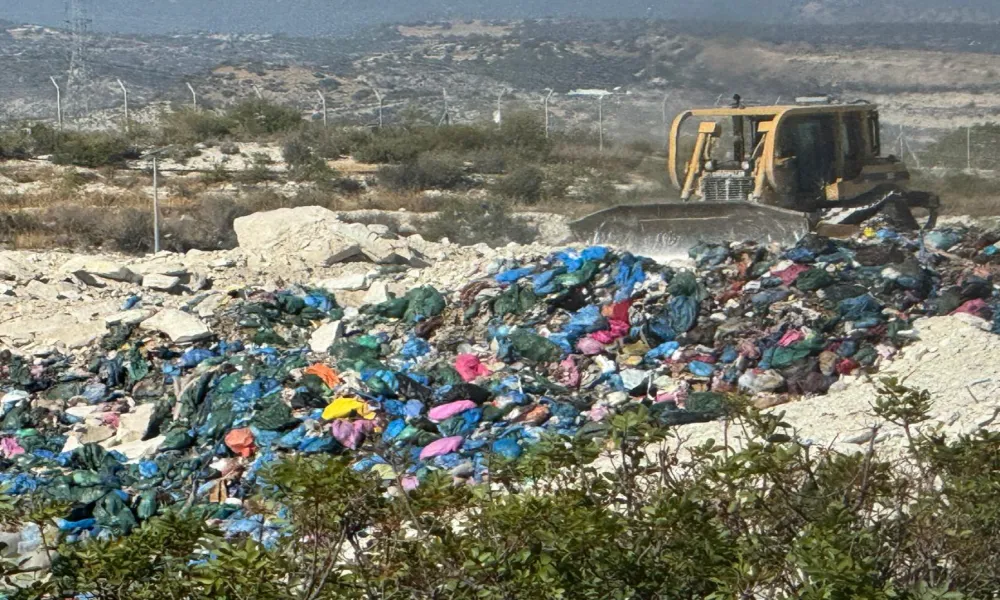
The House Environment Committee has completed its examination of legislation introducing a tax on municipal waste sent to landfill, alongside new offences and penalties.
Local authorities oppose the proposed framework, warning that the additional cost could ultimately be passed on to residents. Most parliamentary groups have reserved their final position until the legislation is debated before the plenary, while ELAM has already declared its opposition.
Parties reserve their positions
According to a report issued by the House Environment Committee on Friday, the proposed legislation and regulations were examined during meetings held on 24 June, 1 July and 8 July.
Committee chairman Linos Papayiannis and member Linos Ioannou Hadjigeorgiou, both ELAM MPs, opposed the adoption of the bill and the approval of the accompanying regulations.
MPs representing DISY, AKEL-Left-New Forces, DIKO, ALMA-Citizens for Cyprus and Direct Democracy reserved their positions on the amended texts until the plenary debate.
Prison sentence reduced to one year
During the article-by-article examination of the legislation, the committee agreed, with the consent of the executive branch, to introduce several technical and legal drafting amendments.
The committee decided to reduce the proposed prison sentence for waste holders or operators of municipal landfill facilities who violate the regulations from three years to one year.
It also removed a provision concerning the responsibilities and penalties imposed on individuals involved in the disposal and management of municipal waste.
The Ministry of Agriculture, Rural Development and the Environment submitted a revised version of the bill on 1 July 2026. For reasons of legal certainty, the revised text explicitly provides that the Council of Ministers may issue regulations governing the calculation, determination and imposition of the municipal landfill tax.
How the landfill tax will work
Under the proposed regulations, a tax of €10 per tonne will be imposed on municipal waste sent to landfill from the date the regulations enter into force until 31 December 2027.
From 1 January 2028, the rate will increase by €5 per tonne every year until it reaches a maximum of €70 per tonne.
The tax will be paid by the holder of municipal waste to the operator of the landfill facility. The operator will be responsible for calculating, determining and collecting the charge.
Once collected, the tax will be transferred to the Department of Environment and subsequently deposited into the Consolidated Fund.
According to the department, the resulting revenue will be used to finance compensatory projects and measures aimed at improving waste management and developing the necessary environmental infrastructure.
€23 million in recovery funding at risk
During the committee’s initial discussion, representatives of the Department of Environment said the legislation forms part of the government’s green tax reform and its commitments under Component 2.1 of Cyprus’ National Recovery and Resilience Plan.
The component requires the introduction of a municipal landfill tax through national legislation.
Officials said Cyprus continues to record some of the European Union’s poorest waste management results. The government therefore included green taxation measures in the national recovery plan, in line with the objectives of the European Green Deal.
Around 68% of municipal waste in Cyprus is currently sent to landfill, while the relevant European target requires this proportion to fall to 10% by 2035.
The initial deadline for completing the reform was 30 June 2026. The final deadline for adopting the legislation has now been set for 31 August 2026.
The reform is linked to the disbursement of €23 million through the Recovery and Resilience Facility.
That amount will be added to €25 million already allocated through the THALIA cohesion policy programme for the introduction of waste separation at source, separate collection and the Pay As You Throw system by local authorities.
A combined €48 million is therefore expected to finance measures helping local authorities adapt and implement their action plans.
Tax seen as incentive for Pay As You Throw
Responding to concerns raised by committee members, the director-general of the ministry’s Environment Directorate said the reform formed part of broader EU environmental objectives and Cyprus’ binding commitments.
He noted that the targets and timetables are monitored by the European Commission and said there was no possibility of extending the deadline, as the Recovery and Resilience Plan ends on 31 August 2026.
Regarding the Pay As You Throw scheme, he said its success depended on cooperation among all relevant stakeholders. Responsibility for the progress recorded so far did not rest exclusively with the state, he added.
He expressed the view that the proposed landfill tax would provide an additional incentive for the more effective implementation of the system.
Funding through the THALIA programme will be distributed within the approved framework through grant schemes and an assessment procedure.
Regarding the development of the necessary infrastructure, the official said interim solutions were being examined. A study expected to be completed in 2028 will help determine the long-term planning of Cyprus’ waste management system.