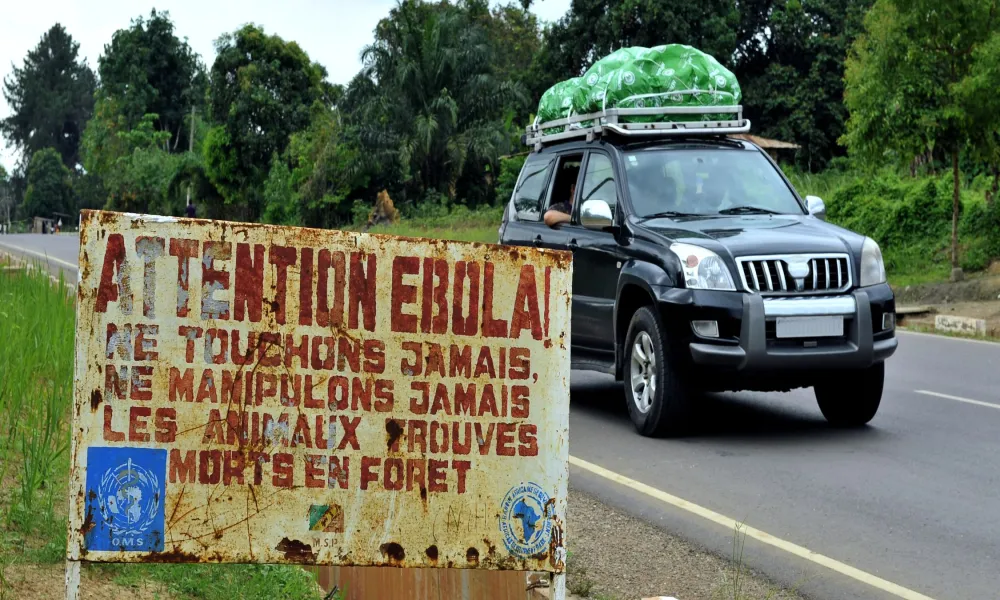

The World Health Organization (WHO) says the current Ebola outbreak in the Democratic Republic of Congo (DR Congo) has become the largest in the country's history, surpassing the 2018-2020 epidemic.
As of 30 July, health authorities had recorded 3,605 confirmed cases and 1,587 deaths, representing a fatality rate of around 44%.
The outbreak, declared on 15 May 2026, is caused by the Bundibugyo strain of the Ebola virus. It has already exceeded the previous record outbreak, which infected nearly 3,500 people between 2018 and 2020.
Cases rising rapidly
In a statement, the WHO warned that the outbreak is intensifying, with sustained transmission and increasing numbers of infections and deaths.
Last week alone, authorities recorded 567 new cases and 296 deaths, the highest weekly totals since the outbreak began.
The agency said insecurity, population displacement and cross-border movement are complicating containment efforts and increasing the risk of further spread.
Regional spread
The outbreak is centred in Ituri province in northeastern DR Congo, near the borders with Uganda and South Sudan.
Cases have also been reported in North Kivu and South Kivu, regions affected by ongoing armed conflict.
Beyond DR Congo, authorities have confirmed:
- 20 cases in Uganda
- One case in France
- Two patients treated in Germany after being diagnosed in DR Congo
No approved vaccine yet
There is currently no approved vaccine or treatment for the Bundibugyo strain of Ebola.
However, vaccine development efforts are under way. The WHO recently identified a candidate vaccine being developed in Singapore as the most promising, while clinical trials of another vaccine have begun in the United Kingdom.
Long history of outbreaks
Ebola spreads through contact with bodily fluids and has killed an estimated 15,000 people across Africa over the past five decades.
Health officials continue to warn that ongoing conflict, displacement and regional movement could make it more difficult to bring the current outbreak under control.
Source: BBC