Mosquito-borne diseases are no longer a remote public health concern for Europe, Cyprus’ Health Minister Neophytos Charalambides said on Wednesday, warning that the continent must strengthen preparedness before outbreaks occur.
Opening a conference in Nicosia on mosquito-borne vector diseases, held at the Filoxenia Conference Centre as part of Cyprus’ Presidency of the Council of the European Union, Charalambides said climate change, environmental pressures, ecosystem shifts, increased travel and demographic changes are altering both the behaviour and geographic reach of such diseases.
Diseases such as dengue fever, chikungunya, Zika and West Nile virus, he said, are no longer “theoretical concerns” confined to other regions, but signs of a changing climate and a changing epidemiological landscape. This, he added, requires vigilance, readiness and cooperation.
A climate-linked health challenge
Charalambides described mosquito-borne diseases as one of the clearest examples of how climate change is affecting human health. Public health in the 21st century, he said, requires a broader approach built on prevention, sustainability and the One Health principle, which links the health of people, animals and the environment.
Cyprus, he noted, sits at the crossroads of Europe, the Middle East and Africa, and its climate places it on the frontline of several public health challenges shaped by environmental change. That position, he said, strengthens the country’s commitment to preparedness, regional cooperation and a more resilient European Health Union.
Preparedness, the Minister stressed, cannot begin when an outbreak is already underway. It must be built in advance through surveillance systems, research networks, public health infrastructure and policy planning.
He called for investment in early warning systems, laboratory and diagnostic capacity, vector surveillance, predictive modelling and environmentally responsible mosquito-control strategies based on scientific evidence.
Charalambides said mosquito-borne diseases are now a strategic European challenge, affecting not only health security but also economic resilience, tourism, agriculture, infrastructure and social wellbeing. Since these threats do not stop at borders, he said, no member state can face them alone.
ECDC warns geography no longer protects Europe
Ole Heuer, representing the European Centre for Disease Prevention and Control, said Europe is facing “a new reality” in the epidemiology of vector-borne diseases, with the challenge developing at a pace that requires early action.
While the current burden of mosquito-borne diseases in Europe remains manageable, he warned that the potential scale of the crisis is significant.
“Geography is no longer a protective factor,” he said, noting that northern Europe is not immune and that the burden in southern Europe is rising quickly as temperatures continue to increase.
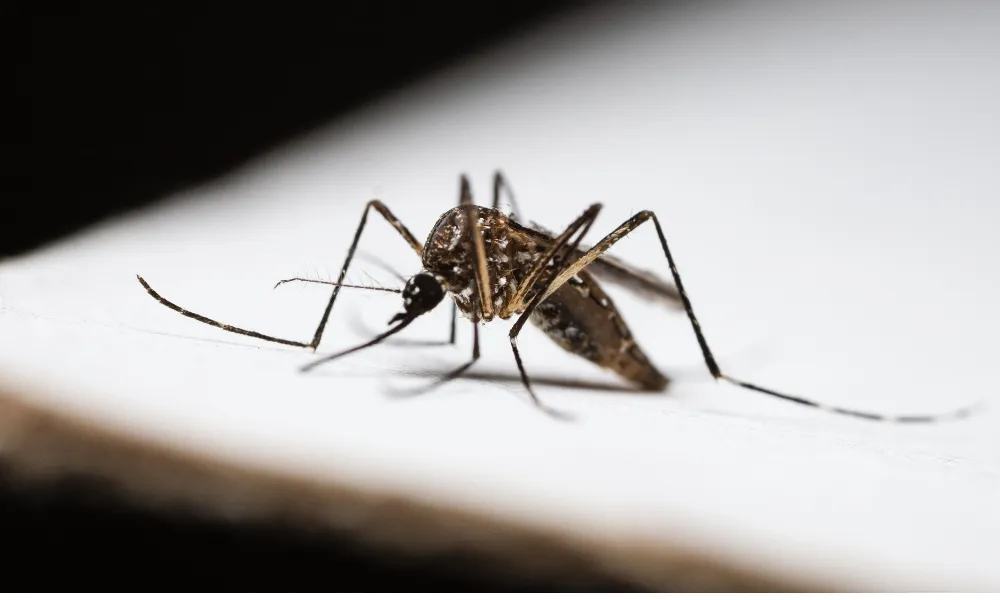
Heuer said the main drivers are climate change, globalisation and ecological shifts, adding that large parts of the EU are already affected by the further spread of vectors such as Aedes albopictus and Aedes aegypti mosquitoes.
He also pointed to structural and operational challenges, including the limited number of approved biocides, growing insecticide resistance, gaps in evidence over the effectiveness of control measures and differences between European countries in their response capacity.
Surveillance and public communication
Heuer said accurate, high-quality surveillance is essential, adding that public health action “begins and ends with surveillance.” Stronger knowledge, better vector-control tools, predictive modelling and evidence-based communication are also needed, he said.
Communication, he added, is central because much of the response depends on changes in behaviour. That requires public information, community involvement and messages grounded in scientific evidence.
He called for a coordinated European approach, greater investment in innovation and evidence, and stronger cooperation between human health, veterinary and environmental sectors.
The Nicosia conference is examining epidemiology, surveillance, mosquito-control methods, preparedness, modelling and communication, with the participation of experts and representatives of EU institutions and member states.
Source: CNA