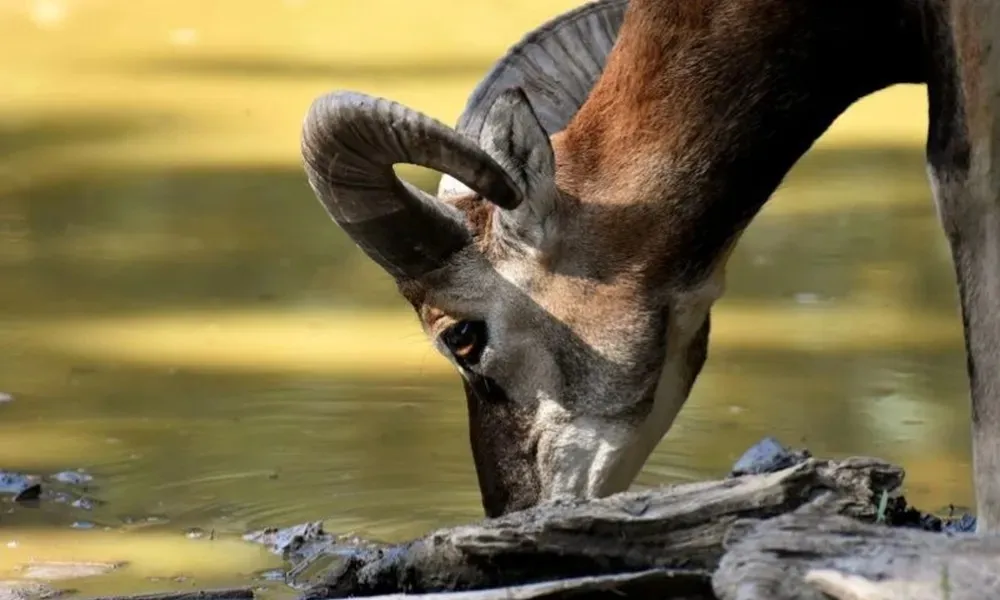

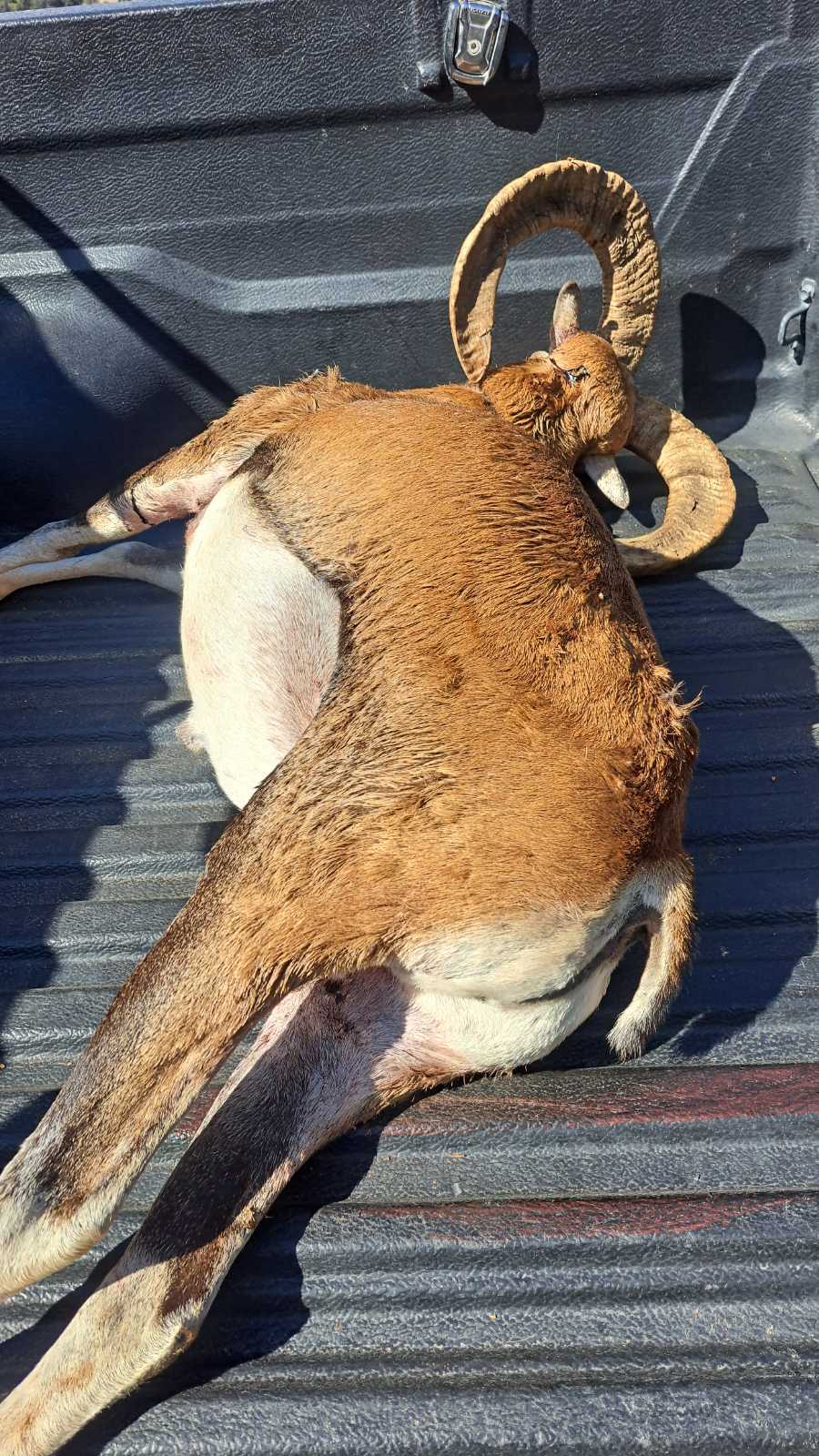
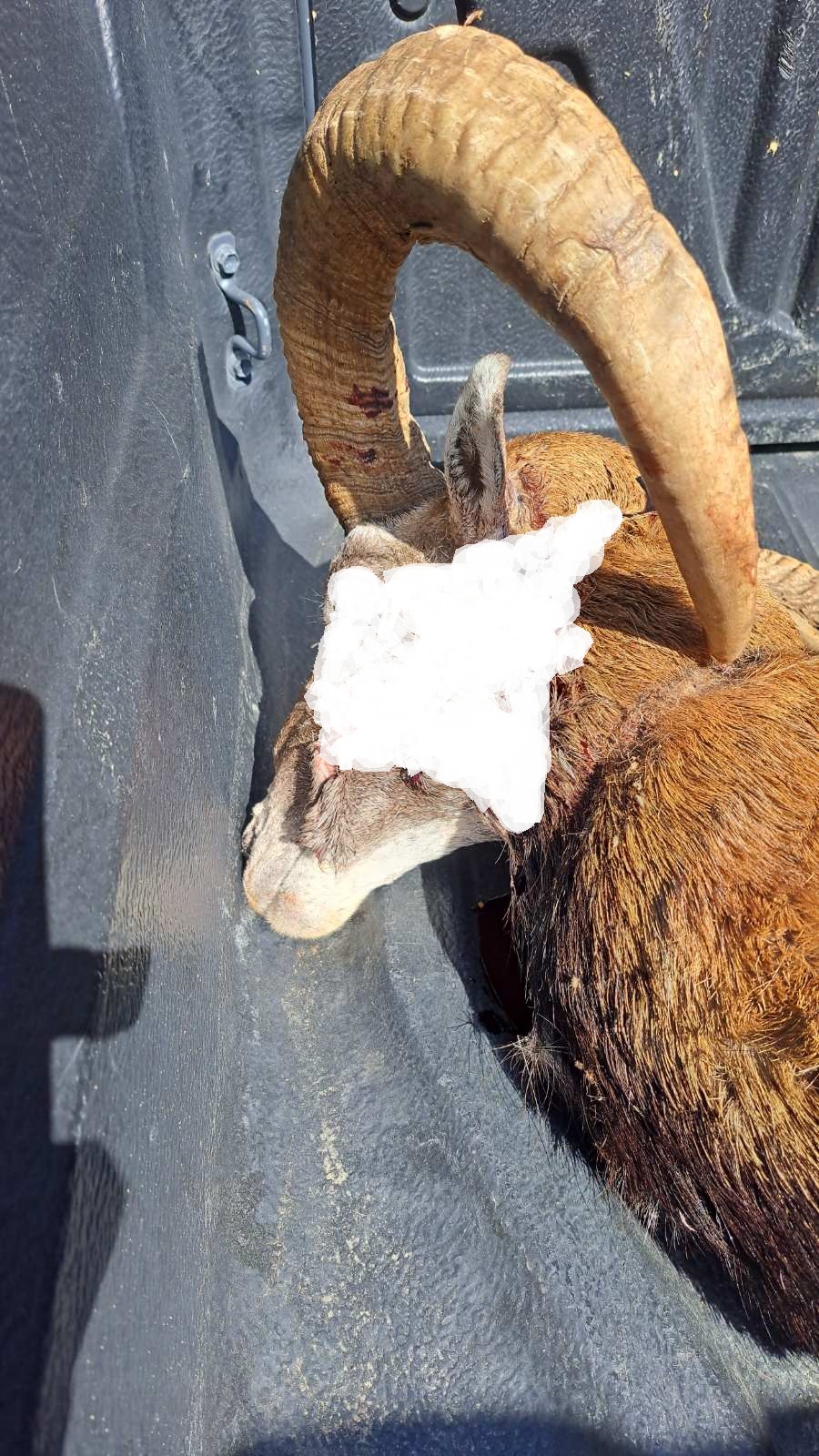
A few weeks ago, Georgios Papapetrou, a naturalist well known on social media, posted a video showing the aftermath of an attack in which a pack of feral stray dogs killed an adult male Cyprus mouflon, the endemic wild sheep known in Greek as agrino and a protected national symbol. Victim and killers were in front of him, on a forest road in the Orkonta area, opposite Lefka in the north. "This is the victim. These are the killers. And this is where the final battle took place. Once again, feral stray dogs are crossing through the buffer zone and mauling mouflon, and not only mouflon. What is worrying is that they also carry a great many diseases. One of them is echinococcosis, which is also transmitted to humans. These are not companion dogs, nor hunting dogs, but large crossbred fighting and guard dog breeds," he said in the video. Speaking to Politis, he said this was one of many such incidents he had recorded, but that this time "the cup overflowed", which is why he decided to publish and share his experience.
Drawing on more than 15 years of recordings, he can describe the mouflon's terrified flight through the forest as the dogs chased it. They would have pursued it for six to seven hours until it was exhausted. When it could go no further, it stopped on the road, where the dogs surrounded and seized it in their usual way, first by the throat, to suffocate it. A missing section of throat on a dead mouflon, he explained, is evidence that it was killed by a pack of feral dogs. "In Cyprus, the only animal other than man that can kill a mouflon is the dog. Not even the fox can, except for a newborn mouflon. There is one reason for this: a dog can chase it for six to seven hours non-stop, always in a pack of three or more dogs, until the mouflon is exhausted and cannot take another step, because the dog has great stamina," he said.
According to Nikos Kassinis, a senior officer at the Game and Fauna Service, mouflon deaths caused by packs of feral dogs occur throughout the Paphos Forest, but mainly in the areas stretching from Lefka to Kato Pyrgos Tyllirias, as the north is a "black hole" from which stray dogs keep arriving. Residents of the area, including the community of Kambos, have from time to time reported attacks by these dogs. The question is whether it will take a fatal incident for the authorities to take notice.
Human health at risk
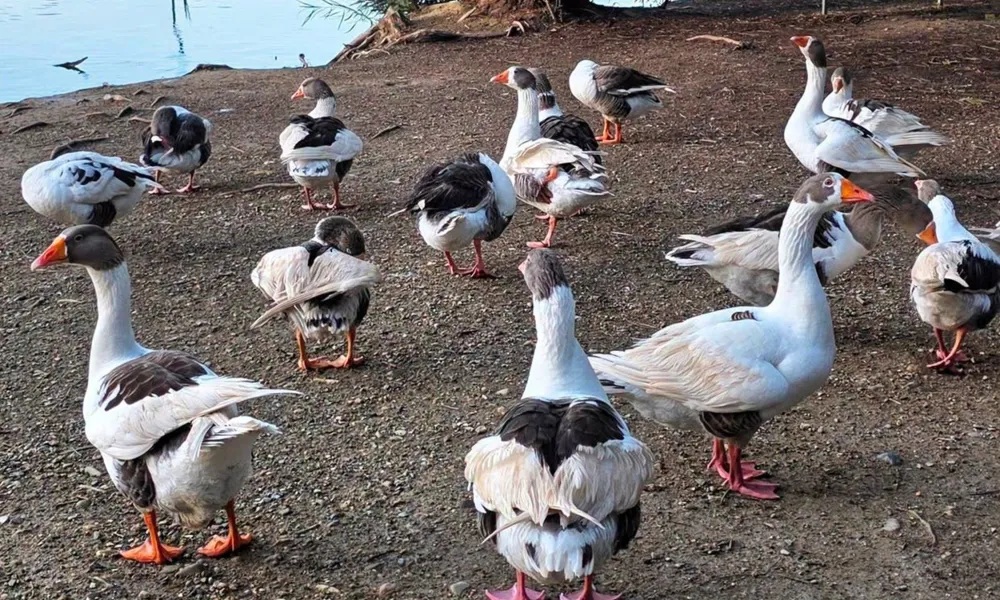
The death of the mouflon, a protected treasure of Cypriot fauna, raises the risk of echinococcosis, a link documented in cases recorded by the Veterinary Services in recent years. It is also connected to the recent discovery of two dead geese at the Athalassa National Forest Park that tested positive for bird flu, which can likewise be transmitted to humans. Both belong to the same serious problem: the uncontrolled release of domestic animals into the wild by irresponsible members of the public, despite an explicit legal ban. The flock of geese had been released at some point by a member of the public. When bird flu arrives with migratory birds, as the authorities believe it does, these geese become the intermediary between wild birds and people who visit the park and hurry to feed them. Dogs, cats, geese and ducks damage the environment and, in several cases, as with the mouflon and the geese, put human health at risk.
Strong opposition
Both the Game and Fauna Service and the Department of Forests told Politis that the reason they do not carry out culling of stray dogs or remove the birds lies in strong opposition from animal welfare groups, repeated releases by members of the public and the absence of a horizontal approach that would mobilise an entire mechanism, including state services, local authorities, vets, organisations and shelters.
"Without doubt, killing animals cannot and must not be the first option. Prevention, neutering, collection, adoption and the responsible management of stray populations always come first. However, when every available solution has failed and an uncontrolled pack continues to wipe out protected or endangered species, the state is called upon to protect wildlife as well. The real dilemma is not whether we love dogs or not, but whether we consider the life of a feral stray dog to be worth more than the life of an endemic species threatened with extinction," naturalist and author Giorgos Konstantinou told Politis.
A miniature of a system off the rails
The Athalassa National Forest Park is a miniature of a situation that has gone off the rails across Cyprus, particularly in forests, parks, reservoirs and even neighbourhoods. Game and Fauna officers, foresters and naturalists know it well, yet despite their warnings, the authorities and society at large remain inactive. Estimates, mainly from animal welfare groups, put the number of stray dogs and free-roaming cats at more than one million each.
Although the release of domestic animals is explicitly banned by law and signs have been put up at several points in the park, offenders systematically do the opposite, Department of Forests spokesman Glafkos Kyriakou told Politis. At the same time, he said, foresters face attacks from animal welfare groups when they try to remove animals or stop people feeding them. Cats, ducks, geese, dogs and even carnivorous turtles are among the species released illegally in the park, especially at night or on public holidays, when park rangers are not on duty. This is the work of irresponsible members of the public, he explained, who have either grown tired of their pets or can no longer afford to keep them.
"The conservation of biodiversity requires decisions based on science, legislation and ecosystem management, and not on emotion alone. Extreme animal welfare activism is often accompanied by the uncontrolled feeding of large populations of stray animals, without neutering programmes or responsible management being implemented at the same time. As a result, populations keep growing, creating a vicious circle in which more and more animals are born, suffer and then need even more care," Konstantinou said.
Packs of dogs also appear at the Athalassa park. According to Kyriakou, they come from the north in groups that can number 10 to 15 animals. The Department of Forests sometimes receives calls from kindergarten teachers who take children to the park for educational visits, asking for help after the dogs surrounded the frightened children. Forestry officers then rush to the scene to drive the dogs away.
An invasive turtle
Kyriakou said a serious problem has also been created by the invasive alien turtle species Trachemys scripta elegans, the red-eared slider, named for the distinctive red mark behind its ears. In recent years, many owners who buy them from pet shops have released them once they grow larger into lakes, in the park and across Cyprus, as well as into rivers and other wetlands. There, the turtles cause enormous ecological damage, displacing the native freshwater turtle Mauremys rivulata. Beyond the Athalassa park, the Game and Fauna Service has also found domestic birds at reservoirs including Lymbia, Kalavasos and Achna, and at lakes such as Oroklini and Paralimni.
No microchip checks
For stray dogs elsewhere in the Paphos Forest and across Cyprus, Kassinis identified the root of the problem as the failure of the competent authorities, the municipalities and communities, to check whether dogs are microchipped. "For stray dogs that carry a microchip, they could trace their owners, but it seems there is a problem," he said. Since owners are required to microchip their dogs, he added, local authorities could also identify dogs without a chip and report their owners.
The 1971 programme
Papapetrou said the solution to feral dogs preying on mouflon is a management programme like the one the Veterinary Services carried out in the 1970s and 1980s to combat echinococcosis. Politis looked up an article by K. Polydorou published in the Bulletin of the Hellenic Veterinary Medical Society on 22 March 1974, which describes the campaign launched in February 1971. A 15-year programme was organised at the time with the aim of eradicating echinococcosis completely. In the first two and a half years, 33,748 stray dogs were put down and 2,532 female dogs were spayed by hysterectomy. According to an official information note from the Veterinary Services, "in the period 1971-1985, a relatively ambitious programme was implemented to tackle echinococcosis. This programme helped limit the spread of the disease, but it drew strong criticism from public opinion."
A horizontal solution
Kassinis explained that under the law, the Game and Fauna Service can take more drastic measures against feral stray dogs when it is impossible to capture them, especially when they harm a priority species such as the mouflon. In his assessment, however, this can only solve the problem locally. "For a horizontal solution, a whole mechanism has to be activated: municipal authorities, vets, municipalities, communities, organisations and shelters. There are a great many dogs out there roaming free and causing damage to the environment," he said.
"The need to manage uncontrolled predators is not a Cypriot peculiarity but international practice," Konstantinou said. He pointed to Australia, where feral cats are considered one of the greatest threats to native wildlife. For this reason, he said, the government has for years run comprehensive national feral cat management programmes that include trapping, fencing of protected areas, strict population control and, where scientifically necessary, controlled culling to protect threatened species. "These decisions are not taken out of hatred for cats, but because protecting biodiversity is a national priority. Similarly, Australia runs management programmes for wild dogs and dingoes (Canis dingo) when their populations seriously affect livestock farming or other areas where human activities need protecting," he said.
At the bicommunal committee
The problem of feral stray dogs coming from the buffer zone is being discussed by the Bicommunal Technical Committee on Environment, in an effort to find joint solutions between Greek Cypriots and Turkish Cypriots, according to its Greek Cypriot co-chair, Michalis Loizides. So far, discussions remain at the ideas stage, such as creating a large fenced area.