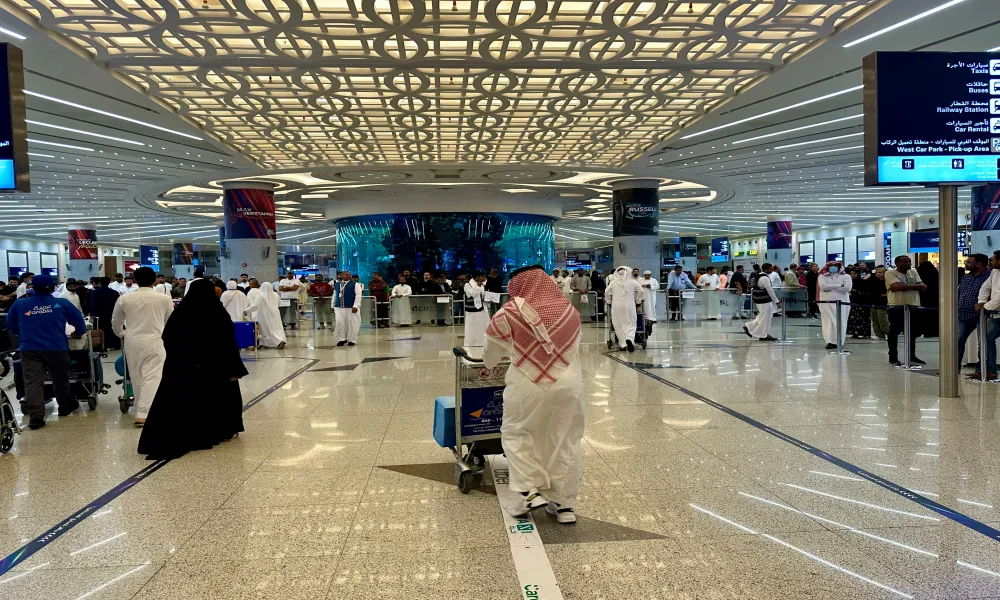

At least 12 people were killed and 309 injured in Saturday’s attack on King Khalid International Airport in Riyadh, according to Saudi authorities. The authorities blamed Ansarallah, the Yemeni rebel movement aligned with Iran and also known as the Houthis, after the family of its leaders. US President Donald Trump described the attack as unacceptable and said Washington could take part in operations against the group.
Victims of 12 nationalities
Four Saudi nationals and eight foreign nationals, among them a US citizen, were killed in the attack, the General Authority of Civil Aviation said in a statement.
“The attack targeting King Khalid International Airport in Riyadh (...) resulted in 12 deaths, including four Saudi nationals, two Bangladeshi nationals, one US national, one Egyptian national, one Argentine national, one Syrian national, one Palestinian and one Sudanese national,” the authority said on X.
It added that some of the 309 injured are in critical condition and reported material damage, the extent of which is still being assessed. Two doctors said that many pilgrims were among those affected.
Deadliest attack since 2015
The attack is the deadliest in the kingdom since August 2015. On that occasion, an attack attributed to the jihadist organisation Islamic State killed 15 people inside a mosque at the special forces headquarters in Abha, in the south of the country.
Airport operations suspended
Operations at the airport were suspended after the strike. A traveller waiting for a flight near the terminal hit by a missile told AFP: “I saw injured people. Everyone was running.”
Dozens of ambulances rushed to the airport. “We were told we are facing a ‘serious emergency’,” a medical source in Riyadh told AFP, as the injured were taken to several hospitals in the capital. Doctors were urgently called in to treat them.
Kuwait Airways, Etihad Airways and Qatar Airways cancelled several flights to and from Riyadh, with some cancellations extending until Monday. The airport urged passengers to contact their airline and confirm the status of their flight before travelling.
Foreign embassies had instructed their staff to avoid the airport for a week, according to a source at a Western embassy.
Coalition vows decisive response
The Saudi-led military coalition, which supports Yemen’s internationally recognised government, blamed Ansarallah for the attack. It denounced it as a “war crime” and said the kingdom intends to “respond decisively” to the “terrorist” act.
The coalition also said a projectile fell near Dammam airport in the east of the country. Together with Jeddah airport in the west, Dammam serves as an alternative to Riyadh airport.
It further announced the “interception and destruction” of an Ansarallah ballistic missile over Al-Kharj province, home to Prince Sultan Air Base.
Trump says US involvement is possible
“What happened in Saudi Arabia is not acceptable,” President Trump told reporters. He said he intended to speak by phone very soon with Crown Prince Mohammed bin Salman, the kingdom’s de facto leader.
Asked earlier on Saturday at the White House whether Washington would take part in operations against Ansarallah, he replied: “That is possible. We will look at it. We just learned that there was an attack (in Riyadh), so we will make a decision. We will act very quickly.”
According to US media, the kingdom has repeatedly asked Washington in recent weeks for help in confronting the Houthis.
International condemnation
UN Secretary-General António Guterres said he was “shocked” by the attack, which he “strongly condemned”. He recalled that actions against “civilians or civilian infrastructure violate international law”.
The UN Special Envoy for Yemen, Hans Grundberg, said in a statement posted by his office on X that attacks such as Saturday’s “pose a serious threat to regional security, perpetuate the cycle of violence and further complicate efforts to restore peace in Yemen”.
Pakistan’s Prime Minister, Shehbaz Sharif, also “strongly condemned” the attack.
“Attacks against civilians and vital infrastructure are completely unacceptable and pose a serious threat to regional peace and security,” Sharif wrote on X. “Violent acts of this nature, which constitute a flagrant violation of international law, must stop immediately,” he added.
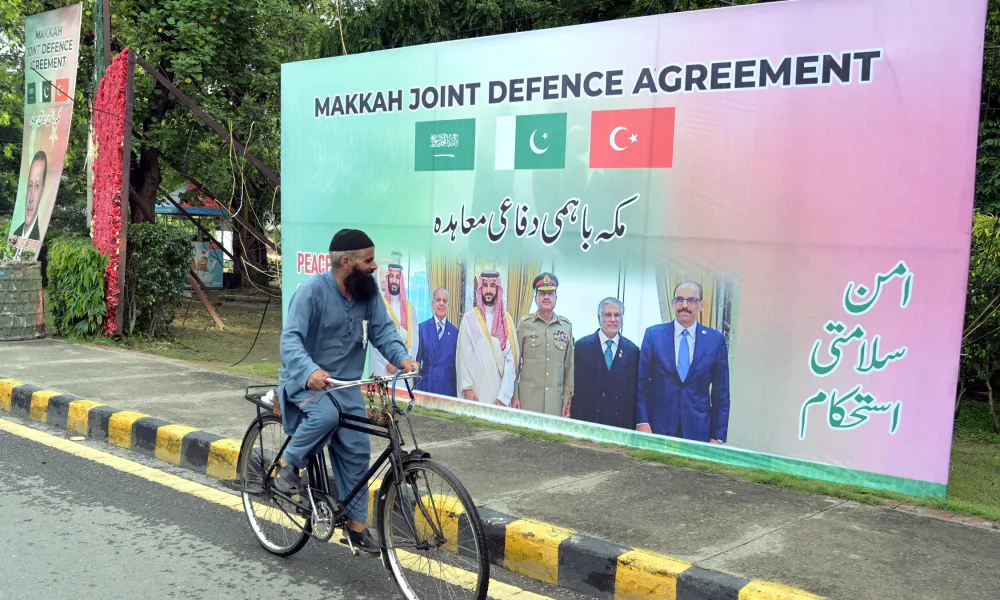
He also expressed “Pakistan’s unwavering commitment” to defending “the national sovereignty and territorial integrity of Saudi Arabia”. In August, Pakistan and Turkey signed a mutual defence agreement with Saudi Arabia in Mecca.
A series of attacks on Riyadh
Ansarallah announced on Wednesday and Thursday that it had targeted Riyadh airport. Three Saudi nationals, among them a pilot, were killed on Thursday. Nationals of Egypt, Algeria and Sudan were killed on Wednesday.
According to AFP, the scale and frequency of the rebels’ attacks on Riyadh in recent days are unprecedented since 2014, when the war between Ansarallah and the forces of Yemen’s internationally recognised government became widespread. The Riyadh-led military coalition intervened in the war in Yemen in March 2015.
Earlier, Saudi fighter jets struck Sanaa airport four times, according to Yemeni media.
The attacks come shortly before a major investment event due to take place in the Saudi capital this month, which usually attracts foreign chief executives of large companies and leading business figures.
Saudi Arabia, the world’s largest crude oil exporter, rarely acknowledges that civilian targets have been hit.
Fighting around Bab el-Mandeb
In September, the rebels launched a lightning offensive in Yemen, seizing the Red Sea coastline and consolidating their control over the strategic Bab el-Mandeb Strait. Government forces are carrying out a counteroffensive with Saudi air support.
Government sources told AFP on Saturday that forces were advancing in the area of the strait, but had not yet restored control over the sea route. The route’s importance has grown since Iran imposed restrictions on shipping in the Strait of Hormuz, on the other side of the Arabian Peninsula.
According to government sources and an Ansarallah official, fighting continues for Mayun Island, at the heart of the passage.
“Our forces maintain control of Bab el-Mandeb, Mayun Island and other areas along Yemen’s western coast,” Hizam al-Asad, a member of Ansarallah’s political bureau, told AFP.
The claims of the warring parties cannot be independently verified, as the situation is changing rapidly and access for journalists ranges from difficult to impossible.
This is a developing story.
With information from AFP and Protothema