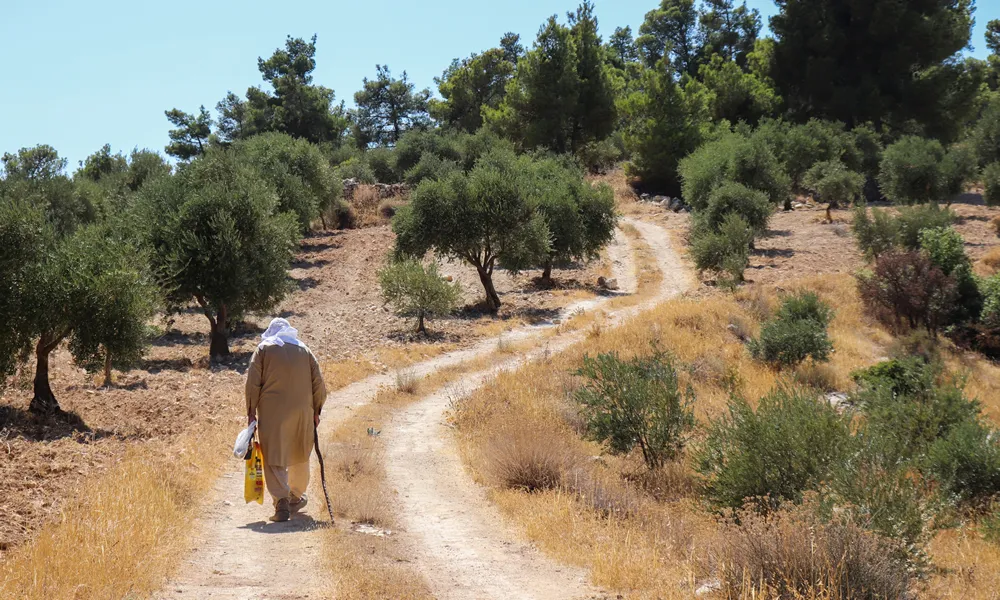



Across three fronts of the same broader conflict, one of the region's oldest living symbols is disappearing at a scale now measured in the hundreds of thousands, and in Gaza's case, the millions. Olive trees, some centuries old and predating any modern border, have become a recurring casualty of Israeli military operations in Lebanon, the West Bank and Gaza, destroyed through burning, bulldozing, chemical exposure and what officials in each territory describe as a deliberate strategy of dispossession. The destruction is now documented not only by advocacy groups but by United Nations bodies, Lebanese and Palestinian government ministries, and international human rights organisations, painting a consistent picture across three distinct territories.
White phosphorus and the buffer zone
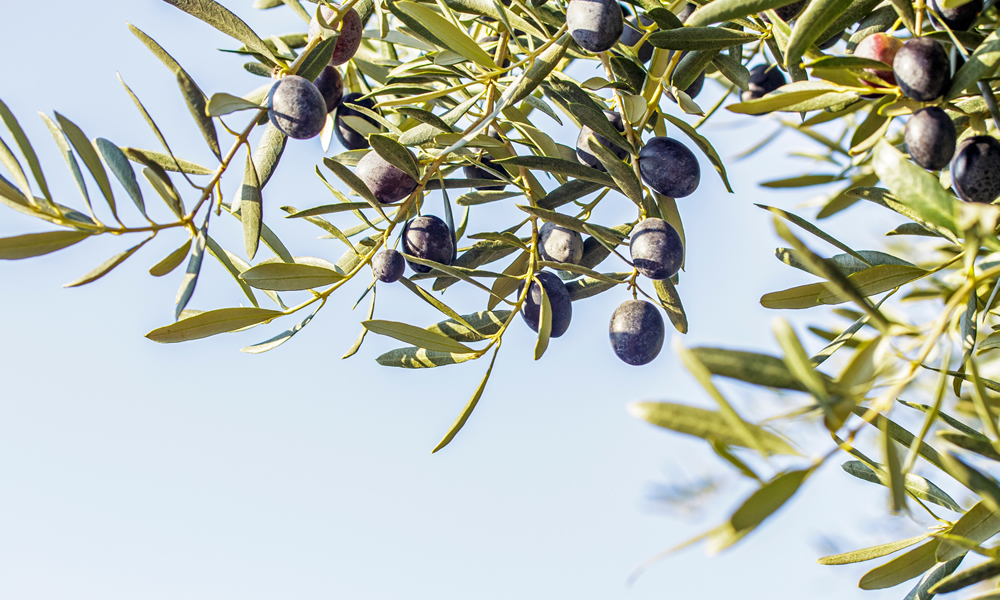
In southern Lebanon, the scale of destruction traces back to two distinct phases of the conflict. During the active war between October 2023 and November 2024, Lebanon's then agriculture minister, Abbas Hajj Hassan, said Israeli white phosphorus munitions burned approximately 40,000 centuries-old olive trees. Since the ceasefire took effect, a second wave of destruction has followed, driven by Israeli bulldozing to clear what the Israeli military describes as a buffer zone along the border. Current Agriculture Minister Nizar Hani told Al Jazeera that roughly 56,000 olive trees have been uprooted in the border town of Hula alone since the ceasefire began. The Lebanese Agricultural Research Institute puts the cumulative total since the war began at more than 60,000 trees across 814 hectares of groves, a figure corroborated by a Rosa Luxemburg Foundation report cited by the aid organisation Anera. In Nabatieh governorate, the head of the agriculture department, Hussein Al-Saqa, estimated structural damage to olive crops at around 40% in border villages, with olive oil production losses reaching 90%.
Human Rights Watch found that Israel made widespread use of white phosphorus munitions across southern Lebanese border villages between October 2023 and May 2024, putting civilians at grave risk and contributing to mass displacement. In a further report published in March 2026, the organisation verified and geolocated photographic evidence showing Israeli forces firing artillery-delivered white phosphorus over a residential neighbourhood in the town of Yohmor on 3 March 2026, igniting fires in at least two homes. Amnesty International separately investigated a 16 October 2023 strike on the town of Dhayra, finding evidence of unlawful white phosphorus use in an indiscriminate attack that injured at least nine civilians, and said the incident warranted investigation as a potential war crime. An Al Jazeera investigation, drawing on its own geolocation work, found that Israel dropped 117 phosphoric bombs on southern Lebanon between October 2023 and March 2024, striking at least 32 towns and villages across nearly the entire 100 kilometre southern border. Lebanon's Ministry of Public Health recorded at least 173 people injured by white phosphorus exposure over that period, while the International Organization for Migration recorded more than 92,600 people displaced from villages in the south.
White phosphorus ignites instantly on contact with oxygen and causes severe burns capable of penetrating bone, along with eye and respiratory damage. Its use is not banned outright under international law, but is restricted under Protocol III of the 1983 Convention on Certain Conventional Weapons, which prohibits its deployment against civilians or in civilian areas, a restriction rights groups argue has been repeatedly violated. Lebanon's Foreign Ministry has formally complained to the UN Security Council alleging Israel also used the herbicide glyphosate near the border, with laboratory testing of soil samples from Aita al-Shaab, Ras Naqoura and Dhayra confirming high concentrations of the chemical. Mohammad Hussein, head of South Lebanon's Agricultural Union, told Al Jazeera that Lebanese experts believe the destruction is deliberate, intended to render the border region uninhabitable and impossible to cultivate.
A pattern that has intensified year on year
In the West Bank, the United Nations Office for the Coordination of Humanitarian Affairs (OCHA) publish near weekly situation updates that log settler and military incidents against Palestinian farmers. During the October and November 2024 olive harvest, OCHA documented around 3,100 trees and saplings, mostly olive, burned, sawed off or otherwise vandalised across 89 communities, a threefold increase compared with each of the three preceding years. The following year's harvest season saw a similar pattern, with 86 settler attacks tied to the olive harvest recorded across 50 villages, vandalising more than 3,000 trees and injuring around 112 Palestinians. As recently as June 2026, OCHA recorded at least 100 additional olive trees and saplings vandalised across Nablus, Hebron and Bethlehem governorates within a single reporting week.
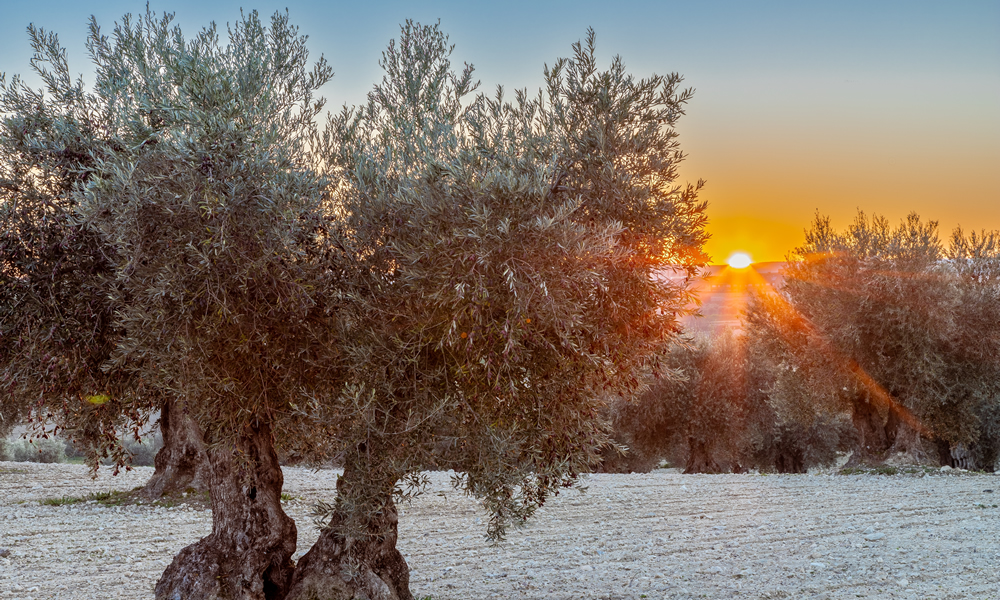
The Applied Research Institute of Jerusalem estimates that more than 800,000 Palestinian olive trees have been uprooted by Israeli authorities and settlers since 1967. More recent tracking by the Colonisation and Wall Resistance Commission found that at least 120,000 trees have been uprooted, damaged or poisoned since 2020 alone, with the pace accelerating sharply in recent years: 2025 saw 35,273 trees destroyed or damaged, more than double the total recorded in 2024, and the first five months of 2026 had already seen over 10,000 trees uprooted, including 6,700 olive trees. The Israeli human rights organisation Yesh Din, which provides legal assistance to Palestinians, documented at least 16 separate Israeli military orders to uproot trees issued across the West Bank in March 2026 alone, covering roughly 820 dunams of land. Yesh Din's earlier research found that of 211 reported incidents of trees cut down, burned, stolen or otherwise vandalised in the West Bank between 2005 and 2013, only four led to police indictments, a figure frequently cited by rights groups as evidence of near total impunity for such attacks.
Near total collapse of an ancient industry
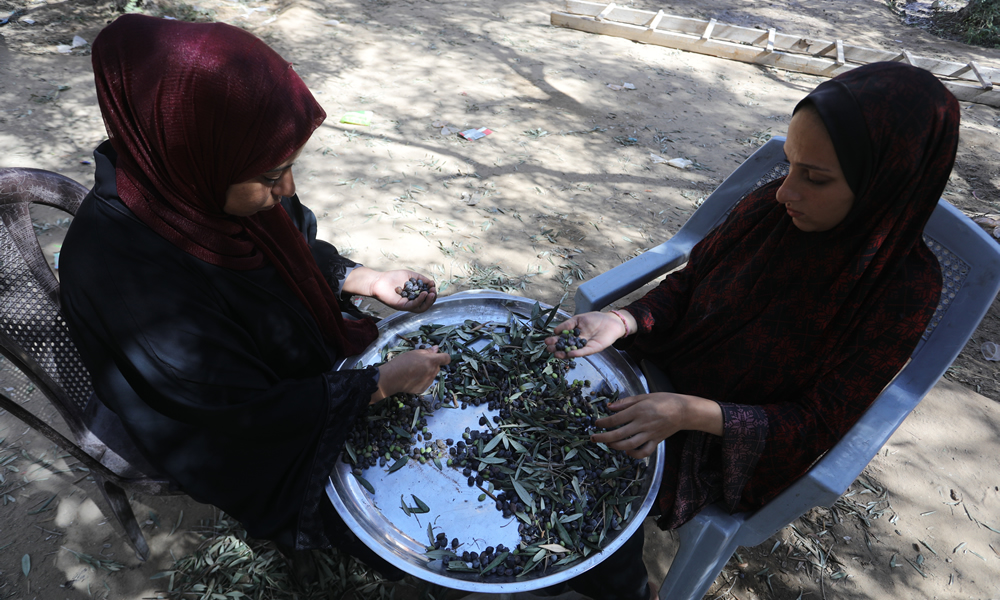
The Palestinian Ministry of Agriculture told the environmental outlet Mongabay that around 74% of Gaza's cultivated olive area has been destroyed since the war began in October 2023, equivalent to the loss of approximately 2,290,000 olive trees. The Palestinian Olive Council has offered an even starker estimate, with its head, Fayyad Fayyad, stating that nearly 1 million of Gaza's 1.1 million olive trees have been destroyed, a claim he has described as evidence of ecological warfare. Gaza's annual olive production, which stood at around 50,000 tons in 2022, fell to well under 1,000 tons by late 2025, according to the Council. The Palestine Liberation Organisation's National Bureau for Defending Land has put the destruction at over 75% of all Gaza olive trees since the war began. Gaza's olive oil pressing infrastructure has effectively collapsed alongside the groves themselves, with OCHA recording that the number of operational presses fell from 37 before the war to just four by early 2025.
Rooted in the same symbol
The olive tree's symbolic weight extends well beyond Palestine and Lebanon. It is Cyprus's own national tree, a fact that shaped a solidarity protest staged in Nicosia just over a year ago. In May 2025, activist Louis Allan climbed an olive tree on Agiou Prokopiou Avenue in Engomi and remained there for five days, undertaking a hunger strike he called "the olive tree protest" to draw attention to shortages in Gaza and call for an immediate ceasefire. Speaking to Politis at the time, Allan explained that he had chosen an olive tree deliberately, describing it as a symbol of peace with deep meaning for Palestinians in terms of agriculture, identity and their present circumstances, while also serving as a natural bridge to Cyprus, given the tree's status here. He said he wanted the protest to model the act of overcoming fear, in the hope that others might find their own way to respond to the crisis, whether through art, conversation or direct action of their own. During his time in the tree, Allan said he faced harassment from a group he believed were affiliated with a nearby university, an incident that drew its own coverage in the Cypriot press at the time.
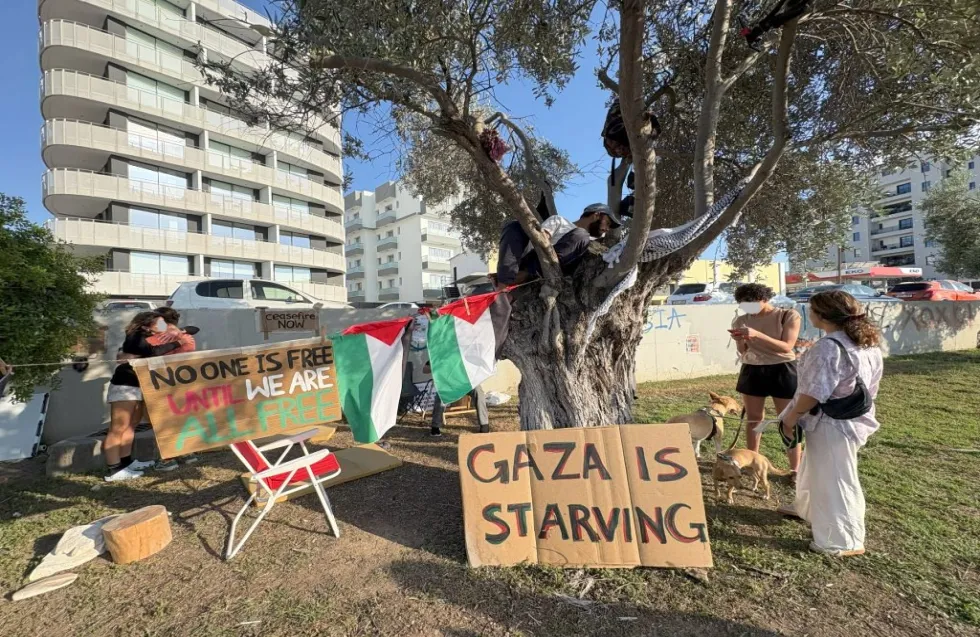
More than a year on, the tree Allan chose as his platform for protest stands as an apt symbol for what has unfolded since: an ancient, drought resistant species, deeply rooted in the identity of multiple peoples across the Eastern Mediterranean, now caught at the centre of a conflict that has destroyed it at a scale unprecedented in the region's modern history.
Sources: OCHA, Human Rights Watch, Amnesty International, Al Jazeera, Arab News, Palestinian Ministry of Agriculture, Palestinian Olive Council, PLO National Bureau for Defending Land, Lebanese Ministry of Agriculture, Lebanese Agricultural Research Institute, Rosa Luxemburg Foundation, Anera, Mongabay, Yale E360, NPR