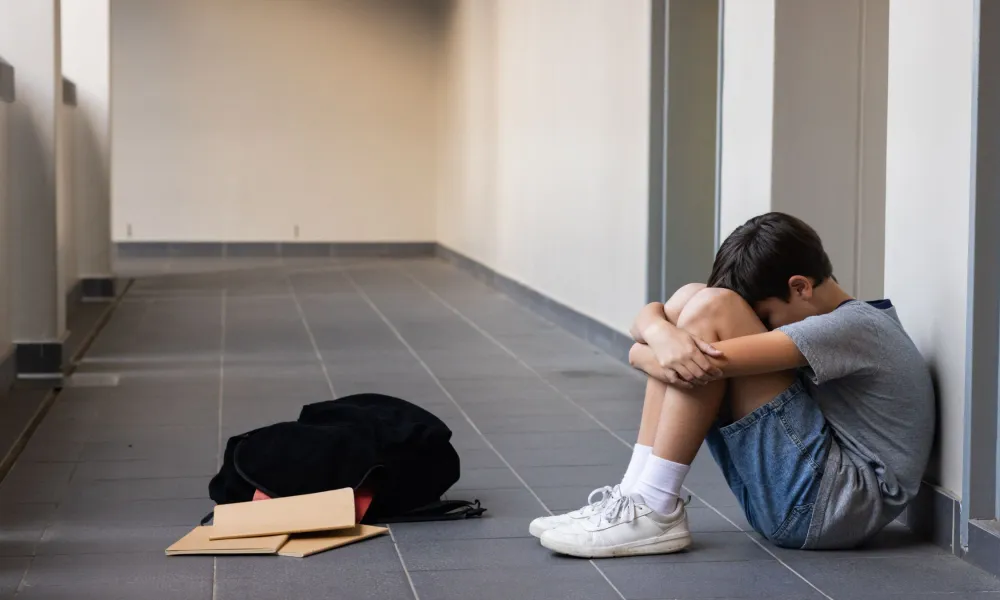

"Children are not numbers in a budget."
That is the message educational organisations are sending in response to the government's handling of plans to strengthen the Educational Psychology Service (EPS).
Following Politis' report on the rejection of the first 20 proposed educational psychologist posts and the subsequent counterproposal for 10 positions without additional funding, both POED and OELMEK have called for an end to what they describe as bargaining over support for students.
POED and OELMEK intervene
POED president Myria Vasiliou told Politis that the figures confirm what teachers experience every day, stressing that children's psychosocial and emotional support needs continue to grow without a corresponding response from the state.
"A situation where one educational psychologist corresponds to approximately 1,700 children cannot be considered adequate," she said.
Vasiliou called for the immediate and meaningful strengthening of the service to ensure prevention, early intervention and genuine support for children, parents and educators.
She also urged the government to move away from what she described as overly financial approaches to education.
According to Vasiliou, children's mental and emotional wellbeing cannot be viewed simply as a budgetary expense or as an issue to be negotiated between ministries.
The need for additional support was also highlighted by OELMEK president Constantinos Constantinou, speaking on state television.
He said a ratio of one psychologist for around 1,700 students could not be considered satisfactory, noting that the profile of today's student population is changing.
Constantinou stressed that schools need more specialists, including psychologists and social workers.
Teachers, he said, are increasingly required to deal with complex situations without always having the necessary expertise and tools, making professional guidance and support essential.
Only 67 psychologists for 114,000 students
The Educational Psychology Service currently employs 71 psychologists in total.
However, after accounting for personnel assigned to other duties, only 67 psychologists remain available to serve the general student population of approximately 114,000 children.
A Ministry of Education study identified a need for 60 additional psychologists over a three-year period, with 20 new positions to be added annually from 2027 onwards.
As previously reported by Politis, the Ministry of Finance rejected the original request, citing the significant increase in the Education Ministry's budget.
Following pressure from the Ministry of Education, the Finance Ministry returned with a proposal for 10 positions, but without providing additional funding.
The Education Ministry responded that it could not absorb even those positions within its existing budget.
Calls for immediate action
House Education Committee chairman Chrysanthos Savvides said the current psychologist-to-student ratio is out of proportion to the challenges facing modern schools.
He noted that early intervention is critical both for children with learning difficulties and for addressing incidents of violence.
Savvides said he intends to raise the issue at the Education Committee and seek answers on when the long-promised upgrade of the service will move forward.
DISY MP Savia Orphanidou, who also chairs the House Health Committee, called on the Ministry of Finance to reconsider the entire request for 60 additional positions.
In a written statement issued on Monday, she said prevention and early diagnosis benefit not only children but society and the state as a whole.
Orphanidou also expressed concern about youth delinquency and aggressive behaviour, adding that the issue will be discussed on Thursday at the House Health Committee as part of a broader debate on serious mental health challenges.