Municipalities continue to oppose the government’s proposed Municipal Waste Landfill Tax, arguing that local authorities and residents should not bear the cost of the state’s failures and lack of waste-management infrastructure.
“The municipalities and citizens will not pay for the state’s shortcomings and the absence of infrastructure,” the Union of Municipalities said in a statement, expressing concern over both the timing and implementation of the tax and warning of what it described as a lack of comprehensive planning on an issue with significant financial and environmental implications.
At the same time, the Presidency is pushing for the bill’s approval.
Politis understands that President Nikos Christodoulides has placed the measure at the top of a list of critical bills and regulations, which he requested be given priority consideration by parliamentary committees in a letter dated June 22, 2026, to House President Annita Demetriou, ahead of parliament’s summer recess.
In the same letter, referring to legislation pending before parliament, the President notes that some bills are directly linked to obligations undertaken by the Republic of Cyprus as part of the National Recovery and Resilience Plan.
He specifically highlights the Waste Regulations of 2026 relating to the landfill tax. The regulations have been pending since March, form part of the green tax reform package and constitute a commitment under the Recovery and Resilience Plan, with an implementation deadline of August 31, 2026.
Municipal opposition grows
Municipalities, meanwhile, are reacting strongly.
According to information obtained by Politis, they have begun a series of contacts with political parties in an effort to prevent the approval of the regulations, which provide for a charge of €10 per tonne until December 31, 2027.
Thereafter, the levy would increase by €5 per tonne annually, up to a maximum of €70 per tonne.
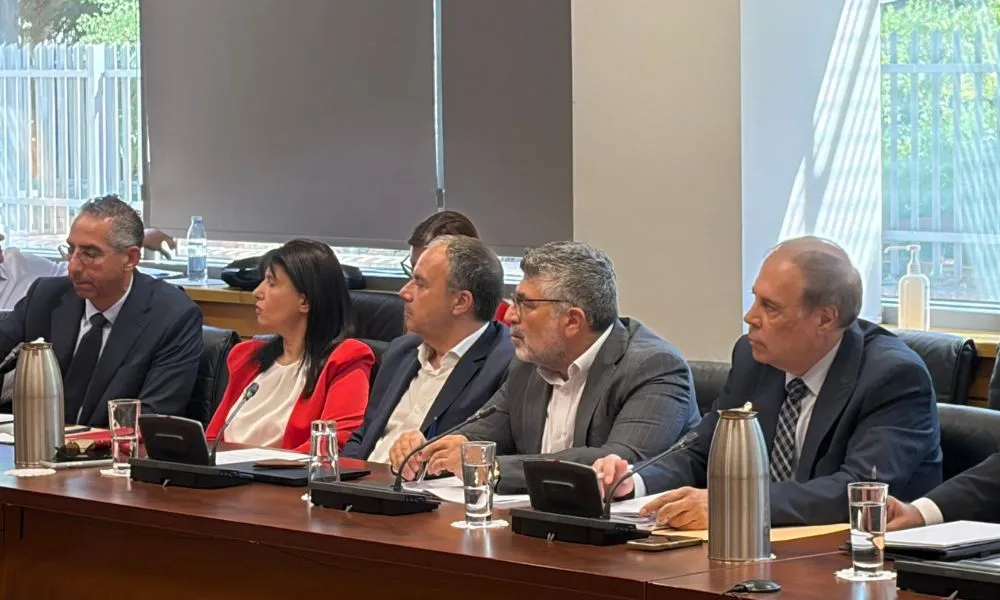
The Union of Municipalities’ statement comes as parliamentary discussion of the bill, which began on June 24 before the House Environment Committee, continues under pressure from the Ministry of Finance’s Directorate General for Growth.
Authorities have warned that unless the legislation is passed by the end of August, Cyprus risks losing €23 million in European funding from the Recovery and Resilience Facility.
The funds are earmarked for recycling infrastructure, source separation projects and modern waste-management systems.
Without such projects, local authorities cannot fully implement the long-delayed “Pay As You Throw” scheme, which, under existing legislation, should already have been in operation since July 1, 2024.
Government’s argument
The Department of Environment maintains that the tax is necessary to meet the national target of reducing landfill waste by 10% by 2035.
Revenue generated by the tax would be deposited into the Republic’s Consolidated Fund and used to support separate waste collection through financial returns to local authorities for purposes such as equipment provision and reducing the volume of municipal waste sent to landfill.
The department also warns that failure to meet the 2035 landfill-reduction target could expose Cyprus to European fines.
Dispute over the figures
The Union of Municipalities disputes the Department of Environment’s claim that 68% of waste is currently being landfilled.
According to municipal data, landfill rates stand at:
- 100% in Paphos,
- 85% at Pentakomo, and
- 74% at Koshi,
producing an average rate of approximately 80%.
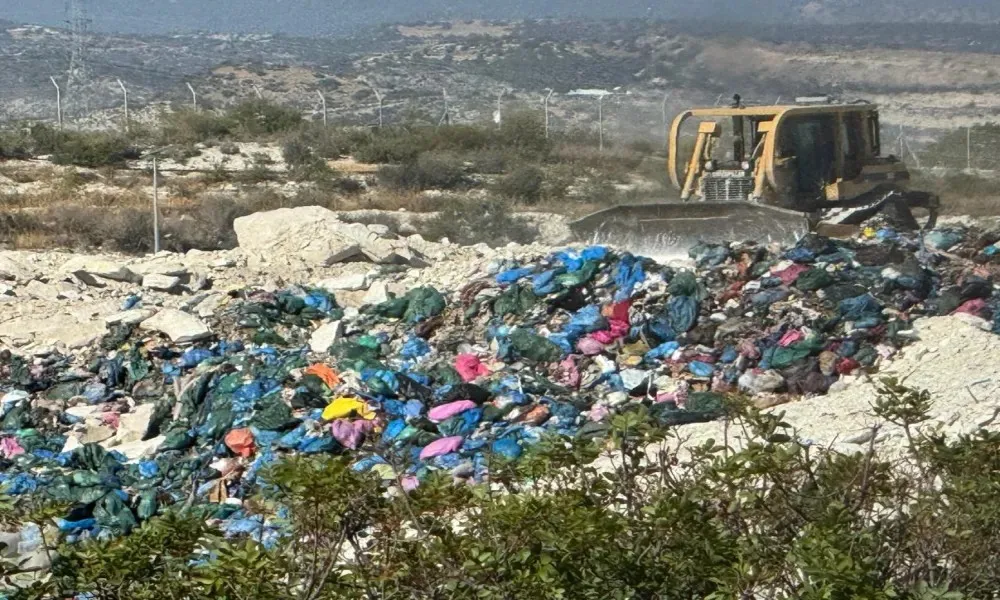
Given that around 500,000 tonnes of waste are deposited annually at those three sites, municipalities calculate that they will be forced to absorb costs of:
- €4 million in the first year,
- €6 million in the second year, and
- €8 million in the third year.
Municipal leaders have warned that they will ultimately have no choice but to pass those costs on to households, estimating that residents could face a cumulative burden of approximately €32.9 million over four years.
“The state’s failure is not our responsibility”
In its statement, the Union of Municipalities argues that local government and citizens cannot be expected to bear the financial consequences of the state’s failure to have the necessary waste-management infrastructure in place on time, including facilities for organic waste.
“It is inconceivable,” the statement says, “that at a time when municipalities face increasing financial obligations and are being asked to implement waste-management policies, there is no coherent state approach and no clear strategic planning for the implementation of such an important measure.”
The association further warns that delays in decision-making and the absence of a coordinated national strategy could jeopardise the €23 million in European funding intended for critical recycling, source-separation and modern waste-management infrastructure.
“These investments are a fundamental prerequisite for achieving national and European environmental targets and for permanently moving away from the outdated practice of landfill disposal,” it concludes.