
Iran has firmly rejected a threat by US President Donald Trump to declare the Strait of Hormuz "a territory of the United States," insisting the strategically vital waterway remains under its control and will only reopen by its own decision.
Iran's response
Iran's Deputy Foreign Minister, Kazem Gharibabadi, dismissed Trump's remarks late on Friday, after the US president claimed Washington would move to declare the strait US territory once "we finish defeating Iran." Gharibabadi said in a post on X that the Strait of Hormuz "cannot be seized with tweets, nor with aircraft carriers, nor with the issuing of a decree, nor with campaign speeches."
ترامپ گفته بعد از شکست ایران، بزودی تنگه هرمز را قلمرو آمریکا اعلام خواهد کرد!
— Gharibabadi (@Gharibabadi) August 14, 2026
تنگه هرمز را نه با توییت میتوان تصاحب کرد و نه با ناو هواپیمابر، نه با صدور فرمان و نه با سخنرانی انتخاباتی. ایران نه از تهدید می هراسد و نه با نمایش قدرت مرعوب میشود. (۱)
He added that Washington should "accept reality" and its "strategic and heavy defeats," saying: "The Strait of Hormuz was Iranian, is Iranian, and will remain Iranian." He noted that the strait remains "closed" and will only reopen on Tehran's "order."
Responding separately on X, Gharibabadi said Tehran would not be intimidated by threats or shows of force from the US, adding that the strait would only be opened, or closed, under Iran's own authority.
In an interview published on Saturday, Iranian Foreign Minister Abbas Araqchi said Iran had not decided to resume talks with the US, and that messages being exchanged via Qatar and Pakistan did not amount to negotiations, according to Reuters. Araqchi told the Iranian outlet Shahrara News that separate talks with Oman were focused on defining a sea route through the strait, while the US would have to meet certain conditions before shipping could resume through the waterway.
How the dispute began
The exchange follows remarks made by Trump on Friday during a speech at a police academy on Long Island, New York, as his administration struggles to conclude the war with Iran. The US president said he would "pretty soon" designate the Strait of Hormuz, a crucial global trade chokepoint through which around a fifth of the world's seaborne oil supplies typically pass, as US territory.
"After we finish defeating Iran, which is being very badly defeated, pretty soon I'll be declaring the Hormuz strait a territory of the United States," Trump said. "Essentially, that's what it is. We have the blockade. No ships get through unless we want them to."
The seriousness of the remark, and whether it signalled a new policy position for his administration, was not immediately clear.
A war at an impasse
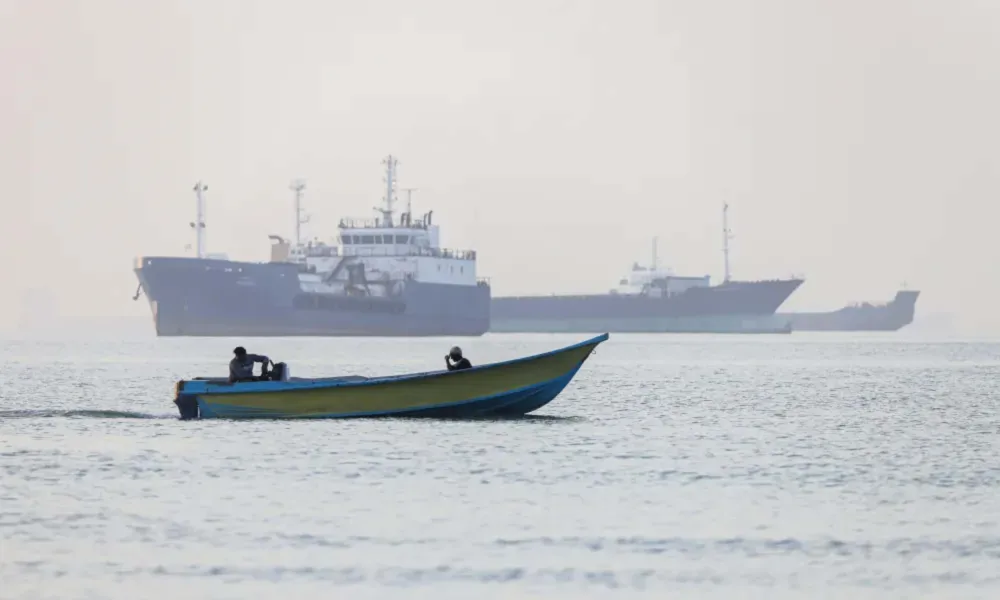
The comment came as peace talks with Iran remain stalled following failed negotiations, with Tehran refusing to reopen the strait, largely closed since the US and Israel launched their war on Iran in February. Almost six months into the conflict, there is little indication that negotiations will soon yield peace, with Iranian officials continuing to defy Trump's demands. The US has been blockading Iranian shipping and ports in recent months in an effort to increase economic pressure on Tehran.
Earlier in the week, Trump claimed the US had "total control" over the strait and said "I think we will keep it" in a post on Truth Social, despite the waterway being an internationally navigable strait bordered by Iran and Oman.
Rising costs at home
Fuel prices have risen sharply since the war began, forcing Americans to pay significantly more at the pump. Nevertheless, on Friday, Trump said Americans who have had to "pay a tiny little bit more for your gasoline" should remember that they are "doing it so that a very evil country cannot have a, really, it's the No 1 state sponsor of terror in the world, we don't want them to have a nuclear weapon."
"When you have to pay a little bit more, you're at $4, it's OK, I mean, it's not. I'll never apologise. I did the right thing," he added.
Over the past six months, the Trump administration has repeatedly claimed victory in the war, saying Iran's government has been pleading for a deal. Tehran has remained steadfast in its demands, saying as recently as last Saturday that it will not reopen the Strait of Hormuz unless the US "corrects its behaviour," "completely compensates" Iran for war damage, lifts sanctions, and "unconditionally" releases frozen assets.
Source: The Guardian