Over 200 days have passed since the US and Israel launched massive joint airstrikes on Iran, resulting in the death of several high-profile government officials and plunging the area in a war that still goes on today. Despite the ceasefire and diplomatic efforts to reach an agreement, the conflict has now spread to as far as the Red Sea, disrupting critical trade routes and threatening the world economy. Cyprus itself got caught in the middle, with a drone falling in the Sovereign Base Area in Akrotiri. Despite it all, Tehran has repeatedly expressed that Cyprus is not the enemy and projects a peaceful stance, urging for the parties to return to dialogue.
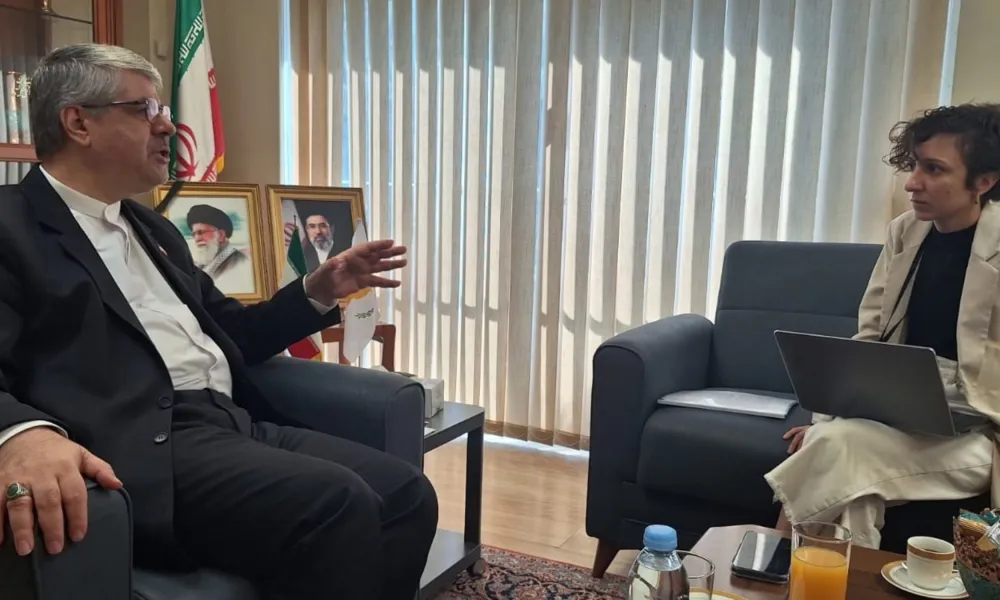
The Ambassador of Iran in Cyprus, Alireza Salarian, hosted “P” at the Embassy on Armenias street, and discussed the situation in the Middle East, Cyprus’ role and life in Iran in times of war.
On the war in Iran
Seven months into the war, how do you assess the situation?
The unlawful aggression by the USA and Iran has continued increasingly through economic pressure, since the attack on February 28th. Iran has acted and will continue to act in its right to defend its national interests, territorial security and national sovereignty. The important question is on what legal grounds was this attack carried out? No credible international organization has approved or endorsed such an attack. Even key European partners of the United States didn't support this action and stated that they were not consulted in advance. Two days before the attack, Iran was engaging in diplomatic negotiations regarding its nuclear program in Geneva in good faith. Even though president Trump withdrew from the JCPOA in 2018, during his second term, we were ready to negotiate. And we still are, our National Security Secretary General said that we are ready to negotiate and stop the war in the whole region.
Israel’s role then and now
There are several American threats. What is Israel’s involvement at the moment?
I think now they are behind the scenes. Mr Netanyahu’s lobby has very good relations with Trump and some of the officials at the White House and that’s why they convinced him to attack Iran and continue the war in the region.
New round of sanctions
How are the sanctions affecting you?
The sanctions and the maritime blockade of the Persian Gulf is mainly affecting oil exports but civilians are directly affected mainly by the sanctions on airlines. Currently, private airlines that fly to and from Iran are facing punishment. Even though governments like Turkey and Pakistan have good relations with Tehran, the businesses have no other option but engage. We were also trading with European countries, mostly Germany, Italy and France, reaching $30 billion.
The effect on Cypriot trading
The interesting fact is that Cyprus is also affected by these sanctions. Cypriot exports to Iran in 2022 alone, reached $35.3 million, whereas they have now dropped to about $500 thousand, mainly in the pharmaceutical sector.
The Gulf states want peace
The conflict is spreading in the wider region. How is this affecting bilateral relations?
Foreign Minister, Abbas Araghchi, has close contacts with his counterparts in Saudi Arabia, Egypt, Turkey, Qatar and even the UAE. But unfortunately, the war has damaged the confidence between the countries in the region. We have always pursued the diplomatic way, unlike the US, which has threatened Iran multiple times. But more pressure wields the opposite result. I think they haven’t learned from the lessons of the past.
The Gulf countries want to have peace, to export their products, especially oil. Because disruption of oil exports affects transport, chemical products and agriculture as well.
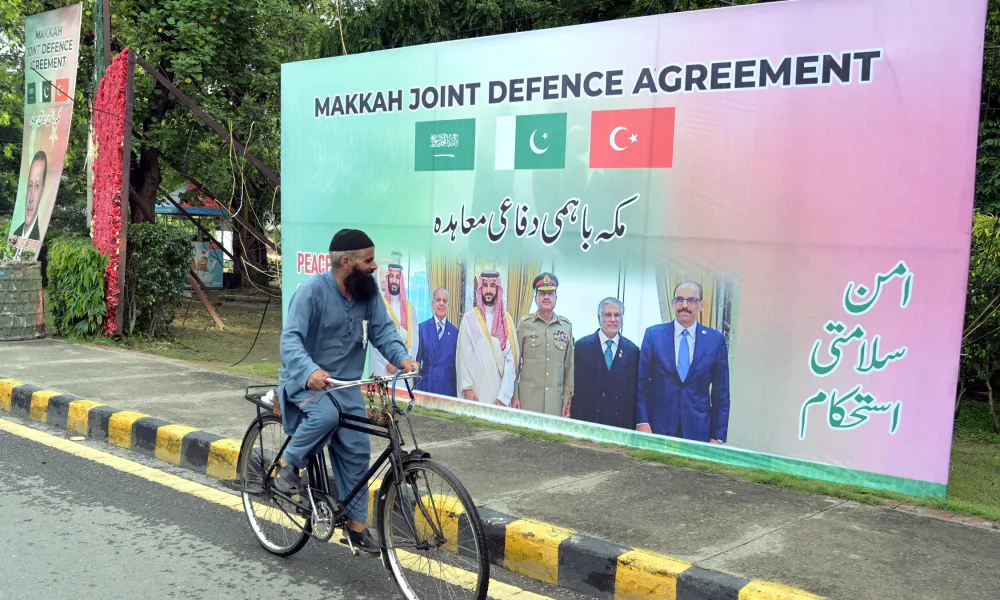
What is your comment on the Mecca Agreement? There were rumours that Iran could also join.
We are waiting for a proposal. We have good relations with the founding countries, especially Turkey and Pakistan, so an invitation will be considered as a positive thing.
Tehran’s relations with Lefkosia
President Trump recently threatened Iran with annihilation, sparking a response from Tehran that any country that aids the US, will be considered a possible target. Where does that leave Cyprus?
From the beginning of the crisis, we had very good relations with Lefkosia and the foreign ministers maintain communication with each other. We fully understand Cyprus’ position and limitations in regards to the British Bases and I believe that the Cyprus government has managed to maintain a fair position, considering the good relations it also has with the US and Israel. But they have tried to balance this relationship and emphasise on diplomacy and neutral position. So far we could successfully address the challenges and hopefully we will continue so in the future.
How big is the Iranian community in Cyprus?
Last year, the Ministry of Interior counted about 1000 Iranians permanently residing in Cyprus, in four cities, mostly Limassol and Larnaca. They are mostly involved in the business and technical sectors. Up until five years ago there was a direct flight between Tehran and Larnaca, that was only 2,5 hours, which was very useful as a transit to other European countries as well.
Life in Iran in times of war
How is the daily life of the Iranian people affected by the war?
Unfortunately there were some strikes in the southern cities, that cost the lives of Iranian people. In Tehran things are quite normal, the infrastructure is functioning. Iran is a huge country that produces a lot of goods itself. Despite the sanctions, imports are still occurring and we can still export to neighbouring countries, like Russia, China and Iraq. The blockade has affected us but not in the way the Trump administration expected.
The Iranian government has been accused internationally several times about women's rights. What is the current situation?
Things are not like they used to be. A lot of women are now walking in the streets without a headscarf. The rule applies only in official government buildings. There are women that wear chador as a religious symbol but it’s not obligatory.
What changed?
People have shown their support in the government and the military, holding demonstrations in the main square every night. The women without hijabs also join.
Relations with the Houthis
President Trump said that the Houthis agreed not to attack the US, where does that leave Iran?
We have always supported the Yemeni people and our stance on the Yemen issue is that it should be solved by dialogue between them. They have suffered for long enough. We support their political right to decide on their own. There is a blockade enforced by Saudi Arabia, practically we have no way of sending them weapons anyway. We are also in close contact with Riyadh to find a solution because both countries are Muslim at the end of the day.
What is your stance on the Russia-Ukraine war?
From the beginning, we didn’t support the Russian aggression against Ukraine, but we are seeing a double standard. Europe is condemning Russia and fuelling Ukraine with billions in defence spending, why are they not condemning the attacks on Iran as well? Unfortunately foreign interference is not stopping wars and countries like Lebanon, Yemen and the Persian Gulf are damaged.
What about the Cyprus problem and Turkey?
Hopefully one day the island is united, because over 50 years is long enough. We have good relations with the Turkish-Cypriot community and Turkey as well, and I am optimistic about the future. A united Cyprus can become one of the financial hubs in the region, due to its strategic location.