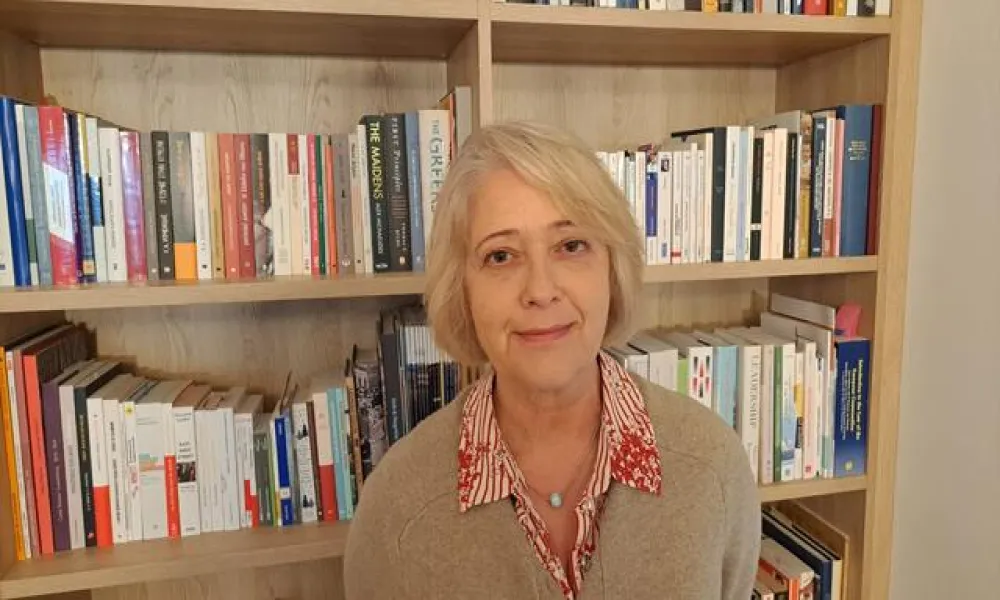

The public debate triggered by the report of the Independent Authority Against Corruption on the so-called ‘mafia state’ has brought to the fore critical questions about how institutions function, how justice is administered and how corruption is tackled in Cyprus. Lawyer and legal adviser, and former senior district judge, Alexandra K. Lycourgou analyses the institutional and legal ramifications of the case, evaluates the handling by the Legal Service and puts forward specific recommendations for the next steps, with the aim of safeguarding the credibility of the criminal investigation and restoring public trust in institutions.
Ms Lycourgou, chair of the Parole Board, was appointed in November 2023 by the Attorney General as an independent criminal investigator to examine issues involving officials of the Cyprus Football Association (CFA), as well as individuals connected to them. In May 2024 she was also appointed to investigate alleged manipulation of sporting events. Her report on CFA officials was submitted to the Attorney General in May 2025.
‘Cosa Nostra, Cyprus-style?’
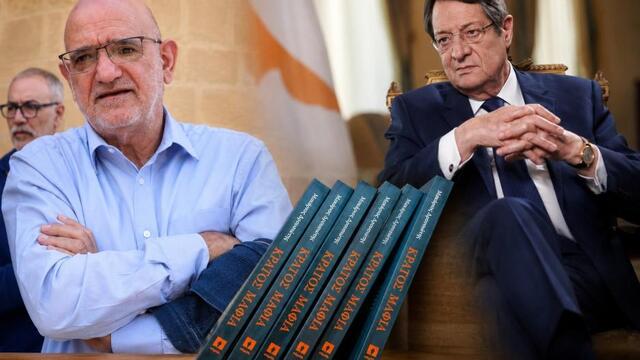
In light of the findings outlined in the Independent Authority Against Corruption’s statement on the ‘mafia state’ report by M. Drousiotis, are we in fact a mafia state?
For the time being, we are not a ‘mafia state’. Even if the facts recorded in the Authority’s announcement of 16 June 2026 are accurate, they are not comparable to the situation in Italy between 1950 and 1990, when the Sicilian criminal organisation Cosa Nostra held sway. At that time, Cosa Nostra had infiltrated public administration and, among other things, held a monopoly over public works. It provided votes and money to politicians and state officials, securing protection and favour in return. It intimidated judges, interfered in their work and, when they became a threat, even murdered them. In 1992, Cosa Nostra assassinated the capable, honest and courageous judges Giovanni Falcone and Paolo Borsellino, who in the mid‑1980s in Palermo led the Maxi Trial, sent hundreds of mafia members to prison and broke the mafia code of silence, omertà. We have certainly not reached that point.
Why “for now”?
Why do you say “for the time being”? Are we gradually becoming one?
If the facts outlined in the Authority’s statement are true – and, to be fair to those named, we should also hear their side – then yes, I believe we are gradually becoming a ‘mafia state’. I say this because the statement refers to facts that appear to show senior state officials, MPs, judges, senior police officers and high-ranking civil servants participating over time and in a systematic way in a network of mutual favours. Within this network, they are said to collaborate with law firms and business figures, allegedly exchanging influence, benefits and protection.
Is it all coincidence?
And it is worth noting that this is not the first report dealing with maladministration, collusion and corruption…
Exactly. Every few years, incidents emerge that create the impression of intertwined and corrupt behaviour among state officials, civil servants and influential figures in society and the economy. The authorities consider these incidents serious enough to warrant criminal investigations. They cannot all be coincidental, unfounded or malicious. We all live in the same Cypriot reality. We all know its limits and its pathologies. We all know the people and the events. We are not living in parallel realities. Can anyone seriously argue that the repeated references to collusion and corruption in our country are simply figments of imagination, or that there is always “smoke without fire”?
Doubts
Did the Legal Service react appropriately in announcing that (a) the two heads and prosecutor Elena Kleopa would recuse themselves from handling the report, and (b) the Attorney General immediately convened the Prosecutorial Council to take over the matter?
As regards the triple recusal, I have no particular comment. The decision by the three is understandable and entirely respected. Anyone who is formally competent to deal with a matter but feels, for objective or subjective reasons, that exercising that competence could create the impression of improper involvement, ought to step aside. However, I do have doubts about the correctness of transferring the Attorney General’s powers, specifically those concerning the prosecution of crime, to the Prosecutorial Council.
Composition of the Prosecutorial Council
Who makes up the Prosecutorial Council?
According to the Legal Service’s announcement, it consists of “the most senior officials of the Legal Service”, namely the nine officials holding the highest-ranking prosecutorial posts. Since Ms Kleopa has recused herself, it follows that the body now consists of the remaining eight prosecutors. Their names, like those of the entire Legal Service staff, are publicly available on its official website.
Role of the Prosecutorial Council
Why did the prosecutors of the Prosecutorial Council also step back from handling the report, which they forwarded to the Council of Ministers and the police?
If I read the Council’s statement correctly, the prosecutors did not recuse themselves. What they decided was not to exercise the first of the two powers delegated to them by the Attorney General, namely to assess the report and issue instructions to criminal investigators. Instead, they chose to forward the report, along with all its annexes, to the police and the Council of Ministers in its entirety, without providing their own assessment or guidance in between.
So does the Legal Service not withdraw entirely from the case?
It appears that the Prosecutorial Council remains in the picture. In their statement, the prosecutors do not clarify their intentions regarding the second power delegated to them by the Attorney General, which is also the most crucial: to evaluate the findings of the criminal investigation to be carried out by investigators appointed by the Council of Ministers and to decide whether to file criminal cases, against whom and for which offences.
Experience and trust
Do they have the necessary experience? Should we trust their decisions?
Beyond the issue of their hierarchical relationship with the leadership of the Legal Service – which raises doubts for some as to their independence – there is also the question of whether the eight of them, or at least the majority, possess the required knowledge and experience to handle such a novel and highly complex criminal case and to take the final decisions.
Are eight prosecutors of the Republic not sufficient?
They may not be. They may lack the specialised knowledge and professional experience required across the three relevant branches of law – criminal law, criminal procedure and the law of evidence. Ms Kleopa, by contrast, undoubtedly possesses such expertise. As a prosecutor who for years has headed the criminal law division, she has successfully handled dozens of criminal cases as the prosecuting authority.
Do you doubt whether the eight prosecutors of the so-called Prosecutorial Council have the knowledge and experience required for the ‘mafia state’ report?
I do have doubts, based on what I have read on the official website of the Legal Service and what emerges from its published organisational chart. According to this, the Legal Service operates under an internal system of strict division of cases by area of law – civil, criminal, administrative, international and so on. Within this framework, it is organised into nine sectors and sub-sectors, each overseen by a prosecutor.
It is therefore reasonable to conclude that the eight prosecutors who head the other sectors and sub-sectors are not involved in criminal law and criminal procedure, or at least do not have specialised knowledge or extensive professional experience in those fields. Their expertise lies instead in the specific legal areas they supervise.
‘Unrelated to criminal law’
Which are these other eight sectors and sub-sectors?
They include fiscal law, international law, civil law, extraditions and European arrest warrants, public prosecutors, constitutional coordination and legislative scrutiny, as well as the administrative court appeals sub-sectors and those relating to international protection. Six of these – fiscal, international, civil and constitutional coordination, along with the two administrative appeal sub-sectors – are unrelated to criminal law and criminal procedure.
The other two – extraditions and European arrest warrants, and public prosecutors – are indeed related, but they do not have the breadth of the criminal law division. Their functional remit is different and does not provide the necessary theoretical foundation or practical experience for handling serious corruption offences, assessing complex investigations or drafting indictments. I say this based on the Legal Service’s own published information.
‘We are not all suited to everything’
But these eight prosecutors are not random individuals.
Certainly not. However, academic qualifications, general legal training and professional distinction in other areas of law are not sufficient for properly handling this particular case. What is needed is proven, systematic and long-term engagement with substantive and procedural criminal law, as well as the law of evidence. It also requires extensive experience in complex criminal cases.
Handling routine cases, such as drug trafficking or illegal possession of weapons, is not enough. We are not all suited to everything. Can even the most distinguished ophthalmologist successfully perform knee surgery?
Are you being too strict? Perhaps even exaggerating?
The medical analogy may sound excessive, but it reflects real truths. In a case of such magnitude and importance, can we afford to settle for a solution whose shortcomings are already evident? There is also the issue of priorities for these prosecutors.
Workload concerns
What do you mean?
I believe we all agree that those involved in evaluating the results of the criminal investigation and taking final decisions must act as swiftly as possible. Given the profile of those named as potential suspects in corruption offences, as well as the circumstances surrounding these offences, final decisions cannot be allowed to drag on indefinitely.
Can the eight prosecutors set aside the urgent and ongoing cases within their sectors? Can they step away from the cases they are currently handling before the courts in order to undertake the demanding task of reviewing the findings of the investigation, along with dozens of witness statements and pieces of evidence?
A solution outside the Legal Service
What do you propose?
The triple recusal has fundamentally altered the conditions for the Legal Service to exercise its constitutional responsibility (Article 113 of the Constitution) to prosecute crime adequately and reliably. Especially following the entirely understandable recusal of Ms Kleopa, whose knowledge, experience and effectiveness inspire confidence, it is understandable that many are now looking for a solution outside the Legal Service.
But how can the Legal Service step back in difficult cases?
This development should not leave us paralysed, nor should we become hostage to it. This is an exceptional case, and therefore the solution must also be exceptional. The law is constantly evolving; it is a living, dynamic discipline and does not allow for dead ends.
‘Ad hoc body for indictments’
Asked what she specifically proposes to keep the Legal Service out of the ‘mafia state’ case, Alexandra K. Lycourgou said she recommends that “the State entrust the task of evaluating the findings of the investigation – to be conducted by criminal investigators – and of drafting indictments, should evidence of guilt emerge, to an ad hoc collective body”.
However, she added, “for this solution to be considered constitutionally acceptable, it must be thoroughly studied and systematically justified, and implemented with precision, consistency and institutional responsibility”. The removal of a constitutional power from a state body such as the Legal Service and its assignment to an ad hoc body, established for the specific management of a particular case, “is an exceptional measure”, the lawyer noted.
Integrity and independence
Who can decide on the creation of such an ad hoc body?
The decision can be taken by parliament through the adoption of a special law. The initiative may come either from parliament itself, through a legislative proposal, or from the Legal Service, through a government bill.
“I believe this solution is aligned with the principles of constitutional law and our case law,” she said, noting that in this instance there are clearly unforeseeable and exceptional circumstances that render the normally competent body unable – or significantly inadequate – to perform its function.
She stressed, however, that particular care is required in drafting such legislation. Its provisions must ensure that the ad hoc body operates only on a temporary basis and strictly within the limits of necessity; that its members possess proven integrity and independence; that they have no conflicts of interest; and that they bring the required specialised expertise and extensive professional experience. It must also be ensured that the members of the ad hoc body are in no way inferior to those ordinarily competent – namely, the Legal Service officials who have recused themselves.
Passing such a law appears difficult and time-consuming.
“It certainly requires careful handling,” she said, adding that it would also require consensus and cooperation among parliamentary parties. As for timing, that would depend on the pace decided by both the Legal Service and parliament.
“Summer holidays can wait this year for as long as necessary,” she remarked.
A precedent in 1963
Are there precedents for such ad hoc arrangements?
There are precedents where the courts deemed deviations from the Constitution to be acceptable due to exceptional circumstances and the need to safeguard fundamental interests. She cites the landmark 1964 Supreme Court ruling in The Attorney General of the Republic v Mustafa Ibrahim and Others, which forms a cornerstone of Cyprus’s legal system.
The doctrine of necessity
What was at stake then?
At the time, the legal existence of the Republic of Cyprus was at risk. In December 1963, members of the Turkish Cypriot community withdrew from positions in the public service, government, the Supreme Court and parliament. As a result, these institutions could no longer function as prescribed by the 1960 Constitution.
The state did not remain inactive. The House of Representatives – now composed solely of Greek Cypriot MPs – responded by passing the Administration of Justice (Miscellaneous Provisions) Law (No. 33/1964), which preserved the state and allowed the Republic to continue functioning.
In practice, the law was enacted and brought into force without complying with constitutional provisions, including the requirement for the participation of the Turkish Cypriot Vice-President. A legal challenge followed, focusing on whether the law could stand despite its deviation from the Constitution.
The Supreme Court, invoking the doctrine of necessity, ruled that Law 33/1964 was valid and binding, as the overriding priority was the survival of the Republic. The law remains in force to this day, regulating the administration of justice.
The Mustafa Ibrahim ruling was followed by a series of decisions serving the same purpose: allowing legislation that diverges from constitutional provisions when justified by exceptional, unforeseen and well-founded necessity.
‘The criminal investigation process risks collapsing’
Asked what is currently at risk, so as to justify her proposal for creating an ad hoc body to handle indictments in the ‘mafia state’ case, Alexandra K. Lycourgou replied that “today, the process of criminal investigation in an unprecedented and shocking case risks collapsing, one that involves individuals at the highest levels of the state”.
“Regardless of the integrity and honesty of the members of the Prosecutorial Council,” she added, “I believe they do not possess the necessary qualifications to handle a criminal case of such nature and gravity.”
“Moreover, social cohesion and public calm are now also at risk, as is trust in the state and its institutions. There are already fears that the case will be dropped because it concerns top state officials and senior public servants. These concerns must be taken seriously. The accumulated anger, disappointment and despair must be channelled through institutional, transparent and credible procedures,” the former senior district judge added.
‘Not foreigners’
So should we turn to foreign experts, as some lawyers suggest?
“We already have one positive example, that of Gabrielle McIntyre from Australia. But, for heaven’s sake, not foreigners. Let us not forget that Ms McIntyre is one of four inspection officers; the other three are Cypriots – Charilaos Chrysanthou, Orestis Nikitas and Andreas Efthymiou. The members of the Independent Authority Against Corruption are also Cypriots.
“In fact, the Authority’s own statement highlights the risks of relying on foreign investigators who lack in-depth knowledge of Cypriot law and its particularities, and who may not be able to reliably assess the evidential value of the material they gather, anticipate how issues may unfold in court proceedings, or steer a criminal trial away from potential pitfalls.
“I am referring to the differing legal opinions between Ms McIntyre and the three Cypriot inspection officers regarding the evidential value of certain phone messages. Thankfully, the position of the Cypriot experts prevailed.”
‘We must not undermine ourselves’
But we have not always had such positive experiences with local officials.
“I agree. But if we begin to distrust our own professionals and start looking abroad for solutions, we will gradually lose confidence even in our criminal judges. Is that what we want? To undermine ourselves? To become a state that turns to external saviours whenever it faces difficulty because it does not trust either the integrity or the competence of its own citizens?”
How many independent criminal investigators should be appointed for such a complex case?
“There should be at least three investigators, and any higher number would be unnecessary. A collective structure ensures faster and smoother operation, avoids deadlocks and strengthens the institutional legitimacy of their decisions.”
Non-publication
Should the report be published in full?
“The Authority’s report should not be published in its entirety. This is to prevent arbitrary, malicious or misleading commentary, and to protect individuals for whom, at this stage, no incriminating findings have emerged. Non-publication serves institutional seriousness, protects the process and avoids unjustified public vilification.”
An ‘internal enemy’
Even if only half of the Authority’s findings are accurate, Cyprus appears to be facing an internal enemy…
“I fully agree. However, it is within our power to confront this internal threat. Our country has the right people and the necessary institutional strength to tackle maladministration, collusion and corruption – if the will exists.
“After all, in 1964, under far more difficult circumstances than those we face today, it was our own people who saved the Republic: the then Attorney General, Kriton Tornaritis, and the Supreme Court judges Christodoulos Vassiliades, Michalakis Triantafyllides and Iosif Iosifides.”