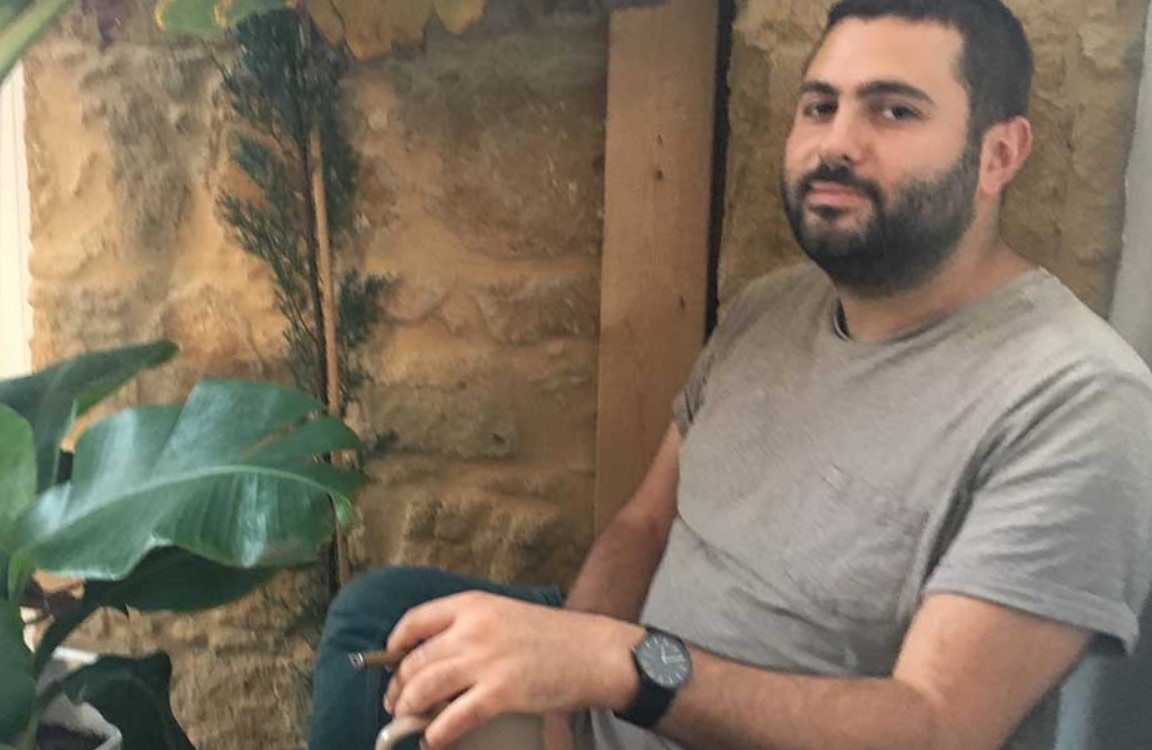
Turkish Cypriot academic, writer and columnist Bulut Ünvan says the Cyprus issue may appear politically frozen, but has in fact undergone a deep ‘sociological transformation’ in recent decades.
From conflict to institutional crisis
Speaking to Politis, Ünvan argues that while the problem initially emerged as a result of deliberately fuelled intercommunal conflict, the main source of the current deadlock no longer lies between the two communities but within the political institutions themselves, which continue to reproduce and sustain it.
Ünvan notes that in recent years meaningful openings have emerged through crossing points, bicommunal activities and certain shared political processes.
For Turkish Cypriots, he explains, resolving the Cyprus issue is not only about relations with Greek Cypriots, but also about redefining their relationship with Turkey on a more balanced and sustainable basis.
He describes the current model as one of asymmetric dependence, which is increasingly difficult to sustain in the long term.
A critical moment for diplomacy
Referring to the visit of the UN Secretary-General’s personal envoy Maria Angela Holguín, Ünvan says it comes at a particularly critical moment amid wider geopolitical shifts.
Political establishments in many countries are under strain, while global power balances are changing rapidly, he notes, adding that Cyprus cannot remain unaffected.
He expresses hope that Holguín’s mission will help create the conditions for compromise, which he believes is becoming increasingly inevitable as borders, alliances and spheres of influence are reshaped worldwide.
Why he sees room for progress
Ünvan expresses cautious optimism about potential developments in the Cyprus issue, pointing to two key factors.
First, he believes Turkey no longer has the same capacity for unilateral control over Cyprus as in the past. Second, he argues that the Greek Cypriot right no longer holds sufficient political strength to block a possible agreement.
He cautions, however, that any future solution may not reflect a grassroots vision of peace between the two communities, but could instead emerge primarily from international dynamics and power balances.
Even so, he considers such an outcome a vital necessity.
Erhurman’s balancing act
Commenting on the approach of Turkish Cypriot leader Tufan Erhürman, Ünvan says he appears to be pursuing a deliberate strategy of balance.
According to Ünvan, Erhürman believes that the most dangerous position for a Turkish Cypriot politician is to take a clear and rigid stance. As a result, he avoids absolute positions in order not to clash either with Ankara or with key segments of the Turkish Cypriot community.
Despite this, Ünvan believes Erhürman genuinely seeks a solution and is attempting, through careful political engagement, to bring Turkey closer to that prospect.
He adds that even moving away from the rhetoric associated with Ersin Tatar represents a form of progress in the political climate in the north.
Everyday consequences
Beyond the political dimension, Ünvan stresses that the unresolved Cyprus issue affects almost every aspect of daily life for Turkish Cypriots.
He cites the inability to operate direct international flights, the absence of an internationally recognised postal system for online commerce, difficulties in exporting local products and the lack of a stable currency.
He also highlights wider impacts, including rising crime in an economy increasingly dependent on opaque and illicit financial flows, as well as environmental degradation linked to a development model heavily reliant on construction.
Fear of gradual decline
All these factors, he concludes, are fuelling a growing concern within the Turkish Cypriot community.
“They feed an increasingly intense fear that the continuation of our collective existence is becoming more difficult,” he says, adding that “without meaningful change, the community risks gradually losing its cohesion, autonomy and ultimately its very existence within a relatively short period.”