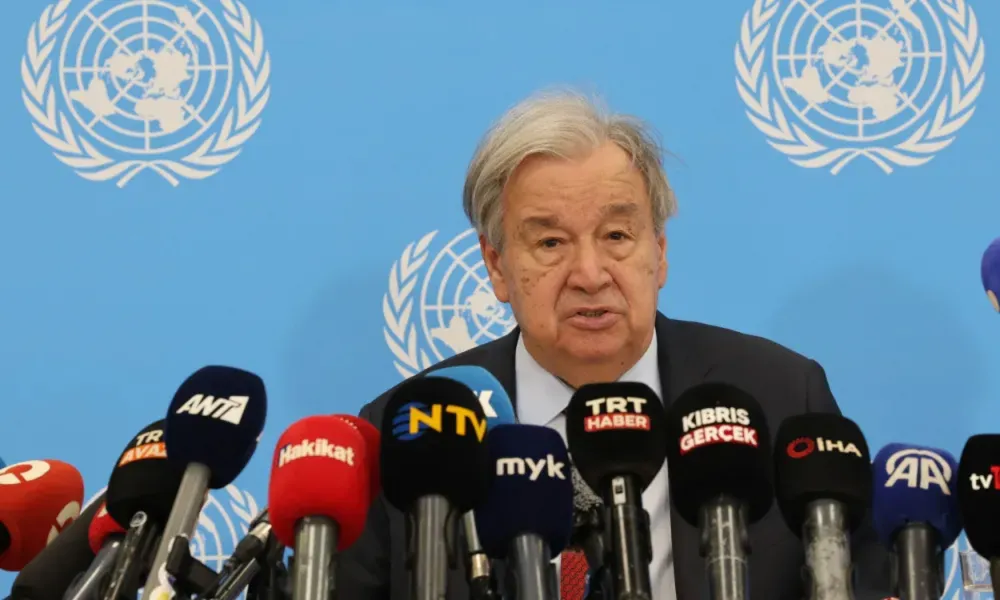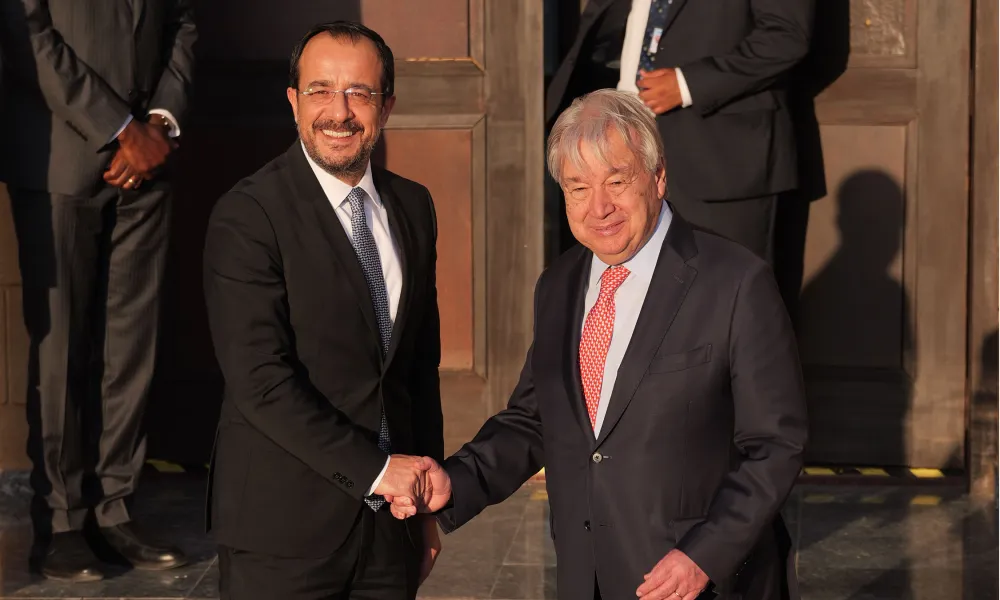

António Guterres' visit to Cyprus showed that the international community does not want the Cyprus problem to remain frozen, political analyst and journalist Marina Oikonomidou said on Politis Radio.
Oikonomidou said the UN secretary-general used his presence and his public remarks to underline his personal interest in the Cyprus problem, recalling the efforts made during his time in office, from Crans-Montana and Berlin to the meetings in Geneva. His message, she said, was that the United Nations remains ready to help, but that this requires matching political will from the two leaders. The announcement of a new expanded meeting, without a set timeline and attached to conditions, showed that the necessary progress has not yet been made.
A record of unresolved practical steps
Oikonomidou pointed to the failure to reach agreement even on simple confidence-building measures. She noted that the opening of new crossing points has not gone ahead, nor have other proposals such as a solar park. If the two sides cannot agree on practical matters, she said, the reasonable question follows as to how they will manage to discuss the substance of the Cyprus problem itself.
She also criticised the political parties, saying that at a moment when a positive development was expected from the secretary-general, political debate at home was focused instead on whether parents' names should appear on new identity cards. This, she said, points to misplaced priorities and a broader unease around the national issue. She stressed that maintaining an artificial sense of movement is not enough. What is needed, she said, is genuine preparation on the Greek Cypriot side, an active negotiating team, briefings for political parties and society, and clearly defined objectives.
Oikonomidou closed by saying she hoped the expanded meeting would take place before the end of Guterres' term, but stressed that the real test is not simply whether the meeting is convened. The actual stake, she said, is whether it avoids becoming another failed attempt, and instead opens the way to substantive negotiations.