
UN Secretary-General António Guterres met with both leaders in the divided capital on Tuesday, expressing solidarity and support to the people of Cyprus in the effort to find a solution. Getting there depends on the two communities and three guarantor powers, he noted.
Guterres also highlighted the potential threat to Cyprus of the ‘chaos’ in the region, making a solution that puts the island on a more secure footing even more important.
In a social media post on his arrival to the island, the UNSG said: “The UN cannot impose peace. Only Cypriots, through their leaders, can build it.”
Later, as his meetings progressed, he added the guarantor powers to the list.
Chaos in the region
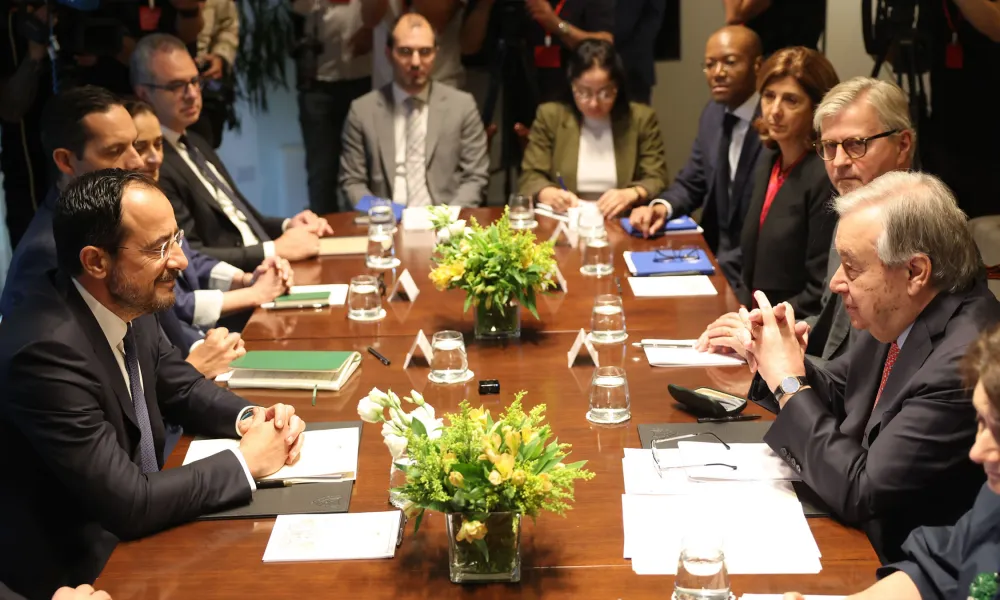
Under a glaring sun, Guterres began his day at the Presidential Palace, meeting President Nikos Christodoulides and his team, including Foreign Minister Constantinos Kombos, European Affairs Deputy Minister Marilena Raouna, Government Spokesperson Konstantinos Letymbiotis and negotiator Menelaos Menelaou.
Guterres was flanked by his Personal Envoy María Ángela Holguín, Special Representative Khassim Diagne, and Under-Secretaries-General Rosemary DiCarlo and Jean-Pierre Lacroix.
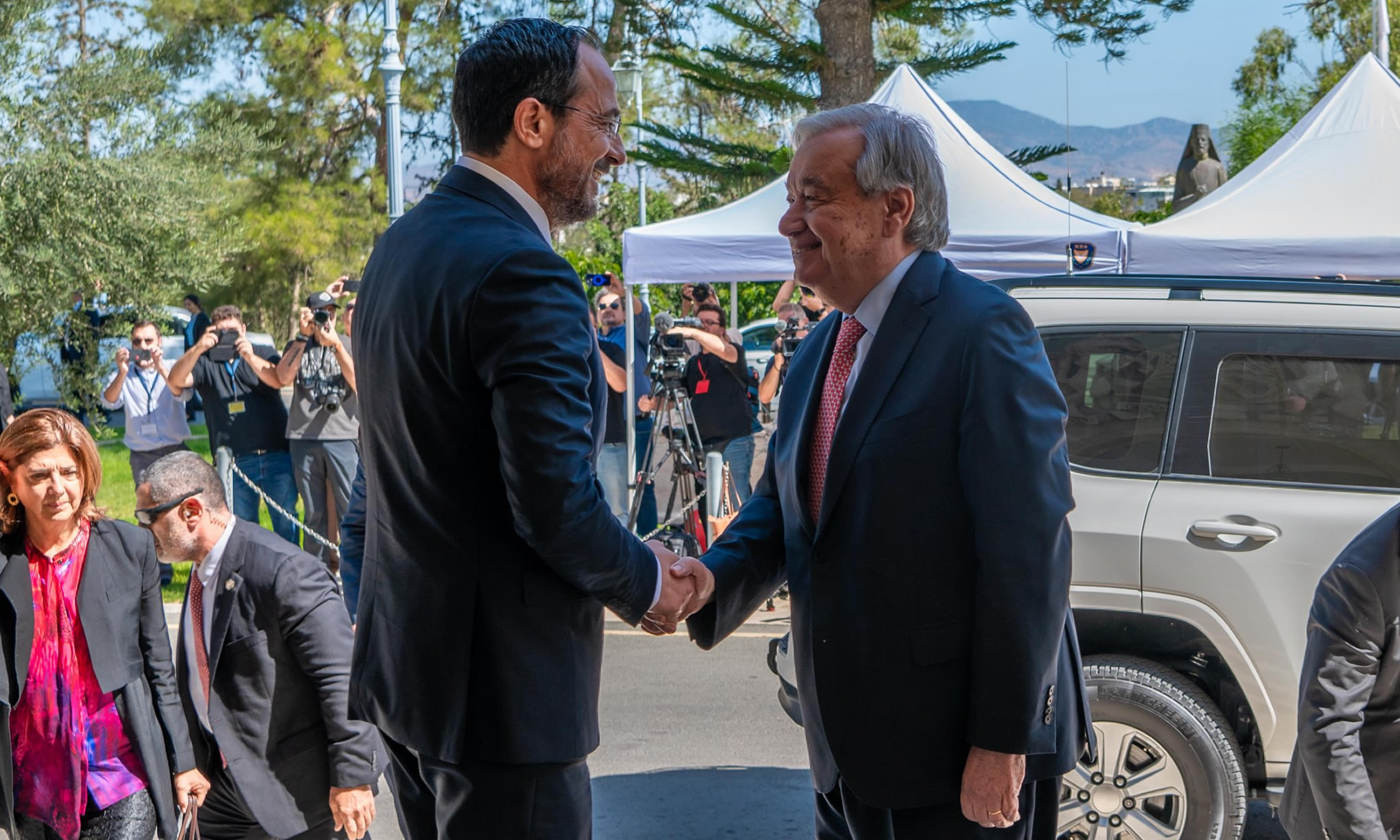
The President welcomed the UNSG, noting that Cyprus, the region and the world needs good news, especially “in these very challenging times” where “certain actors” undermine the post-World War Two international system.
In response, Guterres gave a frank assessment of the current state of play, providing rare insight into the motivation behind his decision to visit the island at a time when formal peace talks have been in the deep freeze for nine years and counting.
“As you rightly said, if there is a moment in which a solution for the Cyprus problem is important, (it) is this moment of chaos in the region,” he said, adding, “And with some geopolitical changes that could all of a sudden put Cyprus more in the centre of unnecessary events, so we are very much interested in finding solutions to allow, to make sure that Cyprus will not get…” The UN chief cut the sentence short after noticing the glare of the cameras.
Expressing his “solidarity” to support the two communities, Guterres said he was fully aware that a solution would not only have “a very positive impact for Cyprus but will be extremely useful in the context of a very difficult situation of the region”.
He added: “It’s not for me to teach to anybody whatever should be done, but with humility, I'm here with total commitment to support your efforts.”
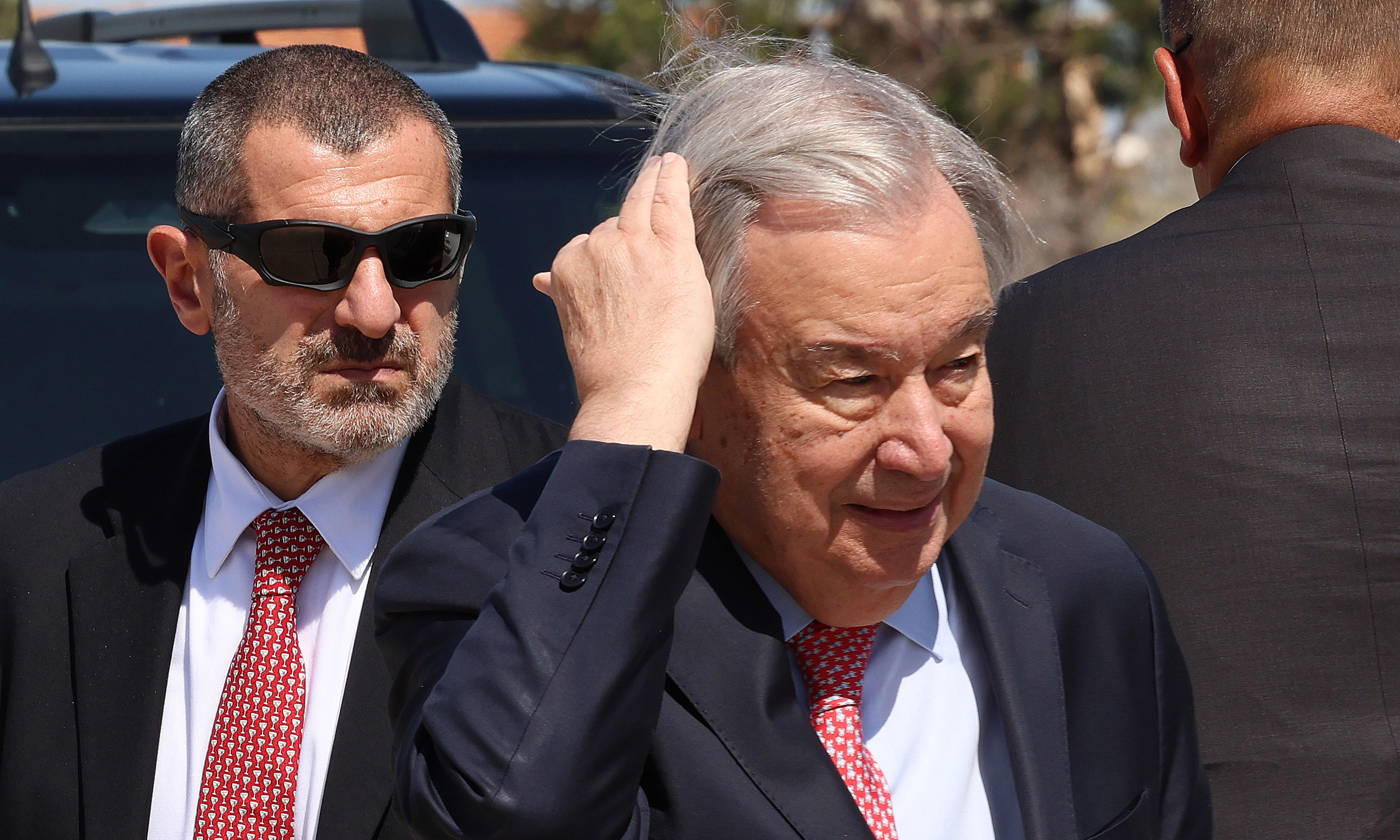
After the meeting of the delegations, Guterres had a tête-à-tête with Christodoulides, as he did with the Turkish Cypriot leader later.
Speaking to reporters outside, with the summer chorus of cicadas blaring away in the background, Guterres noted that a solution “depends obviously on the Cypriots themselves and also the guarantors have a role to play, but I will do everything I can to support the Greek Cypriots and the Turkish Cypriots in this very important moment.”
CBMs on the agenda
Guterres then met with Turkish Cypriot leader Tufan Erhürman, whose delegation included CBMs and Technical Committees Coordinator Seniha Birand Çınar and co-chair of the Technical Committee on Cultural Heritage Ali Tuncay.
Erhürman expressed “the strong will of the Turkish Cypriot people for a just and lasting solution, adding that he was doing his “utmost” for CBMs while “working on a new and realistic methodology, which will help us reach our common aim, to do something different this time, after the experiences of 2004 and 2017”.
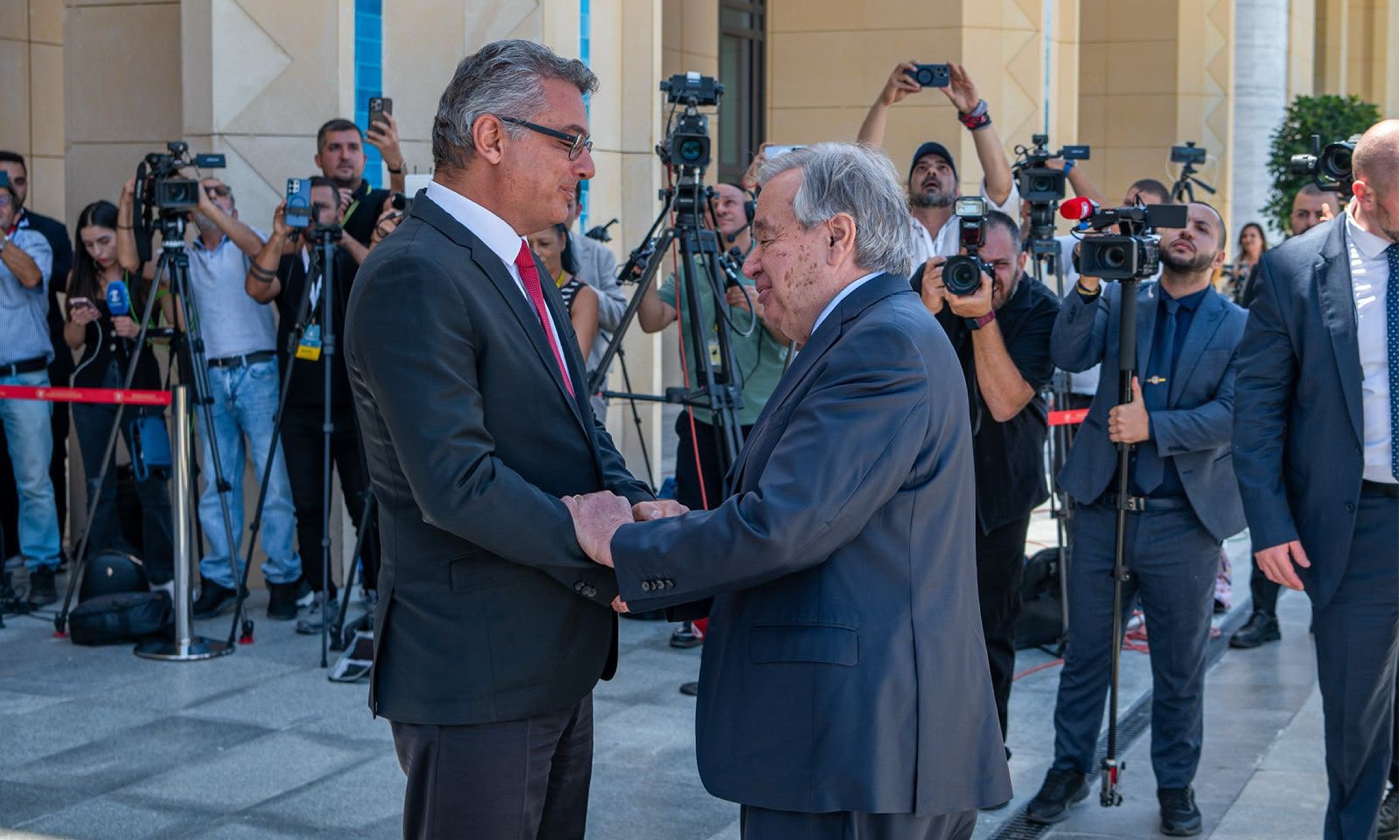
The Turkish Cypriot leader said he strongly supported and welcomed Guterres’ efforts, adding, “Be sure, we will try our best.”
For his part, the UN chief reiterated his commitment to do everything possible to support the two communities create the conditions for a solution, noting: “We know a solution also depends on the guarantors.”
Guterres expressed hope that his visit will help move things forward.
Outside, before the media, he highlighted his engagement with the Cypriots but also with the guarantor powers to find a solution. “And at the same time, to see if CBMs are developed in way that is beneficial for the people of both sides.”
Everything on the table
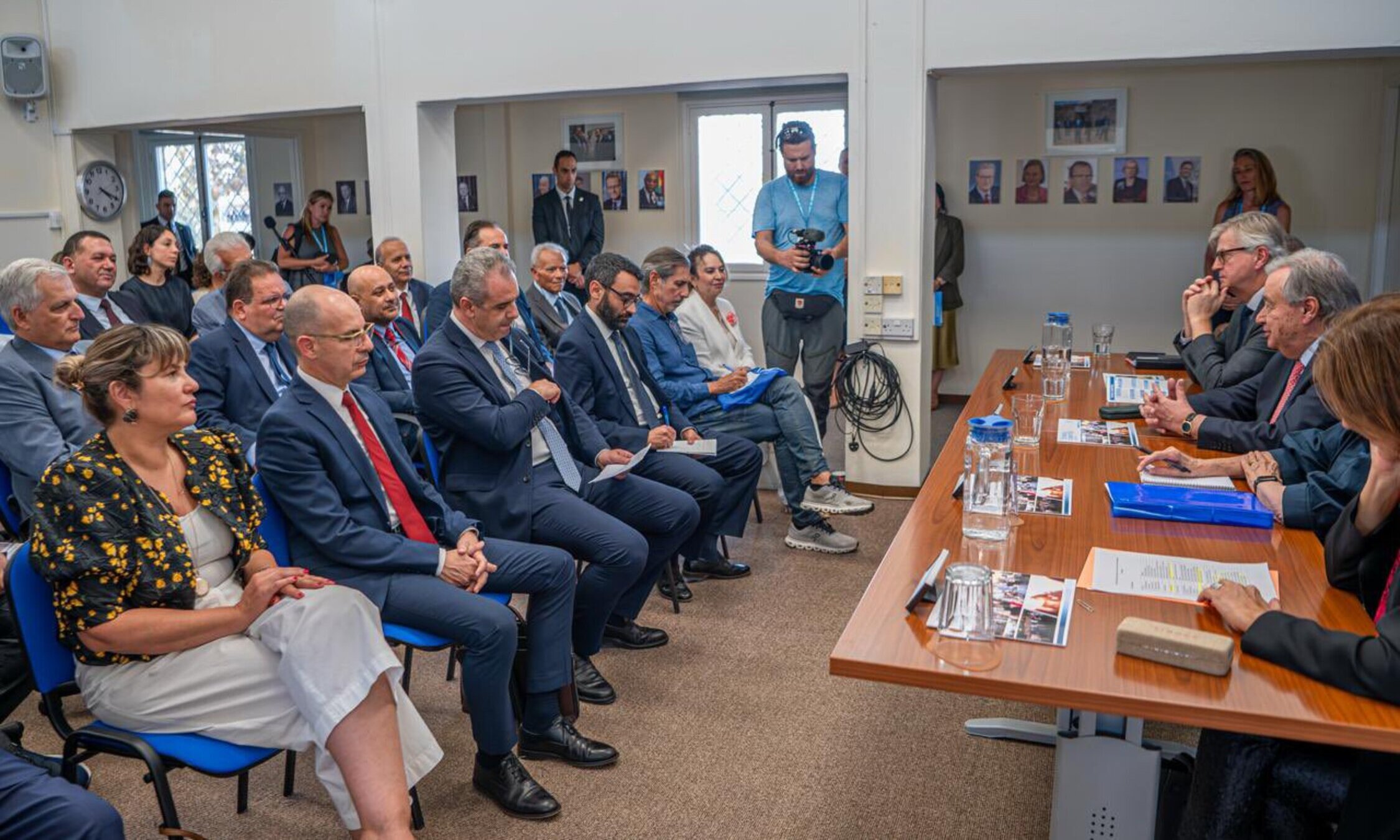
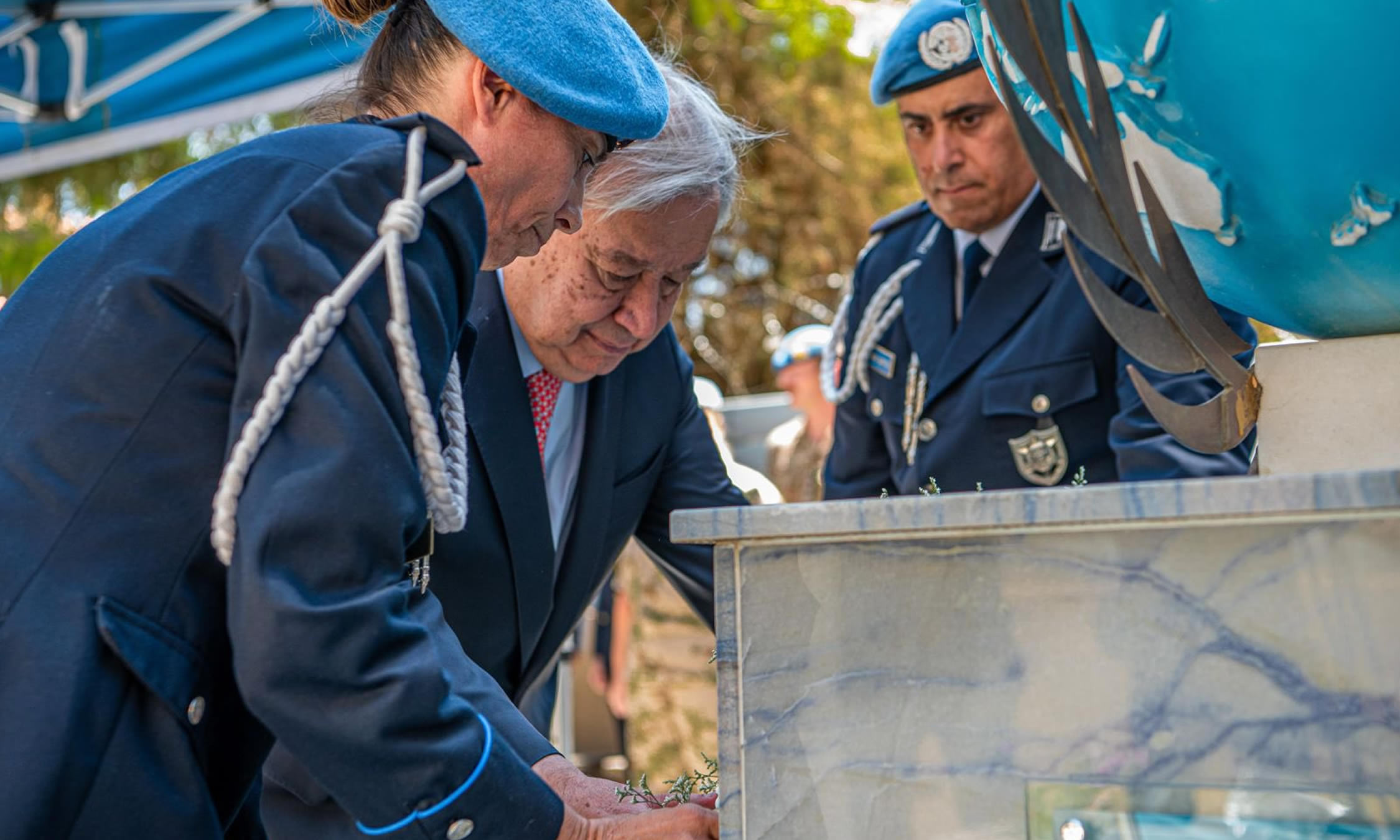
Following the meetings, the Secretary-General laid a wreath at the UNFICYP memorial in the Nicosia buffer zone before heading to a meeting with the Committee on Missing Persons. He then met with the two negotiators and technical committee co-chairs, followed by a meeting with civil society representatives.
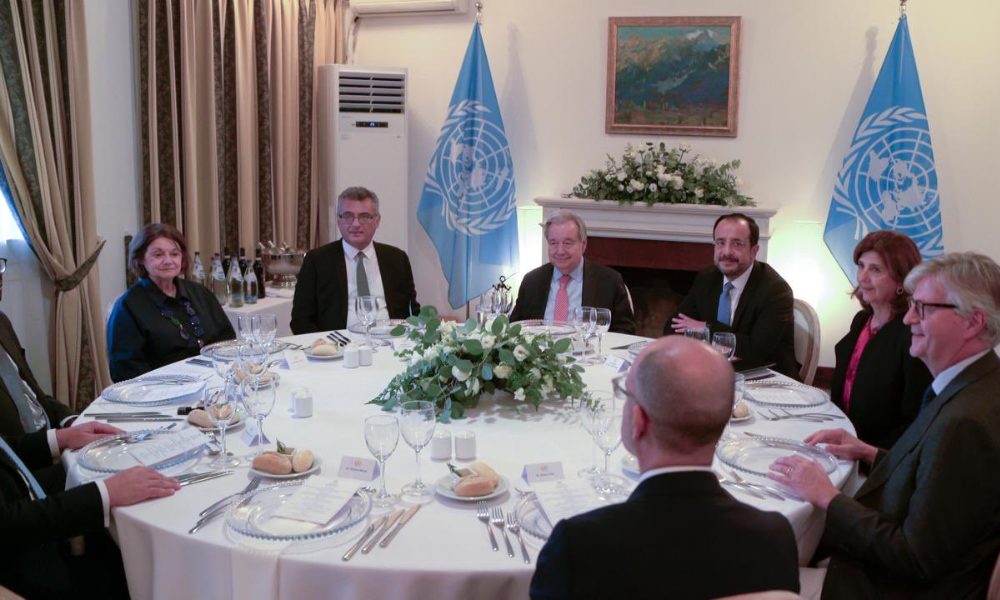
In the evening, Guterres and his team hosted the two leaders and their negotiators for a two-hour working dinner over a meze, the meal of choice for the UNSG. Heading for the evening meal, Christodoulides told reporters he hoped the discussion would be as good as the one he had in the morning with the UNSG. On his return to the palace late Tuesday evening, Christodoulides said the dinner discussion covered all issues – substance, methodology, convergences, a 5+1 meeting, and CBMs. “It was a good, open and honest discussion” that will continue at the trilateral, he said.
A handful of small demonstrations were held throughout the day, mostly in favour of a solution, including one attended by AKEL leader Stefanos Stefanou and DISY’s Averof Neophytou.
Next steps
Depending on how the dinner went, and more importantly, Wednesday morning’s trilateral meeting with the two leaders, the UNSG will make an announcement to the press at around 11.30am.
Many observers have questioned why Guterres decided to take time out of his busy schedule to be here, given the lack of obvious progress in efforts to bring the sides closer together.
One diplomatic source told Politis his visit is not about putting a peace plan on the table or securing a 5+1 meeting as soon as possible. It’s about making sure, at the very least, the situation in Cyprus does not deteriorate, that it stays stable. And if possible, it’s about the sides agreeing on steps moving forward.
The UN chief is really trying to encourage some forward movement, in the hope he may leave some kind of package of implementation for his successor – a reflection of his concern that things could always get worse if left alone, said the source.