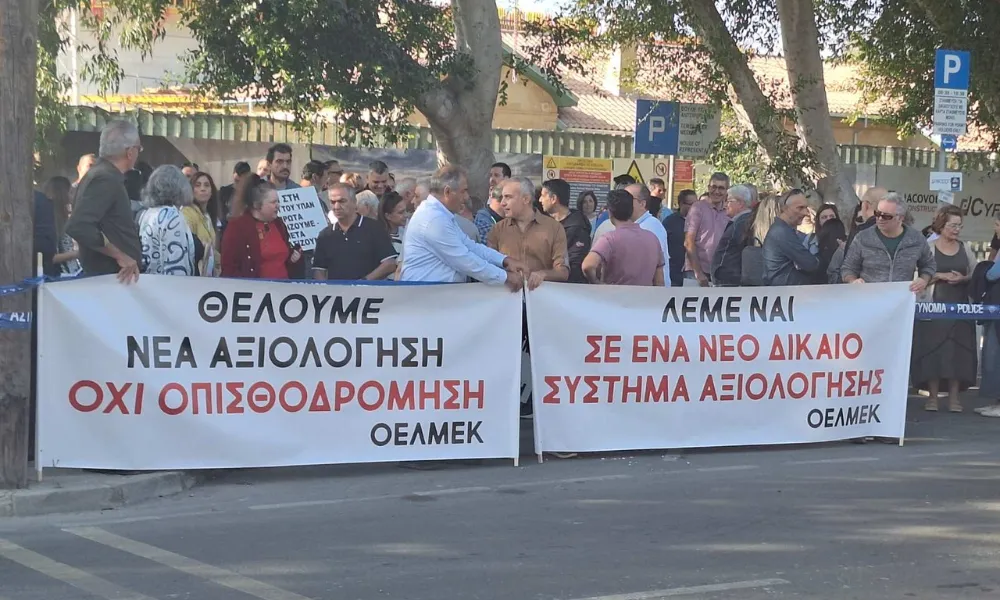

A new dispute has emerged between the Education Ministry and Cyprus’ teaching unions over plans to introduce formative evaluation from September.
POED, OELMEK and OLTEK maintain that the provision cannot be implemented during the 2026-2027 school year because the required institutional and staffing arrangements have not yet been completed.
Unions challenge August deadline
The three organisations outlined their objections in a joint letter to Education Ministry Director-General Marios Panayides, expressing strong dissatisfaction with the handling of the latest meeting of the committee overseeing the evaluation scheme.
According to the unions, Panayides told the meeting that formative evaluation was now a legislative requirement and would therefore be introduced from the beginning of the new school year.
He also asked the organisations to submit their positions by 14 August.
POED, OELMEK and OLTEK said the deadline had been set unilaterally. They also argued that the director-general’s departure from the meeting effectively brought the dialogue and exchange of views to an end.
The unions described the approach taken towards them as insulting and warned that similar practices would not be accepted.
Positions to be submitted after September
The organisations said they would not be able to submit their views on the relevant document before 1 September.
They reiterated that formative evaluation could not begin in September because several key roles had neither been formally established nor staffed.
These include the positions of Senior Education Officer and Inspector-Advisers, which the unions consider necessary for the system to operate as intended.
Objections to selective implementation
The unions also rejected the possibility of selectively activating responsibilities for particular officials, including school headteachers, solely to create the appearance that the provision had been implemented.
They stressed that the evaluation system could not be introduced partially while the broader institutional framework remained incomplete.