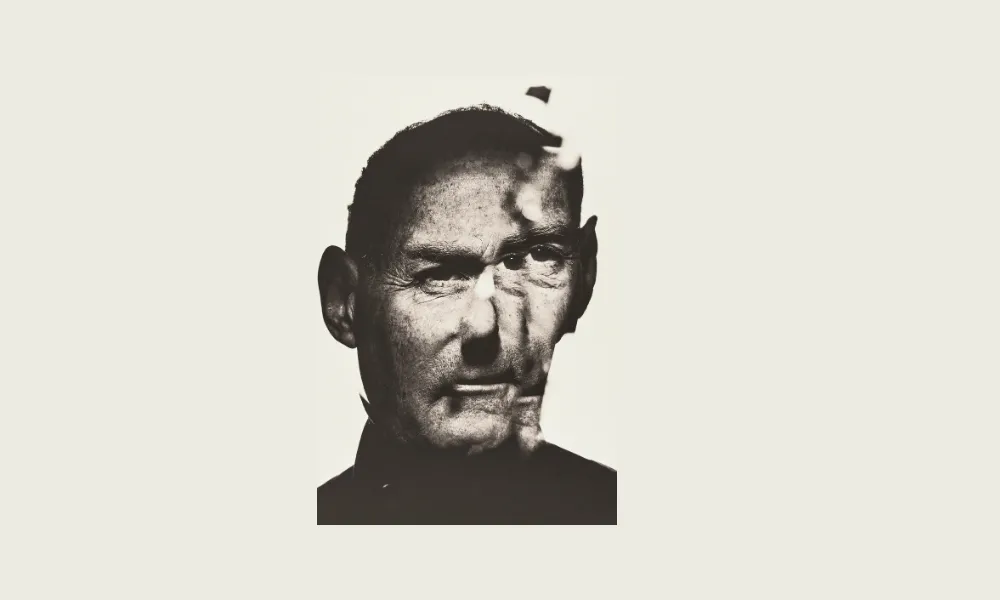

A major retrospective in Paris is revisiting the work of American photographer Irving Penn, whose decades at Vogue turned routine magazine commissions into a study of shape, surface and the human figure. PENN & FASHION, at the Maison Européenne de la Photographie (MEP), covers six decades of his fashion photography, according to designboom.
Six decades at Vogue
The exhibition draws on three sources: the MEP’s own holdings, the Nicola Erni Collection and The Irving Penn Foundation. As designboom reports, it explores how Penn went beyond the requirements of fashion publishing to build a visual language of his own. He pared each composition down so that the clothes, and the people wearing them, held the viewer’s attention.
Early training and influences
Penn joined Vogue in 1943, invited by art director Alexander Liberman, at a time when fashion imagery was helping to define the look of the postwar years. He began with still lifes and ideas for covers before becoming one of the magazine’s leading photographers.
According to designboom, his graphic design training under Alexey Brodovitch shaped his exact use of space. His interest in modernist painting and European Surrealism, meanwhile, gave his pictures a quiet tension beneath their restraint.
A Paris studio lit by daylight
The show is arranged chronologically. It opens with two works from 1947: the still life Theatre Accident and 12 Models Moving Their Heads, a group portrait commissioned by Vogue.
In 1950, Penn went to Paris to photograph the new haute couture collections. He set up a studio lit by natural light on Rue de Vaugirard, where he shot designs by Cristóbal Balenciaga, Lafaurie and Rochas in front of an old theatre curtain. His main model was Lisa Fonssagrives.
With no props or staged settings to distract, the way a garment was built became easier to read, with its outline and texture coming to the fore. designboom notes that these pictures altered how magazines presented couture. Penn saw Balenciaga as a master architect of clothing, and his images of the designer’s sculptural work convey how a garment is conceived, not just how it looks. Facsimiles of Vogue pages show how the photographs appeared in print.
Clothing and identity in Small Trades
While working on his Paris assignments, Penn also produced Small Trades, a series of workers and tradespeople photographed in their working clothes. He gave them the same careful studio treatment as his celebrated models.
Seen together, the two bodies of work reveal Penn’s ongoing interest in what clothing says about the person wearing it. For him, a couture gown and a street vendor’s work clothes were both shaped by how they were made, how they were used and the social world around them.
He applied the same pared-back method to portraits of cultural figures, among them Christian Dior, Pablo Picasso, Jean Cocteau and Elsa Schiaparelli. A few plain screens, a worn carpet and tightly controlled light were enough. The focus fell on each sitter’s posture, expression and presence.
Collaboration with Issey Miyake
One section is devoted to Penn’s partnership with Japanese designer Issey Miyake, which ran from 1986 to 1999. Penn never attended Miyake’s shows. Instead, the designer shipped garments to New York, Penn photographed them in his studio, and the transparencies were sent back to Tokyo.
Despite the distance, the two shared a close creative dialogue. Miyake’s sculptural pieces, built on the manipulation of fabric and volume, suited Penn’s habit of reducing an image to its core forms.
Between 1987 and 1992, graphic designer Ikko Tanaka used Penn’s colour photographs in more than 60 posters for Miyake. Twelve of them are on display, lent by The Miyake Issey Foundation, showing how the images travelled beyond Vogue to become part of the designer’s identity.
Beauty, Surrealism and the print
Penn kept his focus on form and texture as fashion grew more theatrical, photographing designs by Yves Saint Laurent, Karl Lagerfeld, Christian Lacroix and John Galliano.
His beauty work for Vogue, made with fashion editor Phyllis Posnick, gave him more room to experiment, with humour, Surrealist ideas and unconventional treatments of the face. In pictures such as Red-Lacquered Lid (1994) and Bee on Lips (1995), the face becomes a surface to play with, departing from the conventions of beauty photography.
Penn also paid close attention to printing. In later years he made platinum-palladium printing central to his practice, prizing its tonal depth and the physical quality of the final print. For Penn, designboom notes, the photograph was not finished at the moment of exposure. Printing mattered just as much.
Visiting the exhibition
PENN & FASHION runs at the Maison Européenne de la Photographie in Paris from 30 September 2026 to 17 January 2027.
With information from designboom