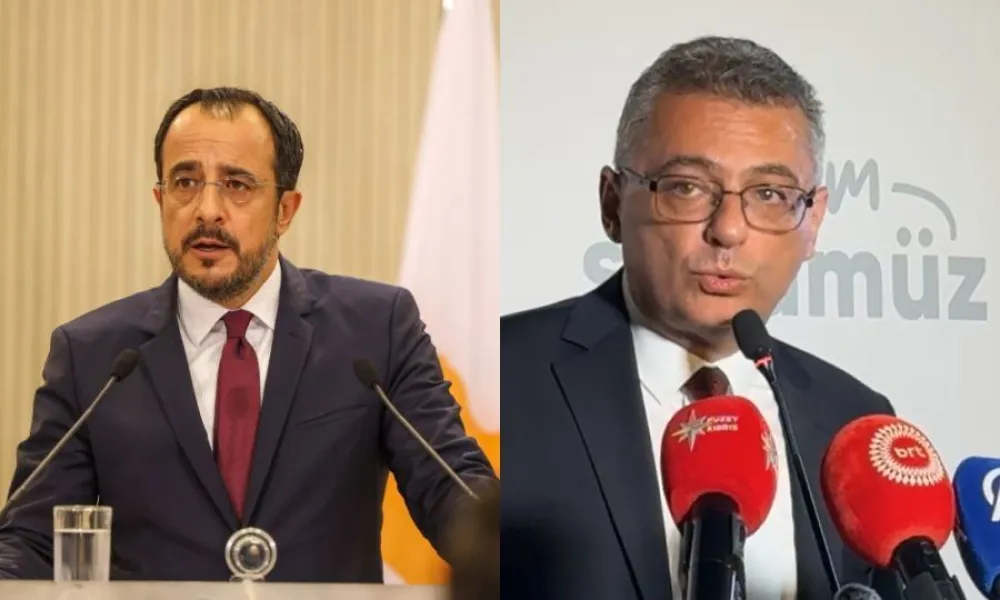
It has been clear for many years that no one is in a rush to solve the Cyprus issue. The two leaders met with the UN Secretary-General’s Personal Envoy, Maria Angela Holguin, in January, but reached no conclusion. They agreed to meet again without her presence. This was apparently because the meeting between the President of the Republic and the Turkish Cypriot leader, scheduled for Tuesday, 24 February at 11:00 under the auspices of the United Nations, following prior arrangements and within the dates set through the Greek Cypriot negotiator, was not considered urgent.
This process of contacts, negotiations, and social meetings has existed for 52 years and seems to suit all political leadership on both sides of the buffer zone. Concerns arise when meetings do not take place, when one side does not know the other’s moves, and when what is called “stalemate” occurs. Everyone agrees that there is some movement, regardless of whether it produces results.
-
For Turkey and the Turkish Cypriot community, the first years after the invasion proved that stagnation was very “productive.” Through settlers, the population in the north increased, the area began to develop economically, a massive construction boom followed, and a large number of land and villa sales to foreign nationals took place. Today there is interest in a solution because the isolation of Turkish Cypriots is genuinely destructive for the entire community. Yet every time discussions about a solution are attempted, seemingly insurmountable red lines appear, such as Turkey’s guarantees and the presence of Turkish troops in Cyprus after a settlement.
-
For the Greek Cypriot side, the lack of willingness to compromise allowed unproductive slogans to dominate, which over the last 52 years have led nowhere. It benefited, however, the economic development of Greek Cypriots and their EU membership. It also allowed some businesspeople, landowners, and party funders in the south to become wealthy. Some politicians were able to sell the narrative that time works in favour of Greek Cypriots, so waiting will bring a better solution, that Turkey’s intransigence will be overcome, or that the country will collapse because of the Kurds and other enemies.
In short, the lack of political will, courage, and vision has been and remains the greatest problem in Cyprus. Unless these are acknowledged, sensible people in this country will once again become victims of a new catastrophe.