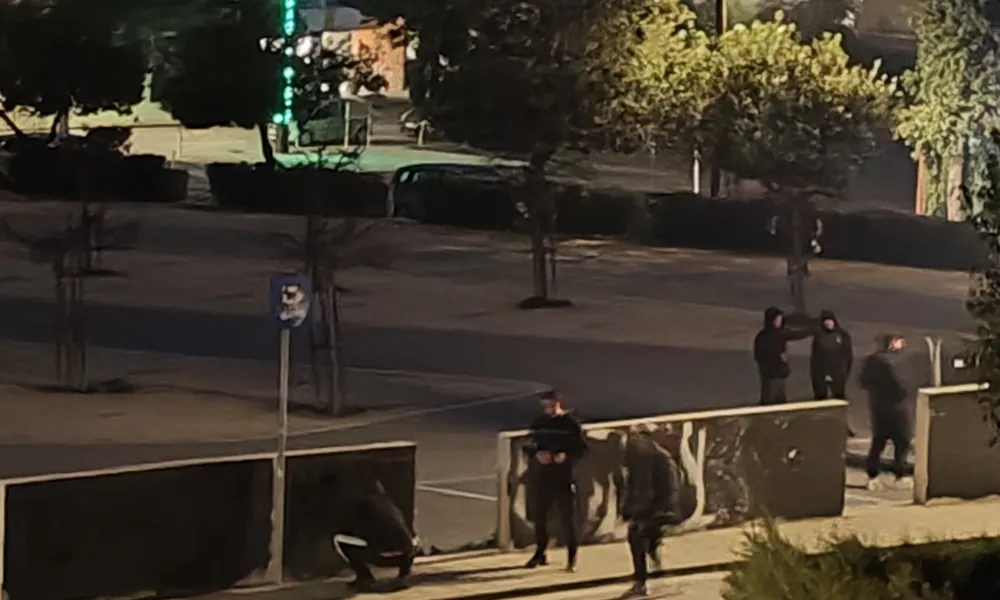
On Saturday night, around midnight, several youths gathered in a neighborhood in Nicosia. Some were teenagers, others a bit older. Their movements appeared secretive, suspicious, they gravitated toward a company parking’s concrete perimeter, a spot long layered with paint, scribbles, and amateur graffiti. They began covering it in black.
A football fan would immediately understand that the act was likely a form of mourning. Indeed, the timing corresponded with a recent tragedy: seven fans of Greek football side PAOK FC had been killed in Romania earlier, while three others remained in critical condition after a van carrying them collided head-on with a lorry. The fans were heading to Lyon, France, for their team’s Europa League match.
The following day, white graffiti appeared over the black paint, reading: “Brothers. You Live. 27/1/2026”. It was their raw and poignant expression of grief in a world where the youth’s loud voice is only heard inside stadiums. Cyprus is very close to Greece when tragedies happen, actually the whole world shrinks when youth is dying. All Cyprus football clubs issued statements of condolence.
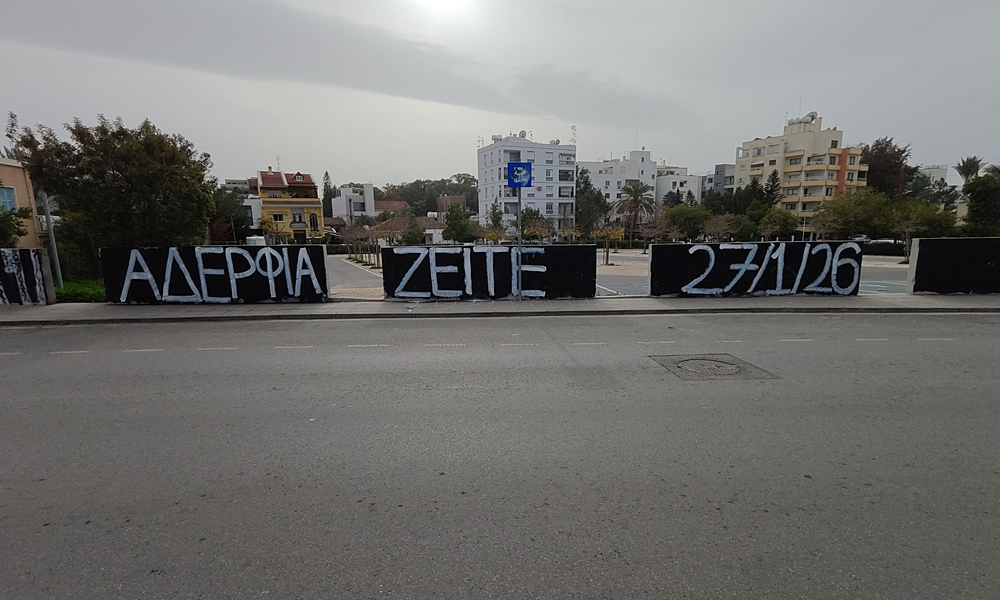
“Brothers. You Live. 27/1/2026”.
Behind vandalism
Research suggests that vandalism often carries deeper social and psychological meaning. Adolescents writing on walls, fences, or banners are rarely acting randomly and such acts often serve as a form of identity expression. Leaving a mark in public space allows youths to assert their presence in a world where they often feel unseen (Erikson, 1968).
Peer dynamics and belonging also play a role. Graffiti often occurs in groups, where the act itself strengthens social bonds and provides collective meaning (Tajfel & Turner, 1979). Spraying the wall can be a communal mourning ritual, turning private sorrow into a shared, visible experience.
In addition, such behavior reflects a response to perceived disempowerment and limited channels of expression. Youths frequently target spaces they do not feel ownership over, walls, banners, public signs, as a subtle reclaiming of authority and visibility (Durkheim, 1897, Zuckerman, 1979). The graffiti, layered over the company’s parking lot, transformed the space into a memorial, giving weight to emotions that words could not fully convey.
Finally, the act serves as emotional release. Adolescents often lack safe outlets for intense feelings of grief, anger, or frustration. Public marking allows a cathartic expression that simultaneously communicates sorrow to the wider community (Lapsley & Hill, 2008). In this sense, the graffiti became a message.
In Syria, It was a small act of teenage defiance that sparked a revolution, a moment forever inscribed in Syrian history. When 15-year-old Mouawiya Syasneh and a group of classmates from Daraa sprayed the words “It’s your turn, Doctor” on the wall of their school, the reference to dictator Bashar al-Assad would become inextricably linked with a 13-year civil war.
Engaging with the vandals
Recently, Paphos Mayor Phedon Phedonoss, witnessed a separate incident. A supporter of a football team spray-painted a road sign, defacing public property. The Mayor posted: “It is truly a shame that people come to watch a football match and end up damaging public property within the city. I should note that I personally saw police officers gathered about 100 meters further down the road and doing nothing, which is very unfortunate.”
The issue, of course, is not police presence as officers cannot be everywhere at once. What is really unfortunate lies, firstly, in the act itself, as sign could not give information any longer, and secondly, more importantly, in the lack of engagement by authorities, football clubs, and municipalities to connect with youth. Without constructive channels for expression, adolescents often turn to walls, fences, and public signs as mediums to communicate emotion, identity, and social commentary.
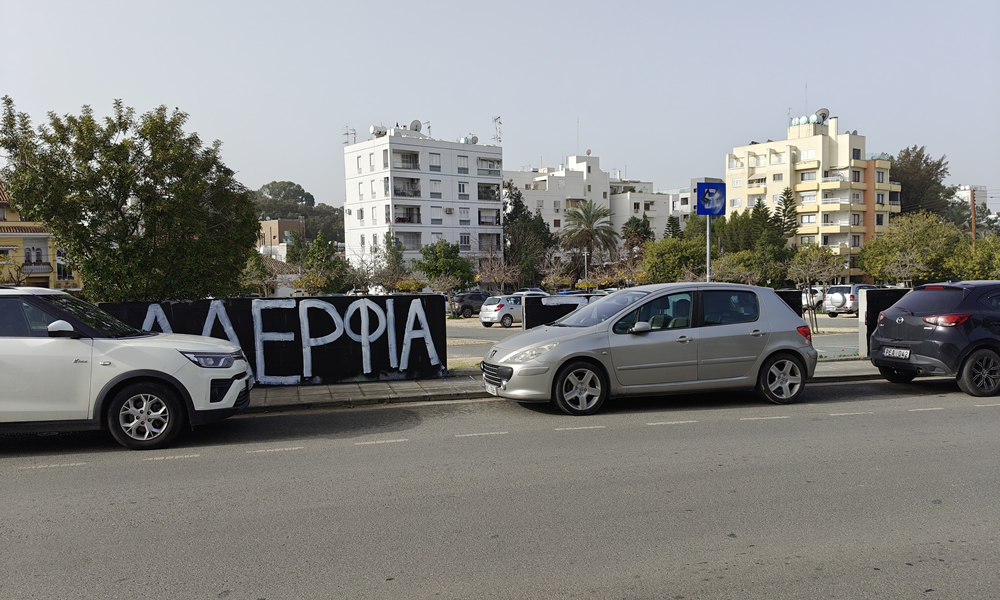
On Monday, life continued as usual. Cars parked in front of the graffiti, partially hiding it, and the city moved on. Perhaps the incident added to the “bibliography of beliefs” that youth are careless, insensitive, or simply destructive. In reality, the group may have done something bigger than they intended, communicating grief and solidarity.