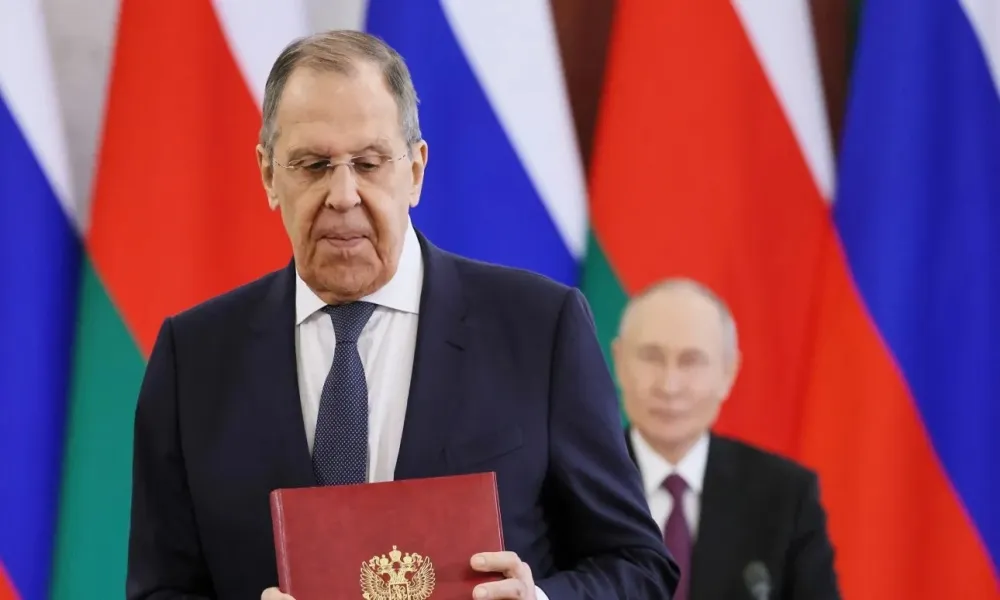
Russia will treat the deployment by other countries of military forces or infrastructure in Ukraine as foreign intervention and will regard them as legitimate targets, Moscow’s Foreign Minister Sergei Lavrov said on Monday.
According to a statement attributed to Lavrov, the minister praised Donald Trump’s efforts to resolve the war, noting that the US President appeared to understand the fundamental causes behind the conflict.
“The deployment in Ukraine of military units, installations, storage sites and other infrastructure by Western countries is unacceptable to us and will be considered foreign intervention that poses a direct threat to Russia’s security,” the Russian Foreign Ministry said on its website.
It stressed that Western countries – which have discussed the possibility of deploying forces to Ukraine to help guarantee a peace agreement – must understand that “any foreign troops, including German ones, if deployed in Ukraine, will become legitimate targets for the Russian armed forces.”
The United States is leading efforts to hold negotiations aimed at ending the conflict in Ukraine. A second round of trilateral talks with representatives of Russia and Ukraine is due to take place this week in the United Arab Emirates.
The issue of ceding internationally recognised Ukrainian territory to Russia remains a sticking point in the talks. Kyiv rejects Moscow’s demand for the handover of the entire Donbas region, including areas not currently under Russian control.
Moscow has repeatedly said it will not tolerate the presence of Western troops in Ukraine.
The Russian Foreign Ministry said Moscow appreciates the “targeted efforts” of the Trump administration aimed at resolving the war and understanding for Russia’s long-standing concerns about NATO’s eastward expansion and the situation in Ukraine.
It also described Trump as one of the few politicians in the West who “not only immediately refused to promote meaningless and destructive preconditions for the start of substantive dialogue with Moscow on the Ukrainian crisis, but also spoke publicly about its deeper causes.”
Source: Reuters, CNA