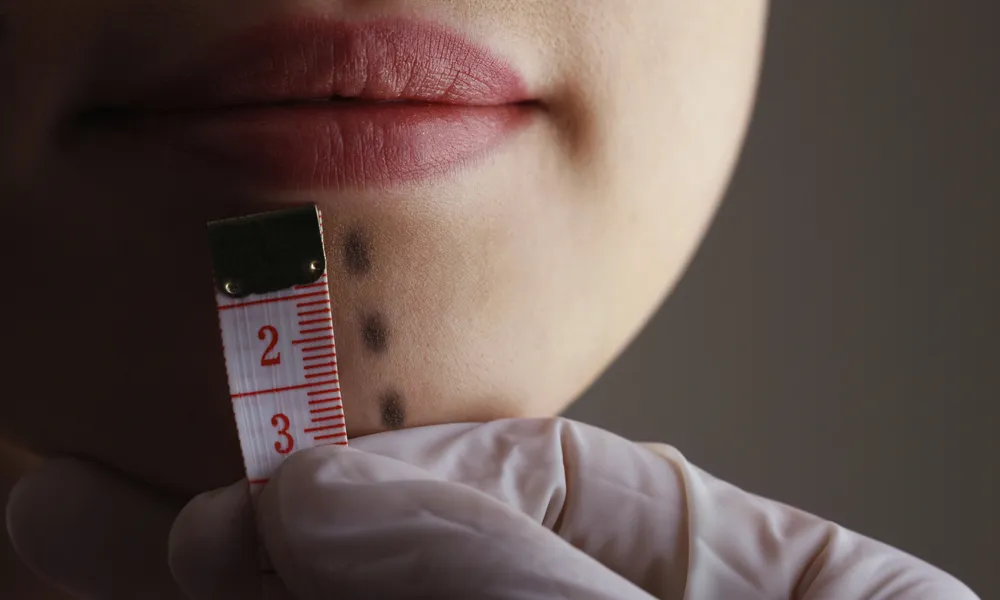



Looksmaxxing is the latest word to migrate from internet subcultures into mainstream teenage vocabulary. It refers to the idea that physical appearance can be strategically improved in order to increase one’s value in social and romantic hierarchies.
The term first circulated in niche, male-dominated forums in the early 2010s. Today it appears casually on TikTok and Instagram, often without users fully knowing its origins. What began as a rigid theory about genetic determinism and facial ranking has been softened into grooming advice, gym culture and “self-improvement” content.
In practice, looksmaxxing is a worldview based on the belief that life outcomes, especially dating and social status, are determined by facial structure, height, symmetry and genetics, and that you should “maximise” what you were given through relentless "optimisation".
The recent visibility of influencers associated with extreme “hardmaxxing” has pushed the trend out of meme territory and into public-health concern, particularly where content encourages steroid use, cosmetic procedures, or pseudo-scientific body “fixes” as rites of passage for adolescent boys and girls.
Looksmaxxing is an umbrella label:
Softmaxxing usually refers to conventional grooming and fitness: skincare, haircuts, weight training, style, and basic health routines.
Hardmaxxing is where the discourse turns darker: invasive cosmetic surgery, extreme dieting, anabolic steroids, and “biohacks” marketed to minors with the promise of turning insecurity into social power. The subculture’s internal language often normalises risk by framing it as rational investment. Do the procedure now, win later.
Crucially, looksmaxxing is a story about fatalism and hierarchy. The vocabulary repeatedly returns to ranking, “objective” beauty scales, and a competitive reading of social life that can slide into misogyny, resentment, and a transactional view of relationships.

How teenagers started talking like this
Looksmaxxing sits in a wider family of “maxxing” terms that translate life into optimisable categories: scentmaxxing, auramaxxing, gymmaxxing. The format is algorithm-friendly: short, repeatable, searchable. It also offers boys and girls a script at a time when many feel they are failing at social confidence, dating, or status.
To speak it is to signal you know the codes of your feed. In that sense, looksmaxxing is a public dialect, shaped by a platform culture that rewards extremes, transformations and before-and-after stories.
There is also a second linguistic layer: coded speech designed to dodge moderation. Researchers and child-safety bodies have documented how appearance-driven content can circulate relentlessly even when it is not explicitly “harmful” by policy definitions, especially when it is packaged as advice, humour, or self-deprecation.
What the evidence says about harms
A 2025 systematic scoping review focuses specifically on TikTok and adolescent mental health, reflecting growing concern that highly visual, fast-feedback platforms intensify appearance comparison and compulsive use patterns. The evidence base remains heterogeneous, but the direction of concern is clear enough that researchers are increasingly separating platform-specific effects rather than treating “social media” as a single exposure.
One of the most uncomfortable findings in recent platform scrutiny is that vulnerable teens may be shown more harmful, “adjacent” content than their peers. An internal Meta study reported by Reuters found that teens who frequently felt bad about their bodies were exposed to substantially more eating-disorder-adjacent and body-judgment content.

Much of what young people see is not illegal, and not always explicitly abusive. But it can still operate as ambient harm.
The Clavicular effect and the logic of escalation
Clavicular (real name Braden Peters) started out selling looksmaxxing as a kind of extreme self-improvement project. He filmed himself, talked constantly about “optimising” his body, and presented drastic measures as normal: heavy steroid use, obsessive body-control, and pseudo-scientific stuff like “bone smashing”. As his following grew, so did the controversy. He performs stunts, uses inflammatory rhetoric and highly questionable on-camera behaviour that drives outrage and clicks. Today, he is the facce of looksmaxxing and teenagers are following his craze.
The world is waking up
Australia has introduced “social media minimum age” framework that obliges age-restricted platforms to take reasonable steps to prevent under-16s from holding accounts. Key public guidance from the eSafety Commissioner stresses this is a delay to account access, preventing the criminalisation of teenagers.
In the EU, the central instrument is the Digital Services Act, with the European Commission issuing guidelines on minors’ protection and presenting work on age verification as part of compliance expectations. At the political level, the European Parliament has explicitly urged stronger EU action, including an EU-wide minimum age of 16 and restrictions on addictive practices.
France has pursued a ban for under-15s, with Brussels signalling that such measures can be compatible with EU law under certain conditions, particularly around compliant age-verification mechanisms. Spain has also announced plans to restrict under-16 access and require age verification, framing the issue as child protection in what it calls a “digital wild west”.
What age bans can and cannot do
Age thresholds can reduce exposure at the most sensitive ages, when identity formation is volatile. They can also force platforms to adopt stronger default settings and age-appropriate design, which matters regardless of whether bans are perfectly enforced.
However, enforcement raises hard questions. There are privacy risks in age verification, workarounds, and also the possibility that harmful content migrates to less regulated spaces.
The deeper problem remains upstream. Looksmaxxing thrives in an ecosystem that monetises insecurity and rewards extreme transformation. latforms are built to amplify what provokes reaction, and few things provoke more reliably than self-doubt paired with the promise of radical improvement. Age limits and content moderation may slow exposure, but they do not dismantle the logic that drives it. As long as attention is the currency and optimisation is the narrative, young people will continue to be told that their bodies are unfinished projects and that worth is something to be engineered.