


One of the most closely watched bills of the current political period is expected to go before the House interior committee in its new composition after the May elections: the creation of a National Civil Protection Mechanism.
The Interior Ministry has already been informed of the timetable, as parliament is due to suspend its work within a month ahead of the upcoming elections.
The proposed mechanism aims to bring all state bodies involved in crisis prevention and response under a more structured and centralised system. The goal is to strengthen the state’s preparedness and effectiveness in emergencies through the rapid mobilisation of personnel, equipment and operational resources.
The draft law, approved by the Council of Ministers last Thursday, also formally establishes the role of a National Coordinator, who would carry overall responsibility for coordinating all agencies involved during a crisis.
Under the proposal, the coordinator would decide on the deployment and movement of forces regardless of which ministry, department or service they belong to. In practice, all relevant state services, from the fire service and the forestry department to the police and civil defence, would come under one central line of coordination during an emergency.
Appointment expected after law is passed
Government sources confirmed that once the bill is passed by parliament and published in the Official Gazette, allowing the law to enter into force, the Council of Ministers will proceed with the appointment of the National Coordinator.
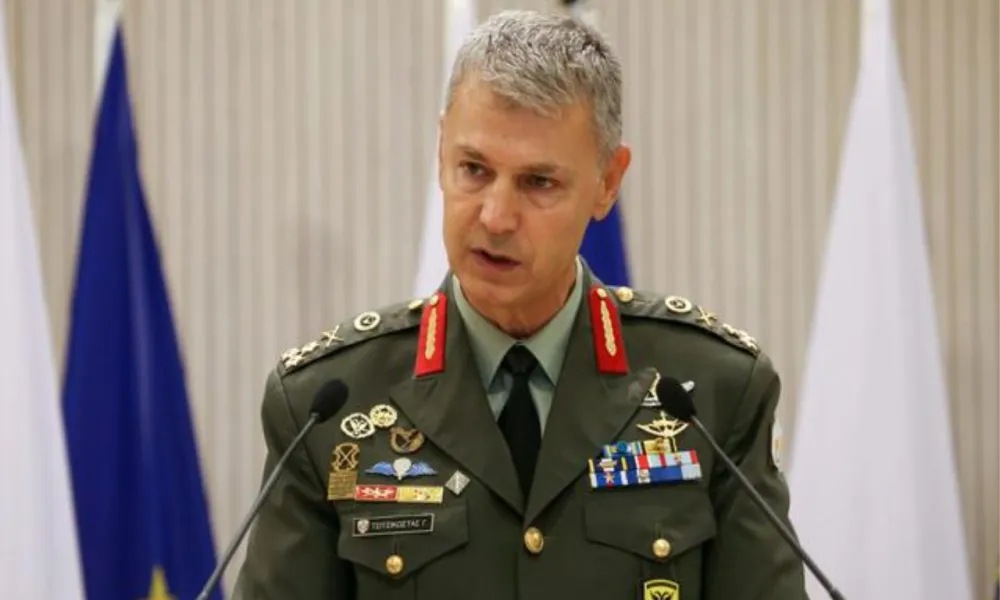
The position is expected to go to a figure already selected by President Nikos Christodoulides and said to enjoy broad political and social acceptance. That figure is retired Lieutenant General Georgios Tzitzikostas, who served as head of the armed forces of the Republic of Cyprus from 2023 to 2025.
His long experience in strategic planning, operational coordination and crisis management is seen as fully meeting the qualifications set out for the post and is expected to be a key factor in the success of the new mechanism.
According to the bill, the National Coordinator must be a person of recognised integrity, standing and professional credibility, with proven knowledge and experience in crisis and emergency management.
Term tied to presidency
The draft law approved by the cabinet states that the National Coordinator may come from either the public or private sector.
The duration of the term will be defined in the appointment decision and will end no later than three months after the expiry of the term of the President of the Republic. In any case, the term may not exceed five years, though it may be renewed, with the total time in office capped at 10 years.
The bill also provides that, until a successor is appointed, the National Coordinator will continue to carry out his duties normally.
This provision effectively allows each President of the Republic to appoint a person in whom they have full confidence to fill what is expected to be a highly sensitive and influential post.
At the same time, the Council of Ministers retains the right to dismiss the National Coordinator whenever it deems appropriate.
The bill further states that the coordinator may resign in writing to the cabinet during his term. Such a resignation would take immediate effect and would not require cabinet approval.
Broad powers in emergencies
The legislation makes clear that if a private individual is appointed National Coordinator, they will not be allowed to hold any other job, profession, business role or paid position while serving in office.
The powers assigned to the National Coordinator are extensive. They include exclusive responsibility for coordinating all departments and bodies involved in crisis response, as well as overall authority over the deployment, movement and positioning of forces during a crisis, regardless of where those forces belong administratively.
The coordinator would also have the power to activate all necessary means for dealing with a crisis, brief the President of the Republic and the competent minister on the overall situation, and remain present at the National Crisis Management Coordination Centre while directing intervention forces through close communication with department heads and other agencies.
The post would also carry responsibility for deciding whether to request activation of the European Civil Protection Mechanism or any other form of international assistance.
Other responsibilities include indicating when traffic measures or evacuations of communities are needed, managing public communication in order to reduce the risk of contradictory messaging or poor public information, and submitting proposals to the competent minister on how to improve the National Mechanism based on risk analysis and identified weaknesses.
The coordinator would also monitor whether departments and involved bodies are implementing recommendations through their annual action plans and other documents. Where obligations are not being properly fulfilled, the coordinator would inform the competent minister so that appropriate measures can be taken.
The role would further include advising on revisions to special national emergency plans and preparing a five-year action plan, with the input of departments and other bodies, aimed at improving the existing crisis response system and creating a more unified and effective mechanism.
In the event of a disaster or imminent disaster requiring the mass mobilisation of personnel or resources, the National Coordinator would also have the power to declare a state of civil protection. This could apply either to the whole territory of the Republic or to a specific area, with the aim of protecting people, property, infrastructure, natural resources and the environment.
Scientific council also proposed
In addition to the creation of the National Civil Protection Mechanism and the appointment of a National Coordinator, the bill also provides for the establishment of a permanent Scientific Council for Civil Protection.
The council would operate under the supervision of the interior minister and would have a purely advisory role on issues related to risk management, prevention, emergency response and crisis handling, as well as the wider resilience policy of the Republic.
More specifically, it would provide scientific and technical recommendations to the interior minister aimed at strengthening the Republic’s preparedness and operational capacity, improving prevention, readiness, response and recovery mechanisms for natural and man-made disasters, and promoting research, innovation and the use of technological tools in the field of civil protection.
The council’s recommendations would be submitted in writing to the minister, who would assess them in cooperation with the National Coordinator, departments and other involved bodies, and could then bring them before the Council of Ministers for approval.
Its membership would include the National Coordinator as well as representatives of state bodies and services responsible for forecasting, monitoring and studying destructive phenomena, academic institutions and research centres active in related fields, and other expert scientists or specialists whenever deemed necessary.
Longinos appointed on interim basis
Until the bill is passed by parliament, the Council of Ministers last Thursday appointed fire service chief Nikos Longinos as interim National Coordinator.