
By Irini Iacovidou, Head of the Projects Department, Eurosuccess Consulting
It is often said that opportunities “come along.” In reality, they often do not come ready-made, nor do they always take the clearest form. And certainly not with a big neon sign saying: “Glass ceiling fast approaching to your left. Proceed with caution.” They may appear as a challenge, a change, a rejection, a difficult decision or a moment when we need to assert ourselves a little more.
And perhaps that is where the crux of the matter lies. Not only in how doors open, but also in how we recognise the doors that are not immediately visible. My thesis is simple; obstacles are rarely announced, thus the answer is not to become perfect, but to be strategic.
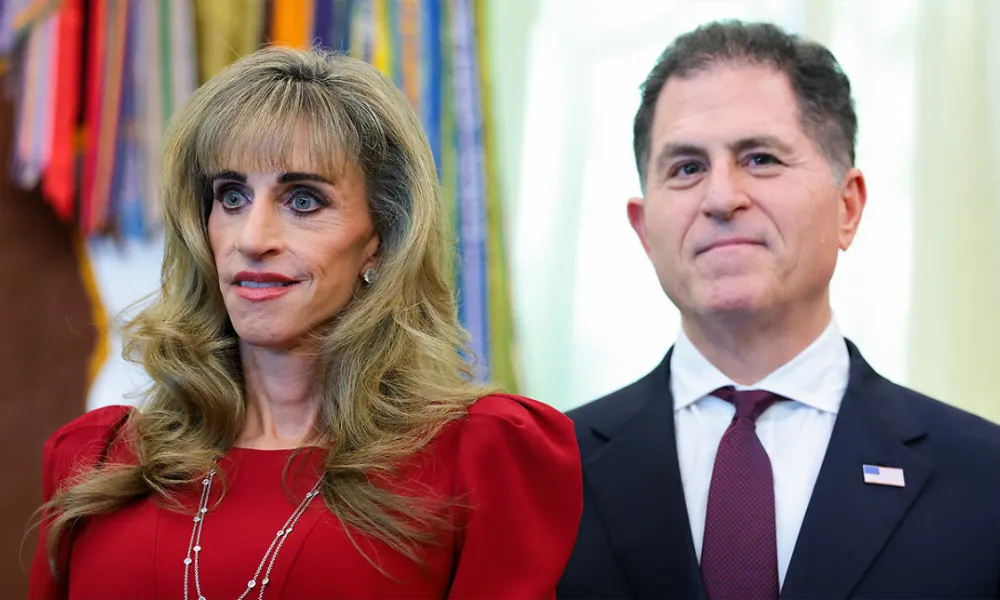
I recently had the pleasure of moderating, on behalf of Eurosuccess Consulting, the panel discussion at the event Beyond Leadership: Funding, Wellbeing & Networking for Women Who Lead, which was co-organised with BPW Nicosia. The panellists were Mrs Cleopatra Kitti, Mrs Stavriana Nathanail, Dr Xenia Charalambous and Ms Katerina Efstratiou – four women with different career paths, yet all returning to the same themes: access, visibility, credibility, networks. Because, yes, success looks good on LinkedIn, but it is rarely accompanied by its caveats: fear, doubt, rejection, overexertion, bad timing, wrong rooms, second chances.
Let’s start with something simple: the illusion of readiness.
Many of us women wait until we are 100 % ready before we go after something. The next role. A seat at the table. And somewhere along the line, whilst we are still tweaking our CV, re-reading the job description and thinking “maybe I’m not quite that ready yet”, someone else simply puts their hand up.
Let’s be honest: there is a reason for it. When you know you will be judged a little more harshly, when you know that one mistake can count for more than ten correct answers, then preparation becomes almost a defence mechanism. It is not just insecurity; often, it is experience. And the figures leave us no room for compromise: Cyprus has the highest proportion of female graduates in the EU (73% of 30–34-year-olds, compared with 56% of men), and yet women hold just 26% of managerial positions (EIGE, 2025). We have the qualifications. It seems, however, that a degree was never the only requirement. We need to be a bit more of a shark when it comes to opportunities: to sniff them out and make a move before we are handed the perfect invitation, complete with a bright red ribbon and instructions for use.
The truth is that we rarely feel completely ready. And if we wait for the moment when everything will be clear, calm and ideal, we will be waiting somewhere between a clean inbox and the day the algorithm stops showing us exactly what we were thinking about two minutes ago. So, the question is not “Am I 100% ready?”. In fact, it is: “Are my foundations solid enough to push me to take the next step, and am I willing to learn as I go?”
Because leadership is not just about managerial roles. It is about how you lead your practice, your work, your team, your idea, and your daily choice not to shrink to fit in.
Of course, this is where the familiar glass ceiling comes in. The invisible one, the one that is “not quite like that, but sort of like that”. The glass ceiling is rarely announced. It is usually disguised.
As “it’s not the right time.”
As “Maybe later.”
As “I don’t know if you’ll be able to fit it in.”
As “Are you sure you want that much responsibility?”
An interesting question from the audience sparked another debate: how do mums balance it all without feeling like they are missing out on something? The honest answer? We cannot always balance it all. At least not in the way it has been sold to us. “Having it all” sounds wonderful until it translates into “doing it all, appearing to have it under control, and not letting on just how exhausting it all is.” The point is to make conscious choices, share the responsibility and stop seeing exhaustion as proof of dedication. Sustainable development is not a luxury. It is a prerequisite.
Credibility is built on consistency, a clear stance, results and professionalism. Not through constant apologising or trying too hard to prove every day that you deserve to be there. It is not arrogant to talk about what you have achieved. Visibility with substance has never been, and never will be, the problem. It does not mean being everywhere, but it does mean being seen by the right people at the right time. It requires a strategy. It requires a network. It requires courage. It requires stepping out of your comfort zone a little; indeed, it is nice in there, but you rarely grow.
Networking, too, is not just about adding people on LinkedIn and then becoming a professional ghost. Many opportunities open up because you were once there. Because you said “yes” to something that did not offer an immediate benefit. Because you learnt something new. Because you did not say, “That is not exactly my role.”
Never say never. It is not just a cliché phrase on an office mug, but actually a practical strategy: paths are rarely straight. The same goes for failure. There is no need to romanticise it: it hurts, it frustrates and sometimes it makes you want to give it all up and head off to Hawaii with your ukulele in hand – or is it just me? It does, however, teach you to distinguish fear from instinct. And instinct, when backed by experience, is pure data.
I am not saying that everything depends on us. The tools are ours, but doors always have two sides. Fortunately, there are many who keep them open, and the best leaders do so even when nobody is asking them to. If we all did this a little more often, we would need far fewer neon signs.
So, what is the takeaway? That doors do not always open by themselves. Sometimes we knock on them. Sometimes we push them. Sometimes we make our own. And sometimes we realise that what we thought was a wall was simply a very poorly designed entrance.
The next generation of leaders does not need to resemble the previous one; it needs to lead clearly, consciously and humanely. And perhaps, in the end, this is what truly means breaking through the glass ceiling: not only for us to pass through, but to leave the opening wide enough for others to follow in our footsteps.
The future female leader’s checklist:
1. Build credibility
Be consistent, speak clearly about your worth and build trust through actions, not just intentions. Seek feedback, not constant validation.
2. Make yourself visible in a meaningful way
Showcase your work and results and talk about your achievements as a matter of fact, not as a confession. You do not need to be in every room, just the right ones.
3. Recognise the right timing: distinguish between “I’m not ready” and “I’m afraid”
Do not wait for everything to be perfect. Ask yourself whether you are genuinely missing something or whether you are simply afraid, and weigh up the opportunity against the risk.
4. Open doors with purpose
Keep learning, use your network authentically, say “yes” to anything that helps you grow – even if it is not perfect – and “no” to anything that holds you back. Keep the door open for the next opportunity.
5. Lead sustainably
Ask for and accept support. Do not try to be everything, everywhere, all at once. Set boundaries without feeling guilty. Growth that is unsustainable is not growth. It is a warning sign.