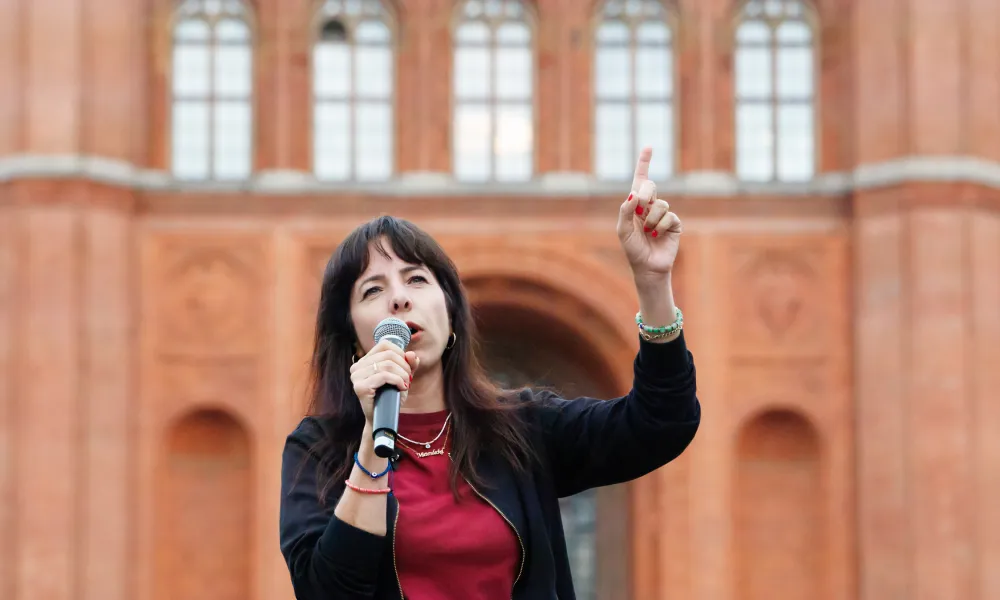

Cate Blanchett stood on the stage of London's National Theatre, still in costume, and asked her audience to do something that felt almost radical: put their phones away. "There are very few places on this planet where we can just be together and live in the moment," she said, after her production of Electra/Persona drew appreciative applause. It was a small, gentle request. It also touched something much larger than one curtain call... and of course it was filmed and uploaded!
A familiar reflex
I still remember, vividly, watching footage from 2020 of George Floyd dying under a police officer's knee while bystanders stood filming. At the time, the recording mattered enormously: it became the evidence that helped secure a conviction, and it forced a global reckoning with police violence that might never have happened without it. That is the paradox at the heart of this subject. The instinct to film is not always wrong. Sometimes it is the only form of accountability available.
‘Please. Your knee in my neck. I can’t breathe.’
— NowThis Impact (@nowthisimpact) May 27, 2020
Black man George Floyd died shortly after a Minneapolis police officer kneeled on his neck (warning: distressing) pic.twitter.com/kMPiILRUqR
But the same reflex that documented Floyd's death has become our default response to almost everything, including things that carry no possibility of justice, only spectacle.
The bystander effect, updated
Psychologists have a name for part of what is happening. The bystander effect, first studied after the 1964 murder of Kitty Genovese, describes how people become less likely to help someone in distress the more witnesses are present, partly because everyone assumes someone else will act. Researchers now argue that smartphones have added a new layer to this old phenomenon: instead of simply failing to act, we actively substitute filming for action, telling ourselves that recording is itself a form of help or protest. Often it isn't. It is simply the bystander effect with better production values.
But that calculation doesn't apply everywhere
The trouble starts when we carry the same behaviour into situations where none of that reasoning holds.
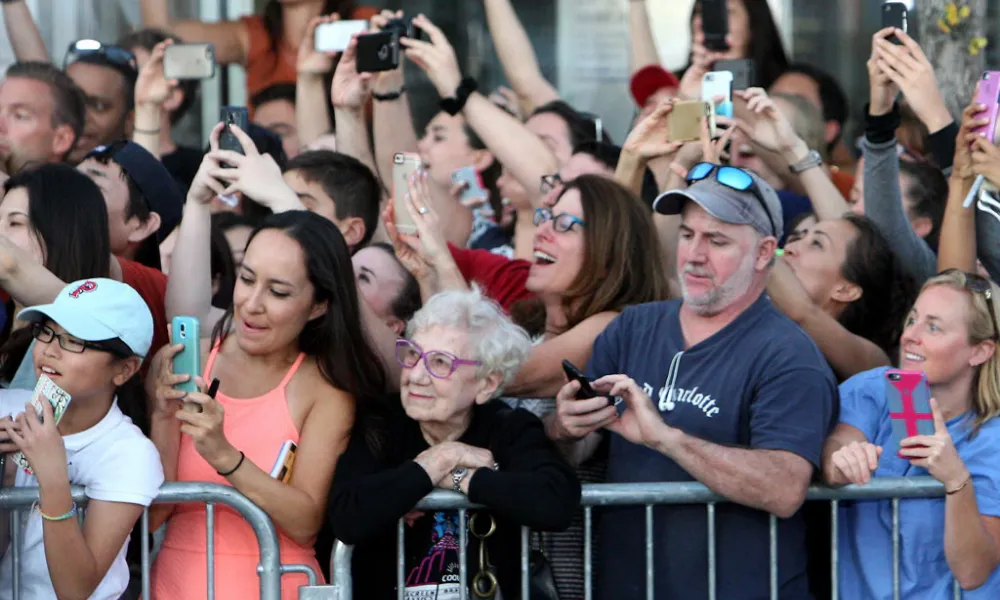
When George Mazonakis was laid to rest on 14 September at the Church of Agia Triada in Nikaia, thousands of people lined the streets. Many held up their phones as his coffin passed. It is a scene that repeats at nearly every public farewell now, for singers, for politicians, for victims of tragedy: grief, rendered simultaneously as a lived moment and as content.
No one is in danger at a funeral. There is no perpetrator to convict, no risk to a bystander who puts their phone down instead of lifting it. So when the phones come out anyway, the justification can't be safety, or evidence, or accountability. It has to be something else.
Feeding the feed
One motive is straightforward, if rarely admitted: content. A funeral, a tragedy, a viral crowd moment, these generate engagement, and engagement is worth something to the person capturing it, whether that's measured in likes, followers, or simply attention. This is the least sympathetic motive, but probably not the rarest one.
The "I was there" token
A subtler motive is presence as proof. Filming becomes a way of banking evidence that we were part of something significant, a form of "I was there" that has less to do with the person who died and more to do with our own place in the story. This doesn't necessarily come from vanity. Sometimes it comes from a very human fear: that if we don't capture the moment, it will simply slip away, unverified, unremembered, as if it hadn't happened to us at all.
When being human stops being the priority
Both motives share a common thread: at the moment that most calls for us to simply be present, undistracted, with other grieving human beings, we choose instead to mediate the experience through a screen. We are, quite literally, no longer fully there. Cate Blanchett's small request in a London theatre, to put the phone down and just share the room, captured this exactly. Whether it's a funeral, a curtain call, or a stranger in distress, the question worth asking before lifting a phone isn't "is this filmable," but "does filming this serve them, or does it only serve me." When the honest answer is the second one, that may be exactly the moment to simply be human instead.