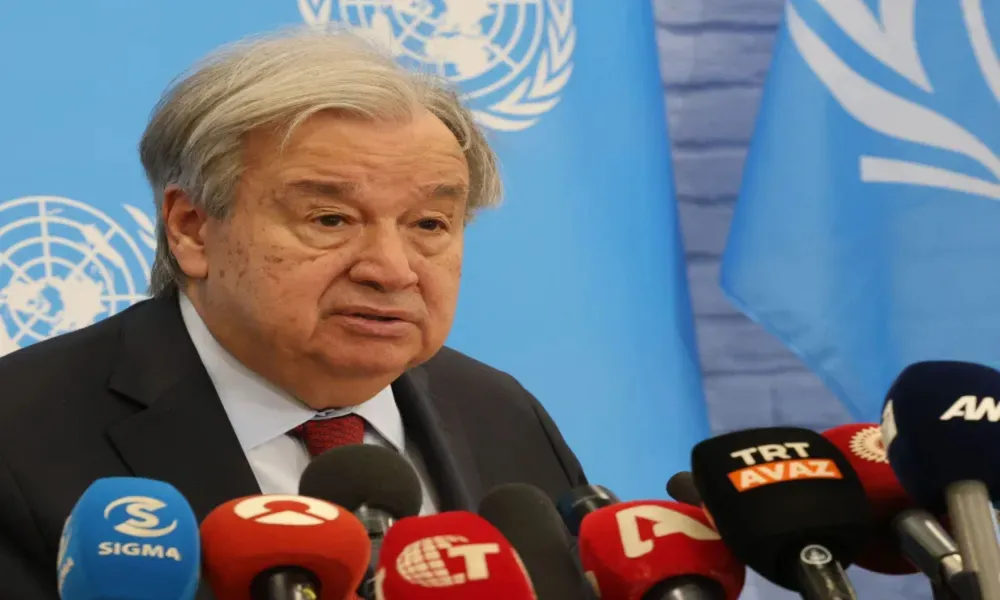

UN Secretary-General António Guterres’ statement in New York that he sees no basis yet for either a trilateral or five-party meeting on the Cyprus issue sends a clear message: the international community is no longer prepared to facilitate political manoeuvring by the island’s leaders.
The UN chief appears unwilling to endorse objections, delays or declarations of readiness that are not matched by action within the agreed framework and parameters established in previous negotiations. Guterres has invested considerable diplomatic effort in attempts to resolve the longstanding Cyprus problem, but has seen little tangible progress on the ground.
His latest intervention suggests that the UN will not tolerate deviations from the process he sought to shape during his visit to Nicosia at the end of July.
Pressure on both leaders
This harder, uncompromising stance places direct pressure on the two leaders just days before they travel to New York. The message is straightforward: tangible results are required, not rhetoric and slogans designed primarily for domestic audiences.
The international community cannot continually be expected to engage in negotiations that produce little substance when the parties themselves fail to rise to the circumstances.
Much of the responsibility for the current impasse rests with President Nikos Christodoulides, who repeatedly declares his commitment to a solution but whose political choices raise questions about how far he is prepared to go to achieve one.
His critics contend that his focus on securing another presidential term and maintaining political support at home has increasingly influenced his approach to the Cyprus issue. In particular, his relationship with nationalist political forces risks restricting the room available for the compromises that any meaningful negotiating process will inevitably require.
Erhürman has also disappointed
The approach of Turkish Cypriot leader Tufan Erhürman has been equally disappointing.
His election generated expectations that he might demonstrate greater autonomy from Ankara, particularly on practical issues affecting everyday life and the opening of additional crossing points.
Instead, he has so far adopted a cautious and subdued position, appearing reluctant to confront political resistance within the north.
The result is an increasingly familiar pattern. Both sides speak about readiness for progress, while the conditions required to generate that progress remain absent.
New York must produce substance
Through Guterres, the international community is signalling that it will not continue participating in discussions lacking meaningful purpose while both sides remain unwilling to make the necessary political moves.
What is expected now is not another carefully worded declaration of goodwill, but concrete results and a recognition by both leaders of the seriousness of the moment.
Without that, the current deadlock risks becoming permanent. And with every lost opportunity, the prospect of reunification becomes more distant.