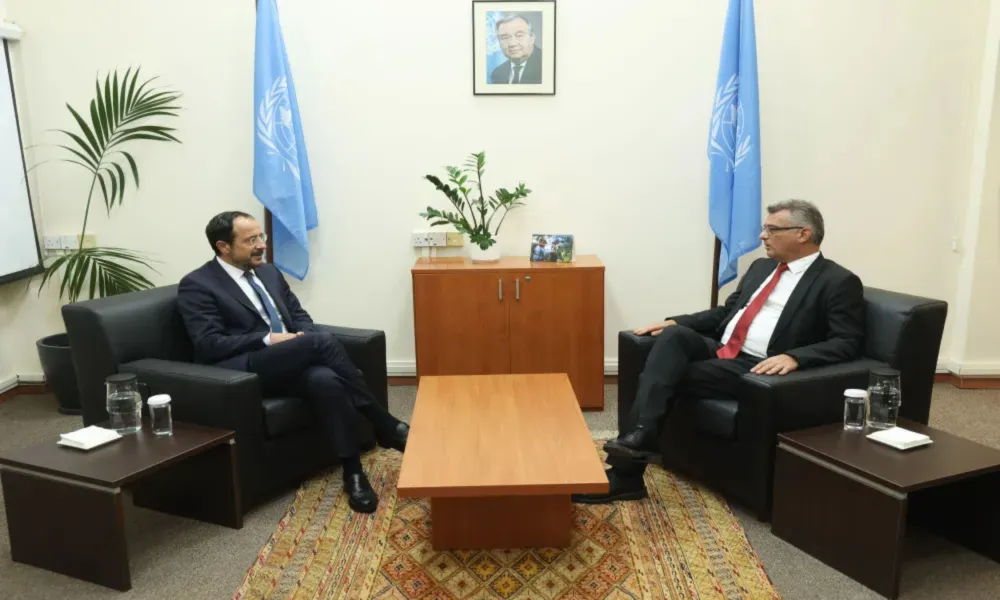

President Nikos Christodoulides said this week that he and Tufan Erhürman could "make history" together. In his interview with Yeni Düzen, he went further, suggesting that if the future of the Cyprus problem depended solely on the two of them, a settlement could be reached within days.
Whether or not that assessment is realistic, a comprehensive solution to the Cyprus issue clearly depends on far more than the positions of the two leaders. There are, however, areas where progress rests much more directly in their hands, and where results need not wait for another Crans-Montana conference or the next informal 5+1 meeting.
Beyond crossing points
Christodoulides himself pointed to confidence-building measures as the main issue currently awaiting progress.
That creates an obvious opportunity ahead of the leaders' meeting. Yet confidence-building measures are too often discussed as though they begin and end with the opening of new crossing points.
Crossings matter. Additional points of passage would ease daily life for thousands of people and increase contact between the two communities. But Cyprus faces challenges that reach far beyond movement across the divide.
Recent events have served as reminders. The shipwreck off Kyrenia and the landfill fire in the north highlighted how humanitarian and environmental crises do not recognise political boundaries.
Shared emergencies, shared response
If the two leaders genuinely wish to improve the climate between their communities, one practical step would be the creation of a mechanism for direct operational cooperation during emergencies.
The absence of such a framework has already been highlighted in discussions about cross-community cooperation in responding to disasters and major incidents.
Expressions of solidarity and offers of assistance are important, but they are often insufficient. In many cases, help cannot be provided effectively because the necessary structures are not in place.
According to experts and diplomats, meaningful cooperation requires established communication channels, agreed protocols, command structures for crisis management, security arrangements and joint training exercises.
Emergency response cannot depend on ad hoc arrangements made in the middle of a crisis. Effective cooperation requires preparation long before disaster strikes.
The missing ingredient
The technical solutions are unlikely to be the most difficult part.
Technical committees and specialists can develop procedures, propose models of cooperation and identify ways of navigating long-standing political sensitivities.
The greater challenge remains political will.
If Christodoulides and Erhürman truly believe they can "make history", they have an opportunity to demonstrate it through practical action. Setting a clear timetable for a joint civil protection mechanism focused on saving lives and protecting communities would be a meaningful start.
For all the discussion about trust, confidence-building measures and future negotiations, few steps would send a stronger signal than cooperation on issues that affect people on both sides of the island.