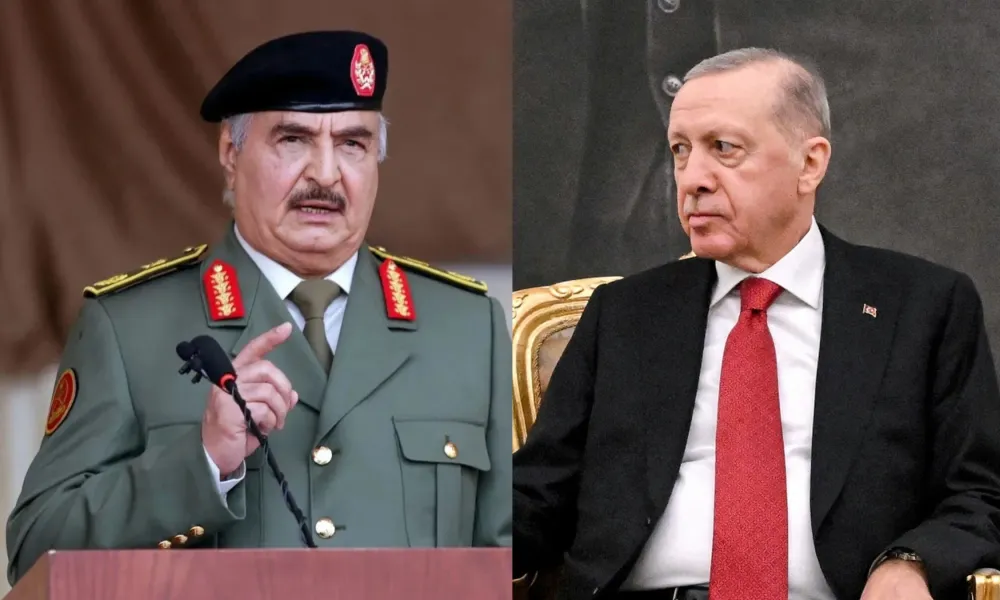

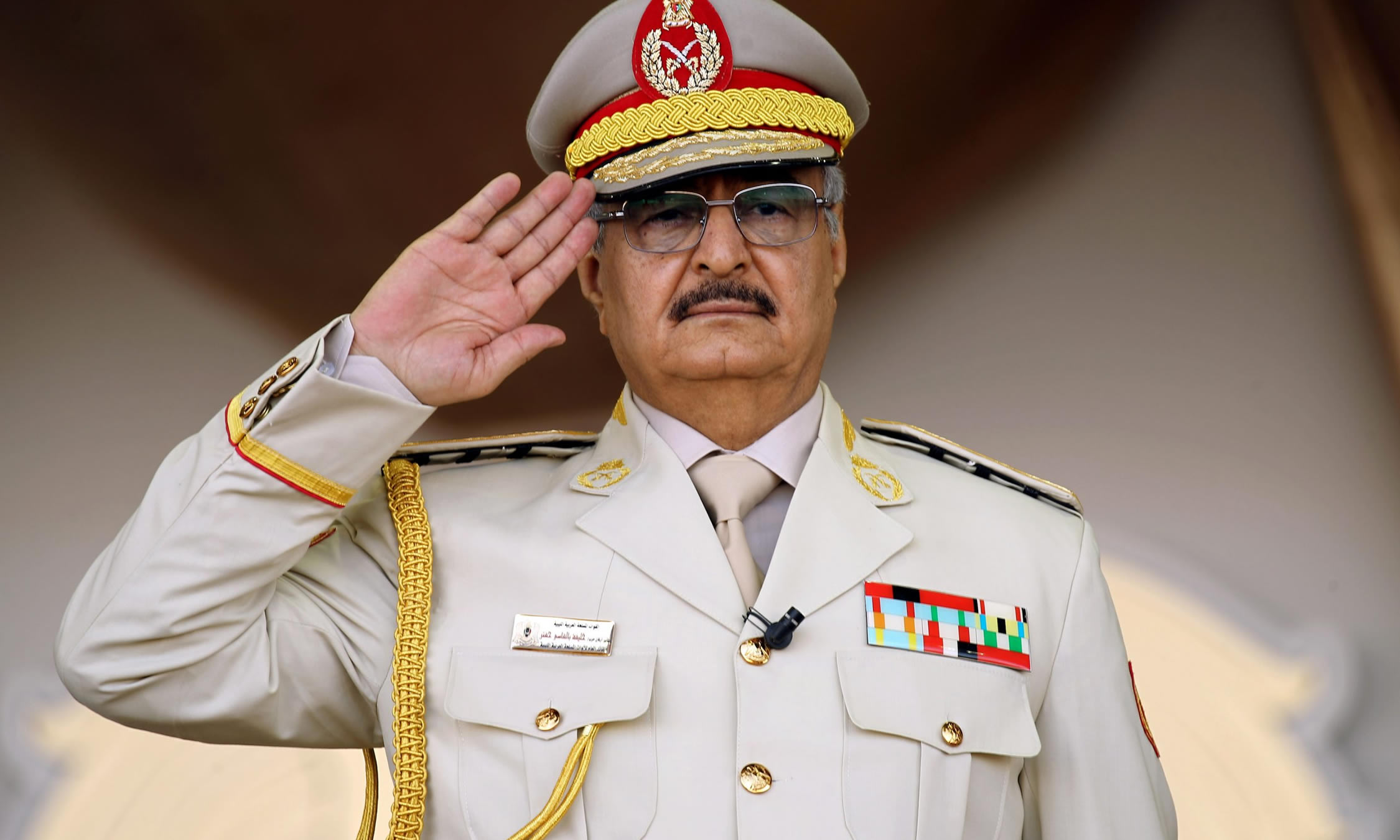
A significant geopolitical shift is under way in Libya, as military commander Khalifa Haftar, once a fierce opponent of Turkey, has moved towards closer ties with Ankara, paving the way for a development that until recently appeared unlikely: approval of the 2019 Turkey-Libya maritime delimitation agreement by the parliament in eastern Libya.
The decision on Tuesday, 20 October, to approve the agreement and revoke previous resolutions adopted in 2020 rejecting the deals and severing political relations with Turkey marks a substantial change in the balance of power in the Eastern Mediterranean, creating new challenges for Greece and Cyprus.
The move is particularly significant for Athens, as Turkey has now secured backing from the Libyan side that had previously challenged the memorandum. This strengthens Ankara’s diplomatic position in its dispute with Greece over maritime boundaries south of Crete.
The shift in Haftar’s camp could also affect wider energy and geopolitical calculations in the region, including those involving the Republic of Cyprus and the Greece-Cyprus electricity interconnection project, the Great Sea Interconnector, amid Turkey’s competing claims in the Eastern Mediterranean.
According to Reuters, the parliament based in Benghazi and aligned with Haftar approved the agreement originally signed in November 2019 between Ankara and the then Government of National Accord (GNA), which Turkey had supported militarily against Haftar’s forces.
The decision is more than a reversal of an earlier parliamentary position. It forms part of a broader realignment of alliances in Libya that international research institutes had already identified in 2025.
The analysis that anticipated the shift
A report published on 2 December 2025 by the Polish Centre for Eastern Studies (OSW), entitled Turkey’s Policy Towards Libya: A Year of Major Shifts, had highlighted Ankara’s gradual departure from a policy focused almost exclusively on supporting the Tripoli-based authorities.
Analyst Adam Michalski argued that Turkey was seeking to establish closer relations with Haftar’s camp. One of the central objectives of this approach, according to the OSW, was to secure approval of the 2019 maritime memorandum from the parliament in eastern Libya.
The latest development therefore represents the achievement of an objective that the research centre had identified as a key priority of Turkish diplomacy almost eleven months earlier.
From the battle for Tripoli to cooperation with Ankara
The shift is particularly striking when viewed against the events of 2019 and 2020.
In April 2019, Haftar’s forces launched a major offensive to capture Tripoli, with support from foreign actors, including Russia’s Wagner group.
Turkey intervened militarily in support of the Tripoli-based government, supplying drones, air defence systems and military advisers. According to the OSW analysis, the intervention played a decisive role in helping repel Haftar’s offensive and contributed to the ceasefire reached in October 2020.
At the time, Ankara and Haftar were on opposing sides of an active military conflict.
The eastern Libyan parliament subsequently rejected the agreements signed between Turkey and the Tripoli government in November 2019, arguing that they ran counter to Libyan interests.
Six years later, the same parliamentary body has reversed that position.
Haftar’s sons and the question of succession
One important factor behind the rapprochement between Turkey and Haftar’s camp, according to the OSW, is the question of political and military succession in eastern Libya.
Haftar has promoted his sons to influential positions within the military and administrative structures of the territory under his control.
Saddam Haftar became deputy commander of the Libyan National Army, Khaled Haftar was promoted to head of the general staff, while Belkacem Haftar assumed a prominent role in managing reconstruction funds.
The Polish research centre argues that closer relations with Turkey could help strengthen the international legitimacy of a future succession within the Haftar family and reduce its dependence on traditional allies.
From this perspective, rapprochement with Ankara is not simply a change in foreign policy but could also form part of wider calculations concerning the future distribution of power in eastern Libya.
This remains an analytical assessment rather than a publicly confirmed statement of Haftar’s intentions.
Turkish intelligence chief’s visit to Benghazi
Contacts established in 2025 were an important milestone in the rapprochement.
In April that year, Saddam Haftar visited Ankara, where military cooperation was among the issues discussed.
An even more significant development was the visit to Benghazi in August 2025 by Ibrahim Kalin, head of Turkey’s National Intelligence Organisation.
According to the OSW, it was the first visit of its kind since the fall of Muammar Gaddafi and provided a clear indication of the changing relationship between Ankara and eastern Libya.
Discussions with Haftar and the leadership of the Libyan National Army covered regional security, irregular migration, intelligence cooperation and defence.
For Turkey, the rapprochement opened the way to developing relations with both of Libya’s main centres of power. For Haftar, it offered access to a powerful regional actor with significant military and diplomatic capabilities.
Moving beyond dependence on Russia
The OSW also points to Haftar’s relationship with Moscow as a factor in the shift.
Russia has been a major military supporter of eastern Libya, providing equipment and maintaining a military presence.
However, the Polish research centre argues that Russia’s reduced capacity as a result of the war in Ukraine created additional incentives for Haftar to diversify his international partnerships.
Turkey consequently emerged as a potential new partner, although this does not necessarily mean Haftar is abandoning his ties with Moscow.
Closer relations with Ankara give his camp greater room for diplomatic and military manoeuvre.
Turkish drones in eastern Libya
Another development highlighting the changing relationship was reported by Reuters on 2 April 2026.
According to the news agency, satellite imagery showed Turkish Bayraktar TB2 unmanned aerial vehicles at Al-Khadim airbase in eastern Libya, which is under the control of Haftar’s forces.
Reuters cautioned that it had not established who supplied the aircraft or who was operating them.
Their presence is nevertheless symbolically significant. Bayraktar drones were among the weapons used by forces supporting the Tripoli government, with Turkish backing, against Haftar’s army in 2019 and 2020.
The reported deployment also raises questions about the United Nations arms embargo imposed on Libya.
What Turkey gains from the agreement
Approval by the eastern Libyan parliament gives Ankara a significant political and diplomatic advantage.
Until now, the 2019 memorandum had been associated primarily with the Tripoli government, while authorities in eastern Libya questioned its legitimacy.
The latest decision gives Turkey backing from a parliamentary body that had previously rejected the agreement.
According to the OSW, this could strengthen Ankara’s ability to pursue energy cooperation and offshore exploration around Libya, including in areas influenced by the eastern authorities.
However, parliamentary approval does not automatically confer international recognition on the maritime boundaries set out in the memorandum, nor does it resolve objections raised by other states.
Implications for Greece and Cyprus
The decision could have wider consequences for the balance of power in the Eastern Mediterranean.
Greece has rejected the Turkey-Libya memorandum, arguing that it infringes on Greek sovereign rights, including those associated with Crete. Turkey maintains a different interpretation of the effect of islands on maritime delimitation and continues to defend the legality of its agreement with Libya.
In December 2025, the OSW warned that approval of the memorandum by the eastern Libyan parliament could trigger renewed tensions between Greece and Turkey and affect Ankara’s relations with the European Union.
The development also has implications for Cyprus, particularly in relation to energy infrastructure and maritime claims in the region.
According to a Reuters report published on 15 October 2026, Turkey has invoked the 2019 memorandum to support claims over maritime areas linked to planned surveys for the Great Sea Interconnector, the electricity link between Greece and Cyprus.
Athens rejects Turkey’s claims, while the project remains a matter of considerable energy and geopolitical interest.
The eastern Libyan parliament’s decision could therefore strengthen Turkey’s political argument in the region, even though it does not settle the underlying legal disputes.
From military conflict to geopolitical accommodation
The decision of 20 October is the clearest result so far of the rapprochement between Ankara and Haftar’s political camp.
Turkey, which intervened militarily in 2019 to prevent Haftar’s forces from capturing Tripoli, now maintains open channels of communication with eastern Libya and has secured approval of an agreement that the region’s parliament once rejected.
The shift highlights the pragmatic nature of Turkish policy in Libya, as well as Haftar’s efforts to broaden his international partnerships.
The key question is whether the new alignment will remain focused on economic and military cooperation or lead to a wider realignment of alliances across the Eastern Mediterranean, with direct consequences for Greek-Turkish relations and regional energy projects.